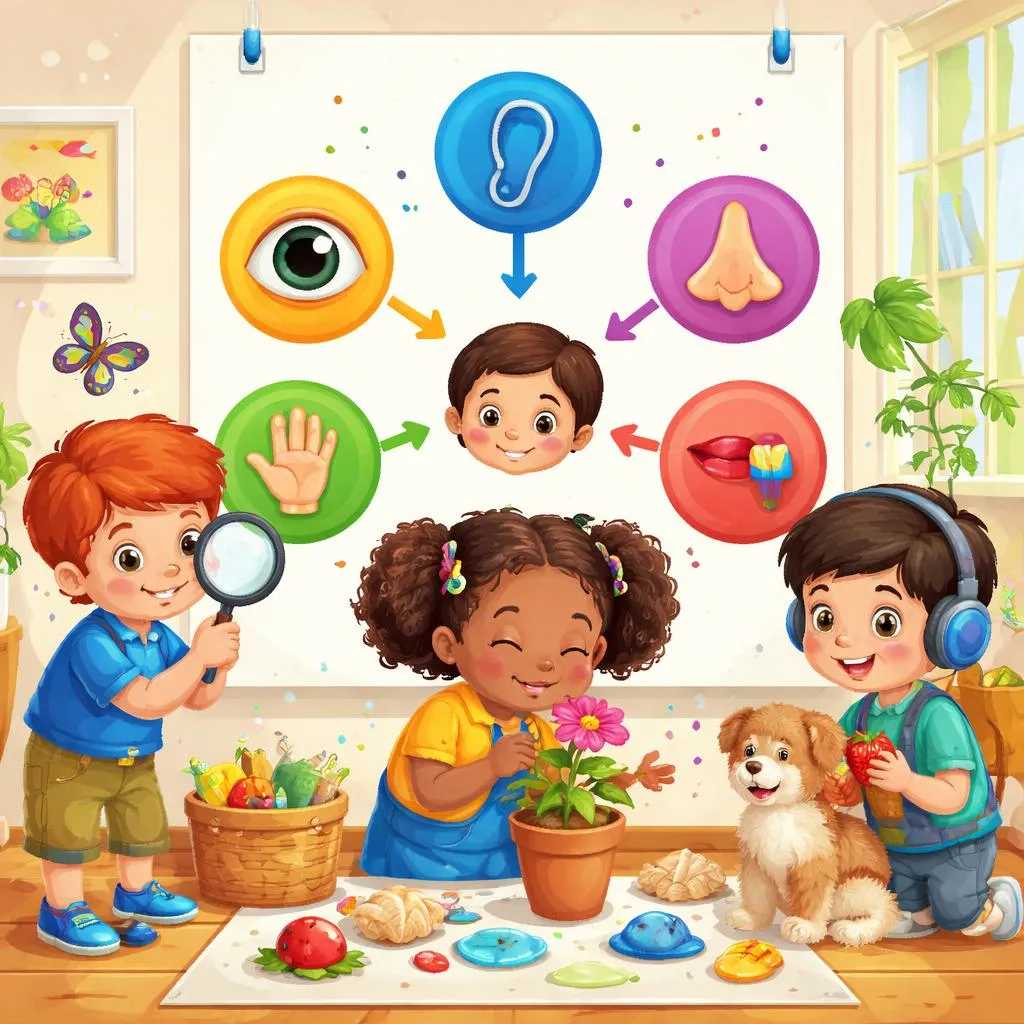

Welcome, curious learners! Today, we are going to explore a wonderful tool for learning. We are talking about a "5 senses anchor chart". This is not just a poster. It is a visual map that helps us organize and remember how we experience the world. It teaches us powerful words for describing what we see, hear, smell, taste, and touch. Let's discover how this chart can make our English more vivid and detailed.
What is a "5 Senses Anchor Chart"? A "5 senses anchor chart" is a large, visual learning aid, usually displayed on a classroom wall. Its purpose is to "anchor" or solidify key information about the five senses. The chart is divided into five clear sections, one for each sense: Sight, Hearing, Smell, Taste, and Touch. Each section includes the name of the sense, a picture of the corresponding body part (like an eye for sight), and a collection of descriptive vocabulary words. It serves as a constant reference point. Children can look at it to find the right word to describe their experiences, building their language skills daily.
Meaning and Explanation The meaning of this chart is deeply connected to observation and description. It teaches that we use specific body parts to gather specific information. Our eyes see colors and shapes. Our ears hear sounds. Our nose smells scents. Our tongue tastes flavors. Our skin feels textures.
The chart explains that each sense has its own set of adjectives. For Sight, we use words like bright, dark, large, small, red, round. For Touch, we use soft, hard, rough, smooth, cold, hot. By organizing words this way, the chart makes abstract vocabulary concrete and accessible. It empowers children to move from simple statements ("I see a flower") to rich descriptions ("I see a bright yellow, round flower").
Categories or Lists The chart organizes vocabulary into five natural categories.
Sight: This column focuses on visual adjectives. Words include: see, look, observe, bright, dark, colorful, shiny, big, small, round, square. Hearing: This column is for sounds. Words include: hear, listen, loud, quiet, soft, noisy, high, low, musical, crunchy. Smell: This column describes scents. Words include: smell, sniff, sweet, stinky, fresh, fruity, spicy, smoky, floral. Taste: This column is for flavors. Words include: taste, flavor, sweet, sour, salty, bitter, yummy, yucky, spicy, juicy. Touch: This column describes textures and temperatures. Words include: touch, feel, soft, hard, rough, smooth, bumpy, cold, hot, wet, dry.
Daily Life Examples We can use the "5 senses anchor chart" to describe any moment of our day. During snack time, we can use it to describe an apple.
Sight: "I see a red, round apple." Touch: "It feels smooth and hard." Smell: "It smells fresh and sweet." Hearing: "It makes a crunchy sound when I bite it." Taste: "It tastes sweet and juicy."
On a walk, we can describe the park. "I see green grass (Sight). I hear birds chirping (Hearing). I smell fresh air (Smell). The bench feels rough (Touch)." The chart provides the word bank needed for these detailed observations.
Printable Flashcards Printable flashcards can complement the large anchor chart. Create a set of five main cards, each dedicated to one sense.
The "Sight" card has a large eye icon and the word "SEE." On the back, list three helper words: look, bright, colorful.
The "Touch" card has a hand icon and the word "FEEL." The back lists soft, rough, hot.
You can also create "sense sorting" cards. Have cards with pictures of objects (a bell, a rose, an ice cube). Children sort them under the correct sense heading on a smaller version of the anchor chart. This builds classification skills and vocabulary association.
Learning Activities or Games Here are activities to make the "5 senses anchor chart" interactive.
-
Sense Scavenger Hunt: Using the chart as a word bank, give a list of clues. "Find something that feels rough." "Find something that makes a loud sound." Children find objects in the room and describe them using the chart's vocabulary.
-
"Mystery Bag" Description Game: Place an object in a bag. A child reaches in and uses only their sense of touch. They describe it using words from the Touch column. "It feels small, hard, and bumpy." Others guess what it is. Then, use other senses to confirm.
-
"Build the Chart" Collaborative Activity: Start with a blank chart with only the five sense titles and body part pictures. As a class, explore an object like a lemon. Brainstorm descriptive words together and write them in the correct column. This makes students co-creators of their learning tool.
-
"Sense Poetry": Use the chart to write a simple five-line poem about an object. Each line starts with "I see/hear/smell/taste/feel..." and uses a word from the chart. This structured activity builds creative confidence with the new vocabulary.
A well-used "5 senses anchor chart" does more than decorate a wall. It actively builds a child's capacity for detailed observation and precise communication. It turns everyday experiences into rich language practice. Encourage children to "consult the chart" when they are searching for the right word. This habit fosters independence in learning. As they use these descriptive words, they are not just naming senses—they are painting detailed pictures with English, making their conversations and stories come alive.