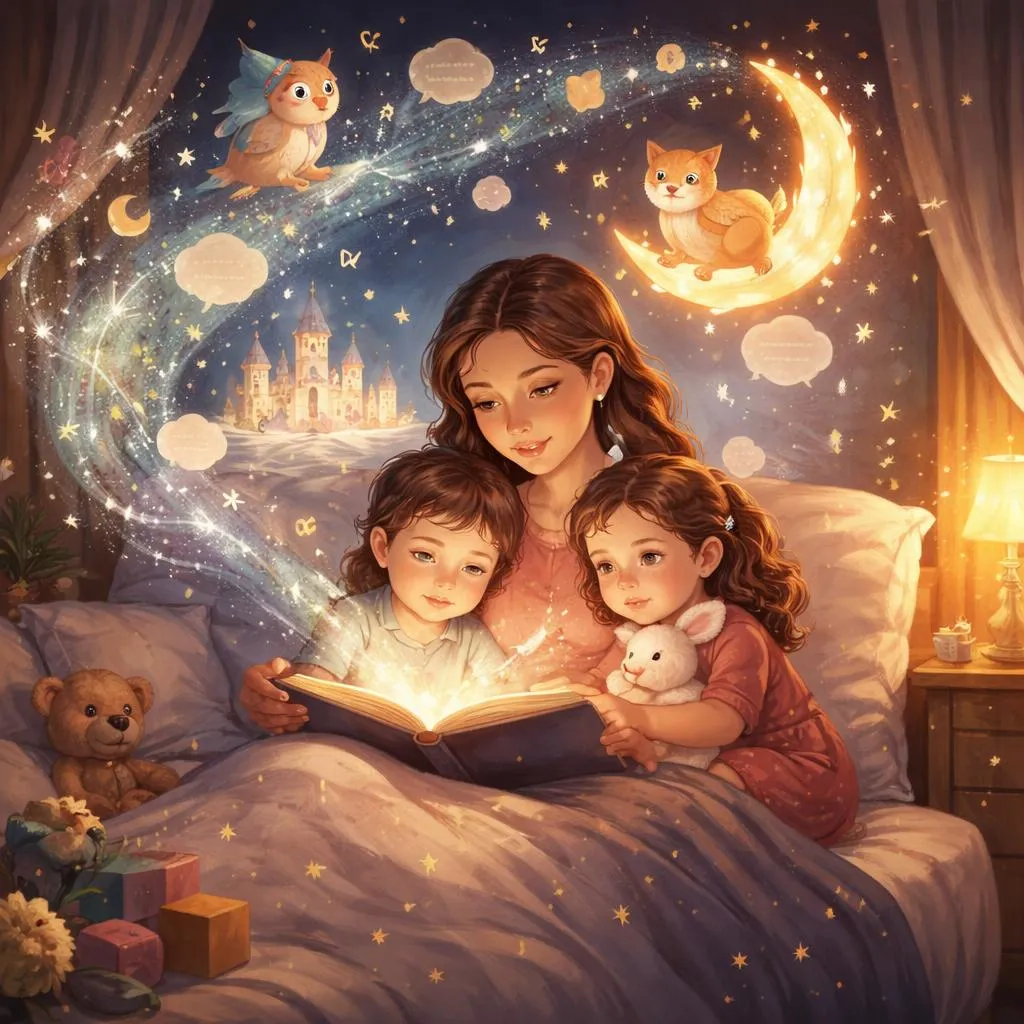

The transition from daytime activity to nighttime rest presents unique opportunities for language learning. The quiet atmosphere changes how children receive and process language. A carefully chosen children's night time story can support both relaxation and linguistic development. These stories use specific patterns. They create calm through predictable structures. This article explores practical teaching applications for bedtime tales. The focus remains on classroom and home strategies. Let us examine how these gentle narratives support English learning.
What Is a Children's Night Time Story? A children's night time story is a narrative designed for reading before sleep. These stories differ from daytime tales. They use softer language. The plots move slowly. Conflicts remain mild and resolve peacefully. The endings bring closure and calm.
These stories often feature settings associated with night. Moonlight, stars, and quiet bedrooms appear frequently. Characters prepare for sleep. They say goodnight to objects and loved ones. The rhythm of the language mimics a lullaby. Repetition creates a hypnotic quality. This combination of elements signals to the listener that the day is ending and rest is approaching.
Meaning and Explanation of Bedtime Story Language The language in a children's night time story serves multiple purposes. The surface meaning tells a simple tale. An animal prepares for winter. A child says goodnight to the room. A dream takes someone on a gentle adventure.
The deeper purpose involves creating security. The predictable patterns reassure young listeners. They know what comes next. This predictability reduces anxiety. It allows the mind to relax. The vocabulary often includes soothing words. "Soft," "warm," "safe," "quiet," and "peaceful" appear frequently. These words create a mental environment conducive to sleep.
The rhythm of the language matters greatly. Many bedtime stories use gentle cadences. Sentences flow smoothly without harsh stops. The sound of the reading voice becomes as important as the meaning of the words. Children absorb the music of English even as they drift toward sleep.
Categories of Night Time Stories Different categories of children's night time story serve different needs. Goodnight books form one major category. These stories systematically say goodnight to various objects. "Goodnight moon. Goodnight room. Goodnight cow jumping over the moon." The pattern builds familiarity and closure.
Dream stories represent another important category. These narratives follow characters into dream adventures. The line between reality and imagination blurs. This allows creative language while maintaining safety. The dreamer always returns to bed at the end.
Animal bedtime stories offer a third category. Young animals prepare for sleep with parental guidance. Children see themselves in these animal characters. The stories model bedtime routines. They provide vocabulary for nighttime activities.
Quiet adventure stories work well for some children. These tales involve gentle journeys. A leaf floats down a stream. A cloud drifts across the sky. The movement is slow and peaceful. The language matches this gentle pace.
Daily Life Examples in Bedtime Stories Children's night time story narratives connect directly to children's evening experiences. Brushing teeth appears in many tales. Putting on pajamas features prominently. Saying goodnight to family members mirrors real routines. These connections make the language immediately useful.
Consider a story about a child who cannot sleep. The character tries various solutions. Counting sheep. Drinking warm milk. Listening to soft music. Children recognize these strategies. They may have tried them themselves. The vocabulary for discussing sleep difficulties becomes available through the story.
Stories about fear of the dark address common childhood experiences. Characters discover that shadows are just shadows. Noises at night have simple explanations. The language provides words for expressing and overcoming nighttime fears.
Printable Flashcards for Bedtime Vocabulary Flashcards extend the teaching value of any children's night time story. Select key nouns from bedtime tales. "Moon," "stars," "bed," "pillow," "blanket," and "lamp" appear frequently. Create cards with images on one side and words on the other.
Action flashcards capture bedtime routines. "Yawn," "stretch," "close eyes," "snuggle," and "dream" describe physical experiences. Students can act out these actions. Physical movement reinforces meaning before the calm of the actual story.
Feeling words deserve special attention in bedtime contexts. "Tired," "sleepy," "calm," "safe," and "peaceful" describe the desired state. Discuss what creates these feelings. Connect each feeling to story moments when characters experience them.
Learning Activities with Night Time Stories Several activities work well with children's night time story materials without disrupting the calming purpose. Pre-reading predictions set the stage. Show the cover. Ask what might happen. This activates prior knowledge before the quiet reading begins.
During reading, gentle comprehension checks maintain engagement. Pause occasionally to ask simple questions. "Where is the moon?" "What is the bear doing?" Keep questions soft and unhurried. The goal remains relaxation, not testing.
After reading, quiet reflection activities extend the experience. Ask students to close their eyes and imagine their favorite part. They can draw it the next day. This connects bedtime reading to daytime expression without pressure.
Bedtime routine sequencing helps organize the evening. Use pictures showing steps of a typical bedtime. Arrange them in order. This builds understanding of sequence vocabulary while supporting real-life routines.
Grammar Patterns Found in Bedtime Stories Children's night time story narratives contain consistent grammar patterns useful for teaching. Present tense often describes ongoing actions. "The moon shines through the window." "The stars twinkle in the sky." This creates immediacy and calm observation.
Imperative sentences appear in gentle forms. "Close your eyes." "Listen to the quiet." "Feel the soft blanket." These commands carry soothing intention rather than demands. Students encounter imperative forms in their most nurturing context.
Prepositional phrases describe location constantly. "In the bed." "Under the covers." "Above the treetops." "Through the window." The spatial relationships in bedtime stories mirror real bedroom geography. This makes prepositions concrete and understandable.
Conditional language appears in gentle promises. "If you close your eyes, you will dream sweet dreams." "When the moon rises, the stars appear." These sentences model real conditionals in reassuring contexts.
Educational Games for Bedtime Story Learning Games related to children's night time story themes work best during daytime hours. Memory match with bedtime objects reinforces vocabulary. Create pairs showing moon, stars, bed, pillow, and blanket. Students find matches while discussing each item.
Bedtime charades works well in classroom settings. Write bedtime actions on cards. Yawning, stretching, reading, and snuggling appear. Students act out while others guess. This builds vocabulary through physical expression.
Story sequencing with picture cards supports narrative understanding. Provide images from a familiar bedtime story. Students arrange them in correct order. This builds comprehension of story structure.
Quiet drawing games connect to story themes. After reading a bedtime tale, provide paper and crayons. Students draw their ideal bedroom or their favorite part of the story. This allows creative expression without requiring spoken language.
Printable Materials for Bedtime Story Lessons Printable materials support structured learning with any children's night time story. Bedtime routine charts organize evening activities. Provide simple charts with pictures and words. Students can check off each step. This builds independence and vocabulary simultaneously.
Goodnight cards offer writing practice. Provide simple templates. Students write or draw things they want to say goodnight to. "Goodnight sun." "Goodnight toys." "Goodnight family." This extends story patterns into personal expression.
Dream journals encourage writing or drawing upon waking. Provide simple pages with space for pictures and a line for words. Students record what they remember. This connects bedtime reading to morning reflection.
Word searches using bedtime vocabulary provide quiet review. Include words like "moon," "stars," "dream," "night," and "sleep." The puzzle format feels like play while reinforcing word recognition.
Creating a Bedtime Story Environment The physical setting for children's night time story reading affects language acquisition. Dim lighting signals relaxation. Soft voices carry the story. Comfortable positions allow physical ease. These elements create optimal conditions for receptive language learning.
Consistent routines build anticipation. Reading a bedtime story at the same time each night creates expectation. Children learn to prepare for language input. Their minds become ready to receive new words and patterns. This readiness enhances retention.
Parent involvement extends learning beyond the classroom. Sharing strategies with caregivers helps maintain consistency. The language of bedtime stories becomes part of family culture. This repeated exposure strengthens neural pathways for English.
The selection of appropriate stories matters greatly. Not every children's book suits bedtime. Fast plots create alertness. Scary moments cause wakefulness. Choosing true children's night time story materials ensures the calming purpose aligns with language goals.
Night time stories occupy a special place in language development. They combine linguistic input with emotional security. The quiet moments before sleep become opportunities for gentle learning. Vocabulary enters the mind when it is most receptive. Grammar patterns sink in through repetition. The calming nature of these stories creates optimal conditions for absorption. Children's night time story reading transforms the end of day into a foundation for language growth.