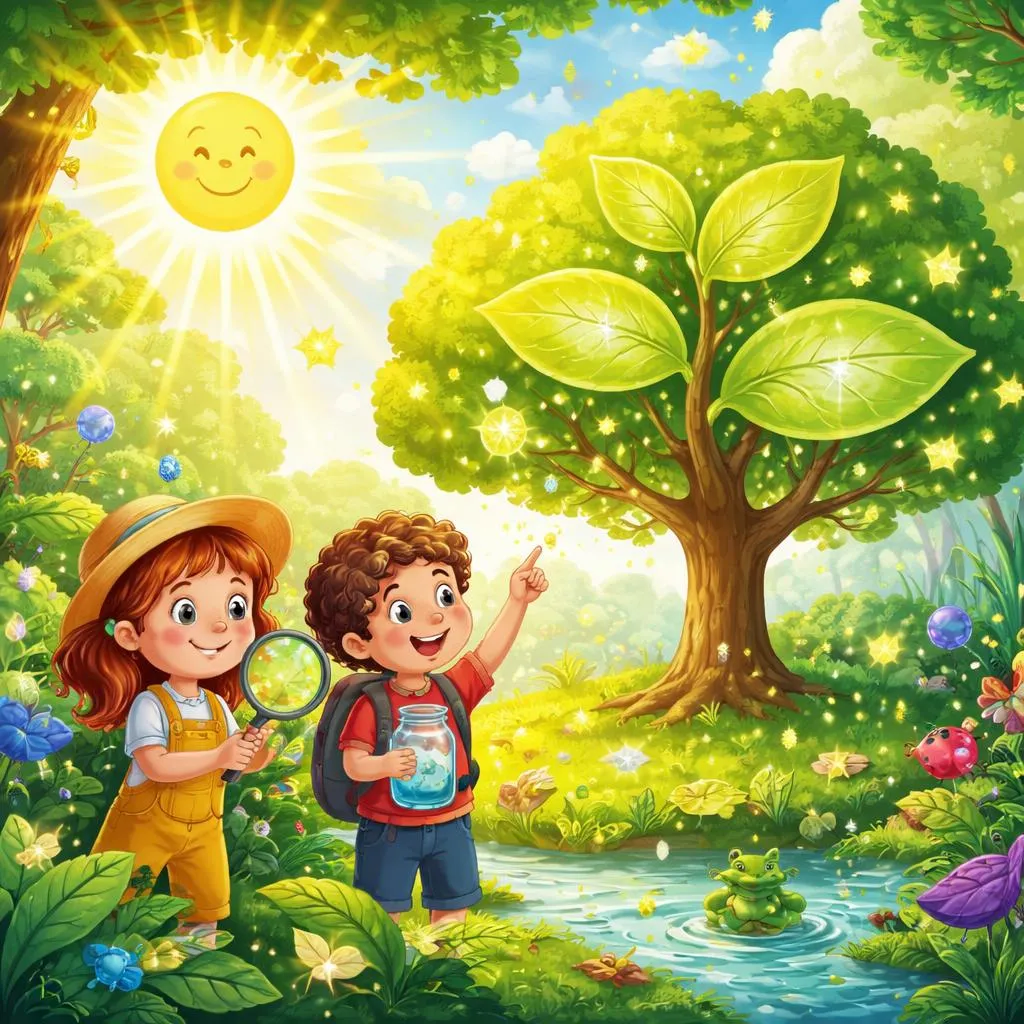

Sunlight streams down onto a leaf. Something invisible happens inside. Air and water transform into food. The plant grows. This process powers nearly all life on Earth. Yet photosynthesis remains hidden from young eyes. A children's story about photosynthesis brings this invisible magic into view. It transforms complex science into understandable narrative. This article explores methods for using these educational tales in teaching.
What Defines a Photosynthesis Story for Children?
A children's story about photosynthesis explains plant science through narrative. The process becomes a character-driven tale. Sunlight might be a friendly character delivering energy. Water drops might travel on adventures through plant roots. Leaves become busy kitchens where food gets made.
These stories personify scientific elements to make them relatable. Mr. Sun sends energy beams. The roots drink thirstily. The leaves work hard cooking. This personification helps young minds grasp abstract concepts through familiar frameworks.
The best photosynthesis stories balance accuracy with accessibility. They simplify without distorting. Children learn that plants need sun, water, and air. They discover that plants make their own food. The core science remains true while the telling entertains.
Why Use Story Form for Science Learning?
A children's story about photosynthesis offers several advantages for science education. First, narrative provides structure. The process has a beginning, middle, and end. Sun enters. Water travels. Food gets made. This sequence mirrors story structure, making it memorable.
Second, stories create emotional connection. Children care about characters. When the little plant struggles for light, readers root for it. This emotional engagement makes scientific content stick.
Third, stories provide context for vocabulary. Scientific terms appear within meaningful narratives. Chlorophyll matters because the story shows it working. Glucose makes sense because the plant needs food.
Fourth, stories answer "why" questions naturally. Why do plants need sun? The story shows what happens without it. Why do leaves turn yellow? The narrative explains through seasons.
Vocabulary Learning Through Science Stories
Photosynthesis stories introduce scientific vocabulary in context. Big words become manageable within story frameworks. Chlorophyll appears as the green magic inside leaves. Photosynthesis becomes the name for the whole cooking process. Context makes terms understandable.
Plant part vocabulary builds naturally. Roots, stem, leaves, and veins all play roles in the story. Each part's job becomes clear through narrative action.
Sunlight vocabulary appears throughout. Rays, energy, light, and warmth describe what sun provides. These words connect to children's own experience of sunny days.
Children's story about photosynthesis also introduces product vocabulary. Oxygen, glucose, and sugar name what plants make. The story shows why these matter for plant and animal life.
Simple Phonics Points in Science Stories
Photosynthesis stories offer useful phonics material. Scientific words provide challenging but rewarding practice. Photosynthesis contains many syllables for stretching pronunciation skills. Chlorophyll offers ch and ll patterns.
Plant part words give sound practice. Root features long oo. Stem contains short e. Leaf has long e. These everyday words build phonics foundations.
Action words in these stories provide varied sounds. Absorb, release, convert, and grow each offer distinct phonetic patterns. Repeated use in meaningful context reinforces sound-symbol connections.
Exploring Grammar Through Science Narratives
Science stories provide clear grammar models. Present tense dominates explanations. "The sun gives energy. The leaves use this energy to make food." This general present expresses scientific truths.
Cause and effect language appears throughout. "Because the sun shines, the plant can make food." "If a plant gets no light, it cannot grow." These structures show scientific relationships.
Sequencing words organize the process. First, roots drink water. Then sunlight arrives. Next, leaves start cooking. Finally, the plant makes food. This sequence language builds understanding of process order.
Learning Activities with Photosynthesis Stories
Active engagement with science narratives deepens learning. These activities bring plant processes into concrete experience.
Plant Observation Journal After reading a photosynthesis story, provide small plants for classroom observation. Learners draw plants and label parts from the story. Over weeks, observe and record changes. Note when plants get sun or water. This connects story concepts to real plant growth.
Photosynthesis Role Play Assign roles based on story elements. Sun sends energy. Roots drink water. Leaves cook food. Stems transport materials. Act out the photosynthesis process together. This physical engagement makes abstract concepts concrete.
Leaf Experiment Read about leaves as food factories. Then collect leaves of different colors. Discuss why green leaves have chlorophyll. Why do autumn leaves change color? This connects story learning to observable natural phenomena.
Plant Needs Sorting Create cards with plant needs and non-needs from the story. Sun, water, air, soil belong in plant needs. Toys, books, shoes belong elsewhere. Learners sort cards into categories. This builds understanding of essential plant requirements.
Educational Games with Science Stories
Games add playful interaction with scientific concepts. These activities work well for groups or individuals.
Photosynthesis Bingo Create bingo cards with photosynthesis elements. Sun. Water. Roots. Leaves. Chlorophyll. Oxygen. As you describe story moments or call terms, learners cover matching squares. This builds vocabulary recognition.
Plant Part Match Create cards with plant part names on some and job descriptions on others. Roots match "drink water." Leaves match "make food." Stems match "carry water." Learners match parts to jobs. This builds understanding of plant functions.
Photosynthesis Relay Divide into teams. Set up stations representing sun, water, air, and plant. Teams move through stations collecting what the plant needs. At the plant station, they exchange collected items for a food token. This physical game reinforces the process.
Printable Materials for Science Story Learning
Tangible resources support extended exploration of photosynthesis themes. These materials work well for independent practice.
Photosynthesis Word Cards Create cards with photosynthesis vocabulary on one side and simple definitions or pictures on the other. Chlorophyll, glucose, oxygen, roots, leaves. Use these for matching games or quick reviews.
My Plant Story Page Provide a template for writing an original story from a plant's perspective. "I am a little seed. First I..." "The sun helps me by..." "I feel happy when..." This builds narrative skills with science content.
Photosynthesis Comic Strip Template Create a simple comic strip template with spaces for drawings and words. Learners illustrate the photosynthesis process in sequence. Each box shows one step with caption. This builds sequencing and visual literacy.
Plant Needs Chart Create a simple chart showing what plants need and what they produce. Needs side: sun, water, air. Produces side: food, oxygen, growth. Learners fill in from story knowledge. This builds summary skills.
The lasting value of a children's story about photosynthesis lies in making the invisible visible. Children cannot see chloroplasts at work. They cannot watch glucose being made. But through story, these hidden processes become real. The sun becomes a helper. The roots become drinkers. The leaves become chefs. This personification creates mental models that support later scientific understanding. Years later, when learners encounter photosynthesis in advanced classes, the story foundation remains. They already know what plants need. They already understand that plants make food. The scientific terms simply name what the story showed. Each photosynthesis story read together plants seeds for future science learning while building vocabulary and comprehension today.