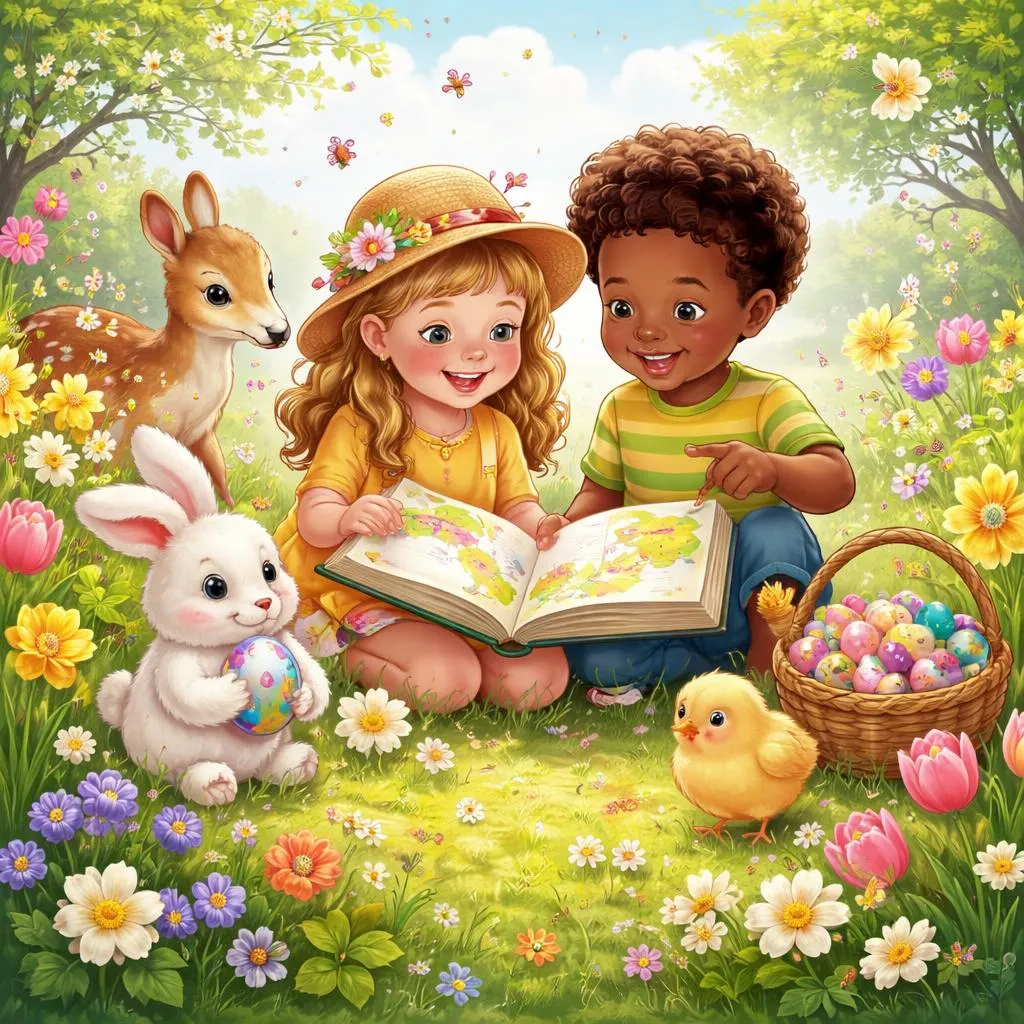

Spring brings new life after winter's sleep. Easter celebrates this renewal. A children's story for easter combines these themes naturally. The stories feature bunnies and eggs. They explore hope and new beginnings. This article explores practical teaching applications for Easter narratives. The focus remains on language development through seasonal storytelling. Let us examine how Easter stories support English learning.
What Is a Children's Story for Easter? A children's story for easter is a narrative connected to the Easter holiday. Some stories tell about Easter bunnies delivering eggs. Others focus on religious themes of renewal. Many celebrate spring's arrival alongside holiday traditions.
These stories vary in their approach. Secular tales feature egg hunts and chocolate treats. Religious stories tell of hope and new life. Both types share themes of spring and renewal. The common thread involves celebrating life returning after winter's darkness.
Vocabulary Learning from Easter Stories Children's story for easter narratives introduce seasonal vocabulary naturally. Easter-specific words appear throughout. "Bunny," "eggs," "basket," "chocolate," "hunt," and "decorate" name holiday elements. Students learn these terms through story context.
Spring vocabulary fills the pages. "Flowers," "bloom," "rain," "sunshine," "baby animals," and "new life" describe the season. Students build words for springtime observations.
Color words abound in Easter stories. Pastel colors dominate. "Pink," "yellow," "lavender," "mint green," and "sky blue" appear in egg descriptions. Students expand color vocabulary beyond basic terms.
Action words describe Easter activities. "Hide," "seek," "find," "fill," "dye," "paint," and "gather" show holiday actions. Students learn verbs through Easter contexts.
Phonics Points in Easter Stories Children's story for easter narratives contain useful phonics patterns. The long "e" sound appears in key words. "Easter," "egg," "bunny," "happy," and "spring" feature this sound. Students practice it throughout stories.
The "b" sound appears frequently. "Bunny," "basket," "baby," "bloom," and "bright" share this initial sound. Students notice the pattern across Easter vocabulary.
Short vowel sounds appear in common words. "Egg" contains short "e." "Hop" contains short "o." "Find" contains long "i." Students encounter various vowel patterns in context.
Word families extend from story vocabulary. "Egg" connects to "leg" and "beg." "Hop" connects to "top" and "stop." "Bunny" connects to "funny" and "sunny." Students extend patterns from holiday words.
Grammar Patterns in Easter Stories Children's story for easter narratives model specific grammatical structures. Present tense describes Easter traditions. "The bunny hides eggs." "Children hunt for treats." Students learn present tense for holiday customs.
Past tense tells Easter stories. "Last Easter, we dyed eggs together." "The bunny came during the night." Students encounter past forms in personal narrative contexts.
Future tense expresses Easter anticipation. "We will hunt for eggs tomorrow." "The flowers will bloom by Easter." Students learn future forms for upcoming events.
Prepositional phrases describe egg locations. "Under the bush." "Behind the tree." "Inside the basket." "Beside the flower." Students build spatial language through egg hunt descriptions.
Learning Activities with Easter Stories Several activities work well with a children's story for easter. Egg decorating connects story to art. Read an Easter story. Provide hard-boiled eggs or paper cutouts. Students decorate using colors from stories. This builds fine motor skills and color vocabulary.
Easter egg hunt with words builds reading skills. Write vocabulary words on plastic eggs. Hide them around classroom. Students find eggs and read words aloud. This combines movement with word recognition.
Spring observation walks connect stories to nature. Go outside after reading. Look for signs of spring. Flowers blooming. Birds building nests. Trees budding. Students describe observations using story vocabulary.
Easter card writing practices expressive language. Students create cards for family. They write Easter messages using vocabulary from stories. "Happy Easter!" "Hope you find many eggs!" This builds writing skills.
Printable Flashcards for Easter Vocabulary Flashcards reinforce key vocabulary from a children's story for easter. Create cards for Easter symbols. "Bunny," "egg," "basket," "chick," "lamb," and "flower." Use simple drawings on one side, words on the reverse.
Color word flashcards expand beyond basic colors. "Pink," "yellow," "lavender," "mint green," "sky blue," and "pastel." Students match colors to Easter eggs.
Action word flashcards capture Easter activities. "Hide," "seek," "find," "dye," "paint," "decorate," and "gather." Students act out each action while saying the word.
Spring word flashcards build seasonal vocabulary. "Bloom," "grow," "rain," "sunshine," "warm," and "new." Students connect spring words to Easter themes.
Educational Games with Easter Stories Games transform a children's story for easter into interactive experiences. Easter bingo works well. Create cards with Easter vocabulary. Call out definitions or descriptions. Students mark matches.
Egg hunt matching game builds word recognition. Write words on half the eggs. Write matching pictures on other half. Hide eggs. Students find matching pairs.
Bunny hop race practices action words. Students hop like bunnies to collect eggs. Each egg has a word. Students read word before hopping back. This combines movement with reading.
Easter story sequencing builds comprehension. Provide sentence strips from an Easter story. Students arrange in correct order. This builds understanding of narrative structure.
Printable Materials for Easter Story Lessons Printable materials support structured learning with Easter stories. Easter story maps organize narrative elements. Provide spaces for characters, setting, problem, Easter activities, and solution. Students complete after reading.
Egg design sheets encourage creativity and color vocabulary. Provide egg outlines. Students design patterns using Easter colors. They label colors used.
Easter word searches build word recognition. Create puzzles with Easter vocabulary. Students find and circle words. This provides independent word practice.
Comprehension questions check understanding of Easter stories. Create questions about characters, Easter events, and holiday traditions. Students answer verbally or in writing.
Spring and Renewal Themes Easter stories naturally explore spring and renewal. Winter ends. Warmth returns. Flowers bloom. Animals give birth. These themes resonate with young children.
Vocabulary for renewal appears in stories. "New," "fresh," "growing," "awakening," "beginning," and "hope" carry this theme. Students learn words for positive change.
Connections to nature build environmental awareness. Easter happens as nature awakens. Students notice this connection. They observe real spring changes.
Personal renewal connects to character experiences. Characters grow and change. Students discuss how they have grown. This builds self-awareness alongside vocabulary.
Easter Traditions Across Cultures Easter stories can introduce cultural diversity. Different cultures celebrate Easter differently. Some have special foods. Others have unique traditions. Students learn about global celebrations.
Vocabulary for cultural practices expands. "Tradition," "celebration," "custom," "holiday," "feast," and "parade" name cultural elements. Students build words for discussing cultural practices.
Comparison discussions develop critical thinking. How is our Easter similar to others? How is it different? This builds comparative language skills.
Respect for diversity grows through learning. Students appreciate that families celebrate differently. All celebrations have value. This builds inclusive vocabulary and attitudes.
Character Education Through Easter Stories Easter stories support character education naturally. Generosity appears in egg-giving bunnies. Characters share treats with others. Students discuss generosity in their lives.
Kindness features in many stories. Animals help each other. Children include everyone in egg hunts. Students explore ways to show kindness.
Patience appears in waiting for Easter. Anticipation builds excitement. Characters wait for celebrations. Students discuss patience in their own waiting.
Gratitude emerges in receiving treats and celebrating. Characters feel thankful. Students express gratitude for holiday joys and everyday blessings.
Creating Classroom Easter Traditions Easter stories can inspire classroom traditions. Annual Easter story reading becomes anticipated. Students look forward to favorite tales each year. This builds reading excitement.
Classroom egg hunt with words combines fun and learning. Hide word eggs annually. Students practice reading while celebrating. This makes learning festive.
Easter story writing becomes tradition. Each year, students write new Easter stories. They build on previous learning. This shows writing growth over time.
Easter art displays celebrate learning. Student artwork decorates classroom. Families see what students learn. This builds community connection.
Home Connection Through Easter Stories Easter stories create home-school connections naturally. Families celebrate Easter together. Stories provide shared language for holiday discussions.
Take-home books extend learning. Students borrow Easter stories to read at home. Families read together. This doubles language exposure.
Family Easter traditions connect to stories. Students share how their families celebrate. This builds oral language and cultural pride.
Easter vocabulary practice happens naturally at home. Families use words from stories during holiday preparations. Dyeing eggs. Hiding baskets. Eating treats. Language practice occurs in meaningful contexts.
A children's story for easter provides rich material for seasonal language learning. The stories introduce holiday vocabulary naturally. They explore themes of spring and renewal. They connect to art, nature study, and cultural learning. Young learners acquire English while celebrating this joyful holiday. The combination of festive fun and language instruction creates memorable learning experiences. Students carry Easter vocabulary with them into spring and beyond.