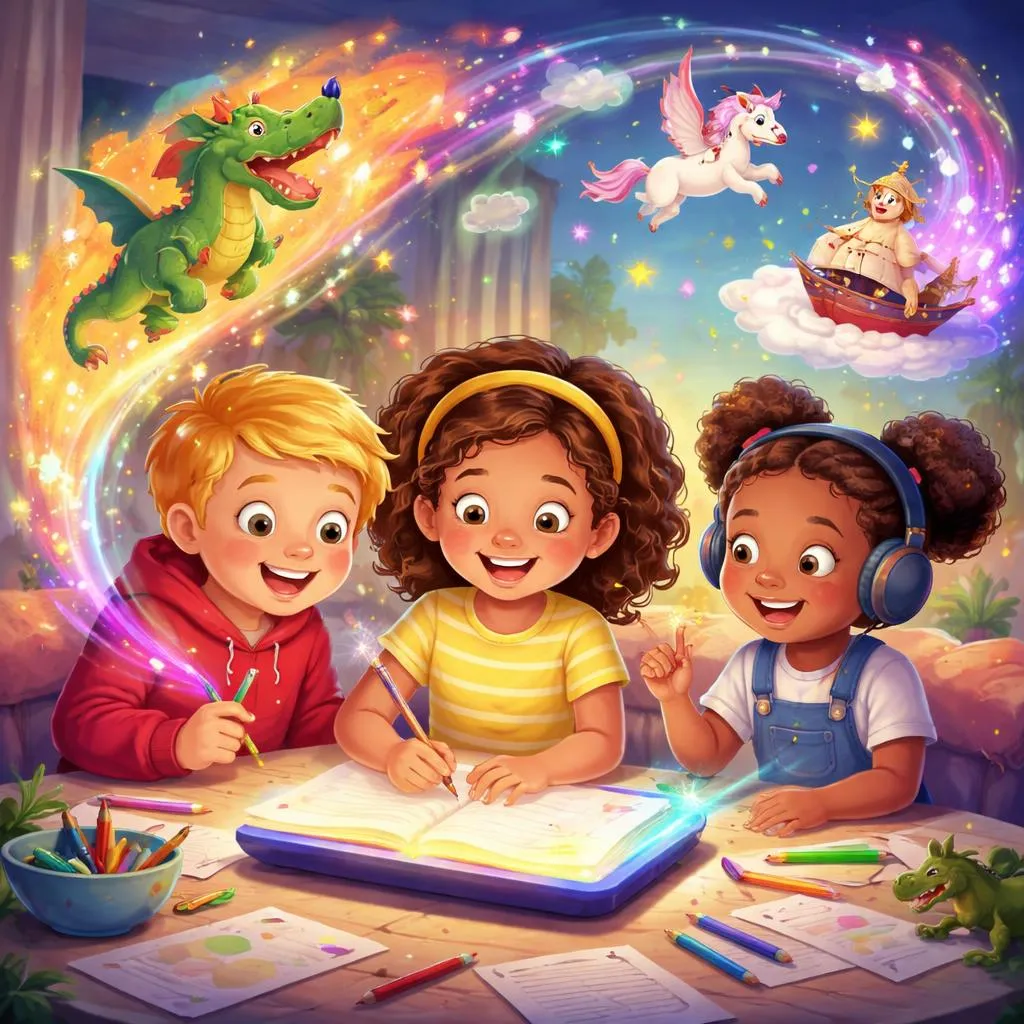

Every child carries stories inside them. Sometimes these stories need help finding their way out. A children's story generator acts as a friendly guide. It offers prompts, characters, and settings to spark imagination. This tool transforms the blank page from frightening to exciting. This article explores methods for using story generators effectively in teaching.
What Is a Children's Story Generator?
A children's story generator is a tool that helps create story ideas. It might be a digital app, a website, or a simple set of cards. The generator provides story elements that users combine in their own way. A character card. A setting card. A problem card. The child puts these pieces together to build a unique tale.
Some generators work like spinning wheels. Spin for a character. Spin for a place. Spin for a challenge. Other generators offer story starters. "Once upon a time, a tiny dragon discovered something strange in the garden." The child continues from there.
The goal remains the same regardless of format. The generator removes the hardest part of writing: the beginning. It gives young writers a push into the story world. From there, their own creativity takes over.
Why Use a Story Generator for Language Learning?
A children's story generator offers several advantages for language development. First, it reduces anxiety. Many children freeze when asked to write a story from nothing. The generator provides a starting point. This lowers the barrier to beginning.
Second, generators introduce story structure naturally. Children learn that stories need characters, settings, and plots. They see how these elements work together. This understanding builds over time through repeated use.
Third, generators encourage vocabulary exploration. A character card might say "a grumpy owl" or "a cheerful mermaid." These phrases introduce new descriptive words. Children incorporate them into their own writing.
Fourth, generators make writing feel like play. The random combinations create surprising and funny story starters. A penguin in a desert. A pirate looking for lost homework. These unexpected pairings delight young writers and keep them engaged.
Daily Life Examples of Story Generator Use
Story generators fit naturally into many learning situations. A classroom writing center might have a basket of story cards. Children choose one card from each category and begin writing. This works for independent practice or small groups.
At home, a digital story generator app provides entertainment during quiet time. Children create stories and share them with family. The generator becomes a bridge between screen time and creative expression.
During tutoring sessions, the generator serves as a warm-up activity. A few minutes of story creation gets creative juices flowing. It also provides material for discussing vocabulary and grammar in a meaningful context.
Group work benefits from generator use too. Each group member might contribute one story element. Together they build a tale. This collaborative process builds communication skills alongside writing ability.
Learning Activities Using Story Generators
Active engagement with story generators produces the best results. These activities move from simple generation to deeper learning.
Story Element Sorting Create a collection of story elements on cards. Characters, settings, and problems. Mix them up. Ask learners to sort them into categories. Discuss why certain elements belong together. This builds understanding of story structure.
Combination Exploration Use the generator to create three random story starters. Discuss each one. Which seems most interesting? Why? Which seems hardest to write? Why? This builds critical thinking about narrative possibilities.
Story Planning Pages After generating a story idea, provide a simple planning page. Who is the main character? Where does the story happen? What is the problem? How does it end? Learners fill this in before writing. This builds organizational skills.
Illustration Connection After generating and writing a story, learners draw a picture of the most exciting moment. Display writing and illustration together. This connects visual and verbal creativity.
Educational Games with Story Generators
Games make story creation even more engaging. These activities add social elements to the writing process.
Story Relay Race Divide learners into small groups. The first person generates a character and writes one sentence. They pass the paper. The next person generates a setting and adds a sentence. Continue through problem and solution. This builds collaboration and quick thinking.
Mystery Story Challenge Use the generator to create a story starter. Do not reveal it to everyone. Whisper it to one learner. That learner begins telling the story aloud. At an exciting moment, stop and choose the next storyteller. Continue until the story ends. This builds oral narrative skills.
Story Swap Learners generate and write short stories without putting their names on them. Collect stories and redistribute randomly. Learners read aloud the story they received. The class guesses who wrote it. This builds audience awareness and appreciation for different styles.
Printable Materials for Story Generation
Tangible materials support generator activities anywhere. These resources work well for classrooms without digital access.
Story Element Cards Create cards for characters, settings, and problems. Use pictures and words together. Characters: brave knight, shy mouse, friendly monster. Settings: dark forest, busy city, underwater cave. Problems: lost treasure, broken toy, new neighbor. Laminate for durability.
Story Starter Spinner Create a simple spinner with a paperclip and pencil. Divide a circle into sections with different story starters. Learners spin and write. Multiple spinners can work together for more complex combinations.
Story Planning Template Create a simple template with boxes for each story element. Character box with space for name and description. Setting box with space for details. Problem and solution boxes. Learners fill these before writing full stories.
My Story Collection Booklet Create a small booklet with pages for multiple stories. Each page includes space for the story starter, the written story, and an illustration. Learners build a personal collection over time.
The lasting value of using a children's story generator lies in its power to build confidence. Every writer faces the blank page with some fear. Generators transform that fear into possibility. They show young writers that stories hide everywhere, waiting to be discovered. A character and a setting need only a question to become a tale. What happens next? The child provides the answer. With each story written, skills grow stronger. Vocabulary expands. Grammar improves. Narrative understanding deepens. But most importantly, the child learns something essential. I am a storyteller. My ideas matter. My words can create worlds. This belief, once planted, grows into a lifetime of confident communication.