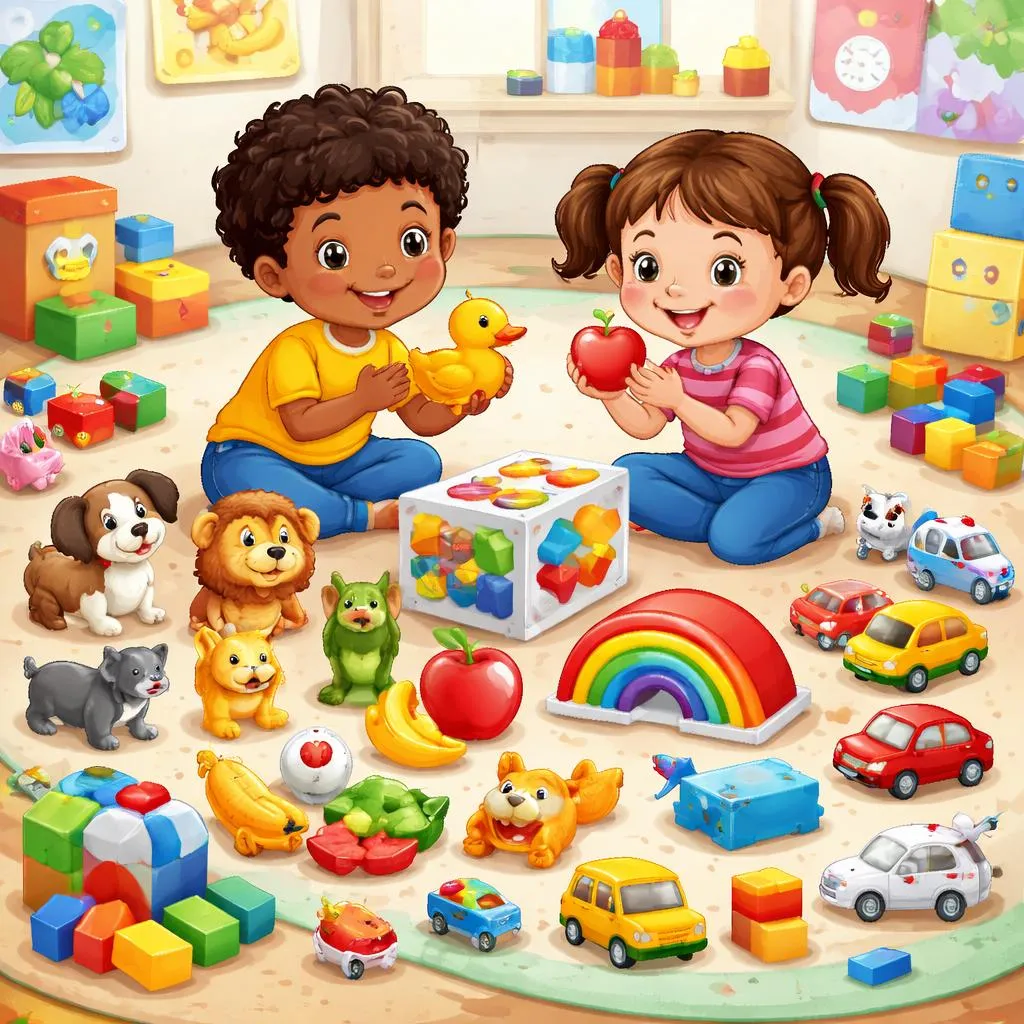

What Is The Rhyme? Nursery rhymes about toys are very common and engaging. A song that incorporates a list of toys is a wonderful teaching tool. This type of rhyme is often simple and repetitive. It might go: "My toys, my toys, I love to play! A ball, a car, a doll today!" The melody is cheerful and easy to remember. The song lists different toy names in a sequence. This musical list of toys helps children memorize new words effortlessly. It turns a simple enumeration into a fun, rhythmic activity. Singing about toys connects language learning directly to a child's world of play.
The Lyrics of Nursery Rhymes The lyrics of nursery rhymes for toys are usually straightforward. They focus on naming items. A classic example is: "Teddy bear, teddy bear, turn around. Teddy bear, teddy bear, touch the ground." Another rhyme might list: "I have a red ball and a blue train. I play with them again and again." The lyrics often use simple adjectives like colors or sizes. They also include action verbs related to play. The repetitive nature of the lyrics is key. It allows children to anticipate the next word. This builds confidence and aids in pronunciation and recall of the list of toys.
Vocabulary Learning Creating and using a list of toys is an excellent way to build vocabulary. We start with common toy names: ball, doll, teddy bear, car, truck, block, puzzle, kite, robot, train. We can expand this list with more specific words: action figure, stuffed animal, building bricks, skateboard, jump rope. We can then group these words into categories. Categories might include: Outdoor Toys (bike, kite), Building Toys (blocks, bricks), Soft Toys (doll, teddy bear). We also learn verbs: play, build, push, roll, throw, catch. Connecting the toy to an action helps solidify the word's meaning.
Phonics Points A list of toys provides rich material for phonics practice. We can focus on beginning sounds. The /b/ sound in ball, blocks, and bike. The /k/ sound in car and kite. The /t/ sound in train, truck, and teddy. We can practice blends like the /tr/ in train and truck. Many toy names are also compound words, perfect for breaking down. "Teddy bear" has two parts. "Skate-board" has two parts. We can also find rhyming pairs within the list. "Ball" and "doll" rhyme. "Car" and "far" rhyme. Clapping syllables for words like "puzzle" (puz-zle) or "robot" (ro-bot) builds phonological awareness.
Grammar Patterns Using a list of toys allows us to practice several basic grammar patterns. We can practice "I have..." sentences. "I have a ball. I have two cars." This introduces singular and plural nouns. We can use adjectives for description. "I have a big teddy bear. I have a red ball." We can ask and answer questions. "What is this? It is a doll. What color is the car? It is blue." We can also use possessive pronouns. "This is my train. That is your robot." These simple sentence structures form the foundation for everyday conversation about possessions and preferences.
Learning Activities Interactive activities bring the list of toys to life. A great activity is "Toy Sort." Gather various toy pictures or real toys. Have children sort them into categories they create, like "things that roll" or "things you build with." Another is "Guess the Toy." One child describes a toy from the list without naming it. "It is round. You can throw it." Others guess, "A ball!" Also, try "Toy Story Chain." Start a story: "I went to the park and brought my ball." The next child adds a toy: "...and my kite." This builds narrative skills and vocabulary.
Printable Materials Printable resources make learning tangible. Create a "My Toy Box" sheet. It has an outline of a toy box. Children draw or glue pictures of their favorite toys inside and label them. Design "Toy Word Cards" with a picture on one side and the word on the back. These are perfect for memory games. A "Color-by-Toy" worksheet is fun. Instructions say: "Color the ball red. Color the car blue." Also, a "Toy Graphing" sheet lets children survey friends about favorite toys and chart the results, combining math and vocabulary.
Educational Games Games turn practice into play. "Toy Bingo" is always a hit. Use bingo cards with pictures of toys. The caller says the word, and players cover the picture. "Toy Store" is a wonderful role-play game. Set up a shop with toy pictures and price tags. Children practice phrases: "I would like the train, please." "How much is the doll?" For an active game, play "Find Your Toy Partner." Hand out toy picture cards. Children must find the other child with the same toy by asking, "Do you have the teddy bear?" and answering, "Yes, I do."
Building and using a list of toys is more than memorizing words. It is about connecting language to a child's personal interests and experiences. This connection makes learning meaningful and memorable. The playful context reduces anxiety and encourages experimentation with new words and sentences. From sorting and describing to singing and playing store, each activity reinforces vocabulary in a different way. This multi-sensory approach ensures that the words move from a simple list into a child's active speaking vocabulary, ready to be used in conversation, storytelling, and creative play every day.