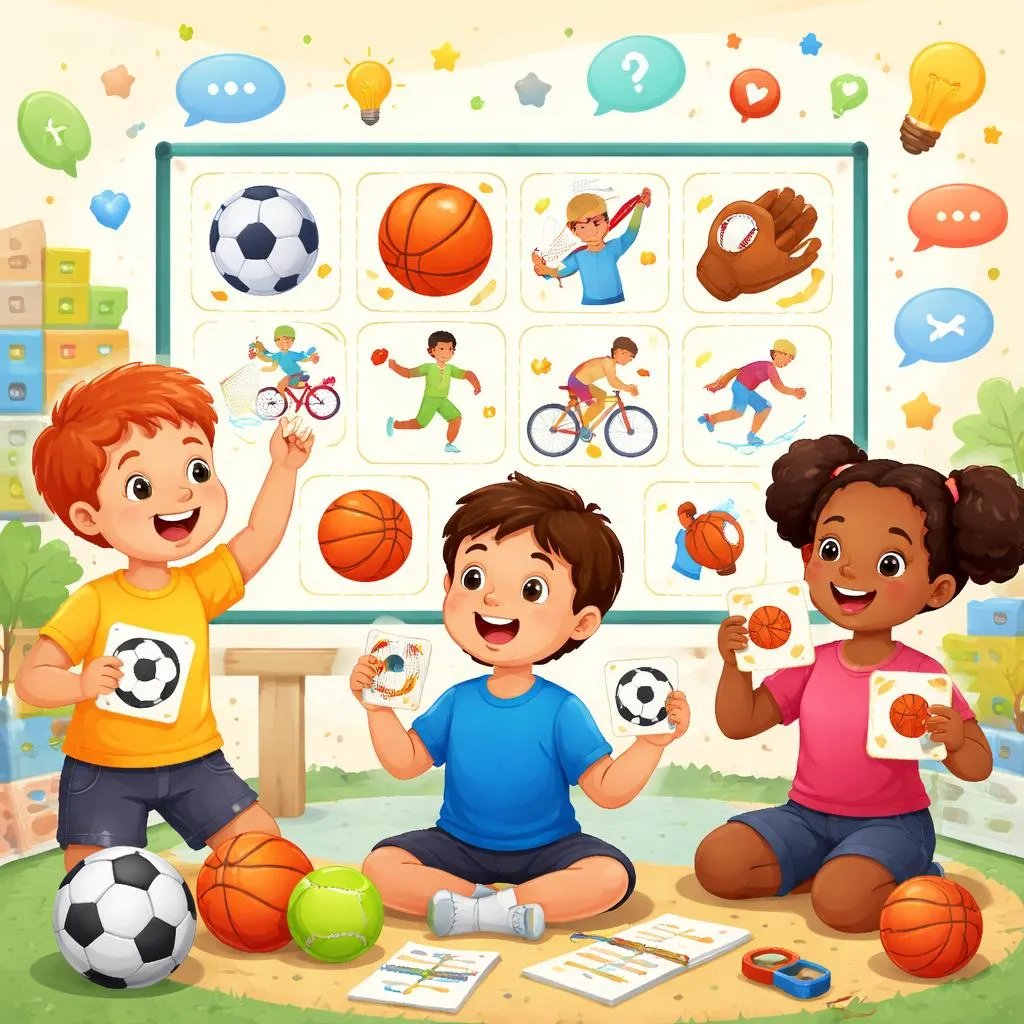

Hello, wonderful educators and guides! Today, we’re diving into a dynamic and universally engaging topic: sports. Creating and using a list of all sports is a fantastic way to build a child’s English vocabulary. This list of all sports does more than just name activities. It introduces action verbs, equipment names, and cultural concepts. Let’s explore how we can use this exciting theme to teach language in a fun, active, and memorable way.
What is a "List of All Sports"? A list of all sports is a categorized compilation of physical activities governed by a set of rules. For our teaching purposes, it is a practical vocabulary tool. We use it to introduce a wide range of nouns and the action verbs associated with them. The goal is not to memorize every sport in existence. The goal is to use this list of all sports as a framework. This framework helps learners expand their word bank, understand categories, and talk about interests and abilities. It connects language to play, fitness, and global events like the Olympics.
Meaning and explanation The meaning behind using a list of all sports in English lessons is multifaceted. First, each sport name is a concrete noun. Learners can often picture a soccer ball, a swimming pool, or a tennis racket. This visual connection aids memory. Second, each sport implies specific actions. The verb “play” often goes with ball sports like soccer or basketball. We use “do” for martial arts like judo or individual activities like gymnastics. We use “go” for activities ending in -ing, like swimming or skiing.
Third, sports vocabulary teaches about teamwork, competition, and health. We can discuss concepts like “team,” “player,” “win,” “lose,” and “practice.” This list of all sports provides context for full sentences and conversations. It moves beyond isolated words into the realm of ideas and culture.
Categories or lists Organizing a list of all sports into categories makes it manageable and logical for learners. A simple and effective categorization includes:
Team Sports: Soccer, Basketball, Baseball, Hockey, Volleyball. These sports use the verb “play.”
Individual Sports: Tennis, Golf, Swimming, Running, Gymnastics. These can use “play” (tennis, golf) or “do/go” (swimming, running).
Water Sports: Swimming, Diving, Surfing, Rowing, Water Polo. These often use “go” (go swimming) or “do” (do diving).
Winter Sports: Skiing, Snowboarding, Ice Skating, Ice Hockey, Bobsledding. These typically use “go” (go skiing).
Combat Sports: Boxing, Judo, Karate, Fencing, Wrestling. These usually use “do” (do judo).
Presenting the list of all sports in these groups helps learners see patterns. They learn which verb to use with which category, a key part of speaking correctly.
Daily life examples The best way to teach a list of all sports is to connect it to daily life. Use current events. During the Olympics or a World Cup, introduce relevant sports vocabulary. Ask, “What sports are on TV today?” Use school activities. “What sports do you play in PE class?” Discuss family hobbies. “My dad likes to go cycling. What does your family like?”
In the classroom, act out simple sports actions. Mime shooting a basketball, swinging a tennis racket, or swimming freestyle. Have learners guess the sport. This kinesthetic approach links the word directly to an action, making the vocabulary stick. Use pictures and videos to provide clear visual examples for less common sports.
Printable flashcards Create high-quality printable flashcards for the list of all sports. Each card should feature a clear, colorful image of the sport on one side. On the reverse, include the name of the sport and a simple sentence using the correct verb. For example:
Front: Picture of someone playing basketball.
Back: “Basketball. They play basketball.”
Make separate sets for different categories. You can also create “Equipment Flashcards” to match with the sports. A picture of a “racket” matches with “tennis” or “badminton.”
Learning activities or games “Sports Charades” is a classic and effective game. Write names from the list of all sports on cards. A learner picks a card and acts it out without speaking. The others must guess by asking, “Are you playing soccer?” or “Are you doing gymnastics?” This practices the vocabulary and the correct verb use in questions.
“Sports Bingo” is great for listening and recognition. Create bingo cards with pictures of different sports. Instead of calling out the sport’s name, describe it or act it out. “This is a team sport. You use a round ball and your feet.” Learners must identify “soccer” on their card. This builds comprehension skills.
“Category Sort” is a good tabletop activity. Provide a large selection of picture cards from the list of all sports and category labels (Team, Water, Winter). Learners work in groups to sort the sports into the correct categories. They then present their groupings, saying, “We put swimming in ‘Water Sports’ because you do it in the water.”
A “My Sports Profile” project encourages personal expression. Provide a worksheet where learners can draw or write about sports they “play,” “do,” or “go.” They can write sentences like, “I can play table tennis,” or “I want to try skiing.” This personalizes the vocabulary and encourages the use of “can” for ability and “want to” for ambition.
Using a list of all sports as a teaching tool taps into natural curiosity and energy. It provides a rich, thematic vein of vocabulary that supports sentence building, grammatical patterns like verb collocations, and conversational skills. When learners can confidently name sports, use the right verb, and talk about what they enjoy, they are using English to share a part of their identity and interests. This makes language learning meaningful and powerful. So, get active, have fun with the words, and let the world of sports bring dynamic energy to your English lessons.