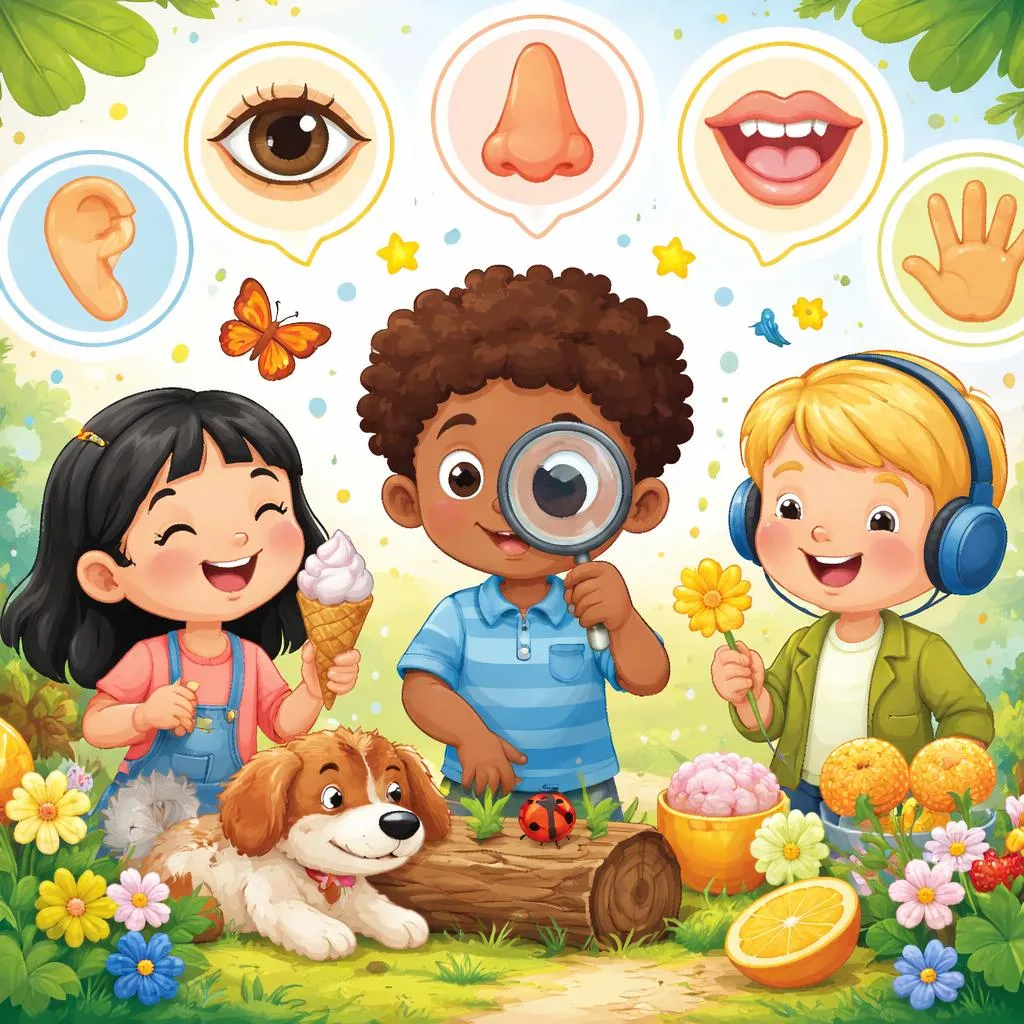

Welcome, curious learners and educators! Today, we are going to talk about a wonderful learning tool. We will explore the idea of "My Five Senses Book." This is not just any book. It is a personal, interactive journal that helps children discover the world. They use their own senses to fill its pages. This activity builds rich vocabulary and scientific understanding. Let us open our senses and our minds to this creative project.
What is a "My Five Senses Book"? A "My Five Senses Book" is a personalized learning project. It is usually a homemade or printable booklet. Each page focuses on one of the five senses: sight, hearing, smell, taste, and touch. The book provides prompts and space for children to record their sensory experiences. They might draw something they see. They could write a word for something they hear. They might glue a texture they feel. This book turns everyday observations into a concrete record of learning. It connects language directly to personal experience.
Meaning and Explanation The meaning of this project goes beyond making a book. It is about mindful exploration. The book acts as a guide. It encourages children to slow down and focus on one sense at a time. This builds attention and descriptive skills. For example, instead of just seeing a flower, they learn to describe its color, shape, and size. This process enriches their English vocabulary with adjectives and specific nouns. The book also teaches a basic scientific concept: we use different body parts to gather information about our world. Our eyes see, our ears hear, our nose smells, our tongue tastes, and our skin feels. Documenting this makes the concept clear and memorable.
Categories or Lists The book naturally organizes itself into five clear categories, one for each sense. Each section has its own key vocabulary and exploration focus.
-
Sight: This page is about what we see. Key words include: see, eyes, look, observe, color, shape, big, small, bright, dark. Children can draw pictures, use color swatches, or paste photographs.
-
Hearing: This page is about what we hear. Key words include: hear, ears, listen, sound, loud, quiet, high, low, noise, music. Recordings or drawings of sound sources work well here.
-
Smell: This page is about what we smell. Key words include: smell, nose, sniff, scent, stinky, sweet, fresh, fruity, spicy. Children can draw smells or attach cotton balls with safe scents like vanilla or lemon extract.
-
Taste: This page is about what we taste. Key words include: taste, tongue, flavor, sweet, sour, salty, bitter, yummy, yucky. This is great for drawing favorite foods or sorting food pictures by taste.
-
Touch: This page is about what we feel. Key words include: touch, feel, hands, skin, texture, soft, hard, rough, smooth, hot, cold. A texture collage with fabrics, sandpaper, and foil is perfect here.
Daily Life Examples We can find examples for our book everywhere. Let's think about a morning routine.
For sight, we can look out the window. We might see "a big, yellow sun" or "green trees." We draw this on our sight page.
For hearing, we might hear "the loud alarm clock" or "the quiet sound of rain." We write these words next to a drawing of an ear.
During breakfast, we use smell and taste. We smell "the sweet scent of strawberries." We taste "the salty butter on toast." These become entries.
When getting dressed, we use touch. Our "soft sweater" or "rough jeans" provide perfect examples for the touch page. A walk in the park offers endless sensory discoveries for the book.
Printable Flashcards Flashcards can prepare us for making our book. Create a set of five large cards. Each card features a picture of the sense organ and its name.
The "Sight" card shows a large, friendly eye and the word "SEE." On the back, list helper words: look, observe, color.
The "Hearing" card shows an ear and the word "HEAR." The back has words like listen, sound, loud.
Do the same for "SMELL" (nose), "TASTE" (tongue), and "TOUCH" (hand). Use these cards to play sorting games before filling the book. Show a picture of a bell. Ask, "Which sense do we use?" The child holds up the "Hearing" card. This builds strong associations.
Learning Activities or Games Here are some activities to make your "My Five Senses Book" project lively and full of discovery.
-
Sensory Scavenger Hunt: Create a list for a walk or a room. The list has five items: "Find something smooth (touch)," "Find something red (sight)," "Find something that makes a crunchy sound (hearing)," etc. Children draw or describe their finds in their book.
-
Mystery Bag Touch Game: Place several objects with different textures inside a bag. A child reaches in, uses their sense of touch, and describes it. "I feel something hard and bumpy." They guess what it is before pulling it out to confirm with sight. This object can then go in the book.
-
Sound Matching: Record five distinct, common sounds (a doorbell, water running, a dog barking). Number them. Play them one by one. Have children draw what they think made the sound in their hearing section. This sharpens listening skills.
-
Taste Test (Safe Version): Use pictures or very familiar, safe foods like apple slices, crackers, and dark chocolate. Have children describe the taste (sweet, salty, bitter) and draw the food on their taste page. Always check for allergies first.
Creating a "My Five Senses Book" is a journey of attention. It teaches that language is a tool for describing real experiences. Each page filled is a step toward richer expression and deeper observation. The book becomes a treasured record of a child's unique perspective on the world. Keep exploring, describing, and recording. Your book will show just how amazing and detailed our world is when we truly stop to sense it.