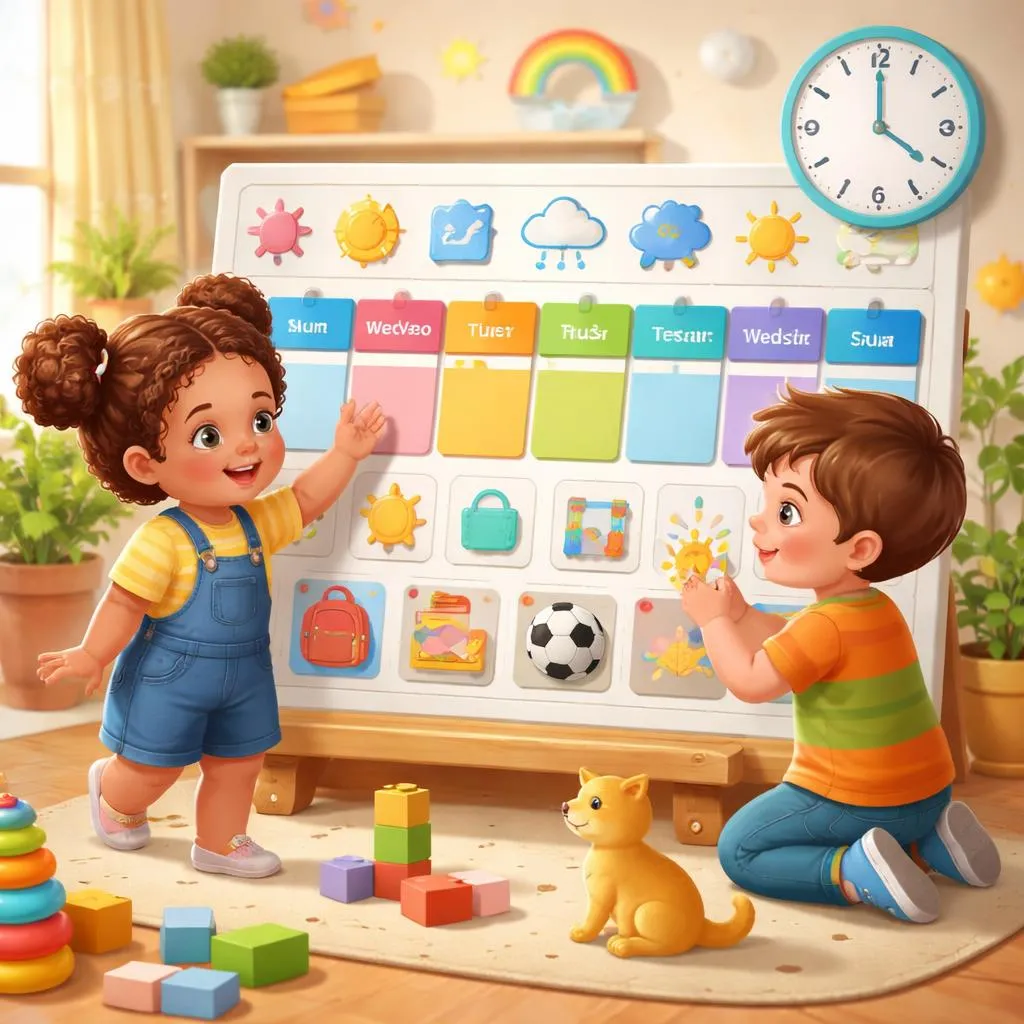

Hello, wonderful teachers and parents! Today brings an exciting opportunity to explore a fundamental learning tool. Understanding time presents challenges for young minds. Days of the week can feel abstract and confusing. A "weekday calendar" bridges this gap beautifully. It makes time visible and tangible. Children can see the sequence of days. They can touch and move the pieces. This hands-on approach transforms a difficult concept into something concrete and manageable. Let us discover together how this simple tool works magic in the classroom.
What Is a Weekday Calendar? A "weekday calendar" is a special learning tool designed for young children. It focuses specifically on the five weekdays. Monday through Friday take center stage. Some versions include Saturday and Sunday as well. The purpose remains clear and simple. Children learn the names and order of the days.
These calendars come in many forms. Some use magnetic pieces that stick to a board. Others feature pockets where cards slide in and out. Felt boards with soft pieces work wonderfully for small hands. Digital versions exist for tablets and computers. The format matters less than the function. Each type helps children visualize the passage of time.
What makes a "weekday calendar" special is its interactive nature. Children do not just look at the days. They actively participate. They move a marker to show today. They change the day each morning. They see yesterday behind them and tomorrow ahead. This physical interaction builds understanding in a way that staring at a printed calendar cannot match.
Many weekday calendars include additional features. Weather symbols let children record daily conditions. Activity cards show what happens each day. Sports practice, music lessons, and library days become visible. Emotions faces let children express how they feel. These additions make the calendar a complete morning meeting tool.
Meaning and Explanation of Weekday Concepts Teaching the weekdays requires helping children understand several connected ideas. The names themselves carry meaning. The order creates a sequence. The cycle repeats endlessly. Each concept builds upon the last.
The names Monday through Friday each have origins. Monday was the moon's day in ancient times. Tuesday came from Tyr, a Norse god. Wednesday honored Odin, also called Woden. Thursday belonged to Thor, the thunder god. Friday came from Frigg, Odin's wife. While children do not need this history, knowing it adds richness for curious minds.
The order of days follows a fixed pattern. Monday always comes after Sunday. Tuesday always follows Monday. This never changes. A "weekday calendar" makes this clear through its physical arrangement. Days appear in a line from left to right. Children see the sequence with their own eyes. They internalize that Wednesday cannot jump ahead of Tuesday.
The cycle concept proves trickier for young learners. After Friday comes Saturday and Sunday. Then Monday returns. The week repeats forever. A linear calendar can confuse this point. Children may think the week ends on Friday. A cyclical representation helps. Some weekday calendars arrange days in a circle or loop. This shows the never-ending pattern clearly.
Time vocabulary grows alongside calendar use. Yesterday, today, and tomorrow gain meaning through daily practice. Last Tuesday and next Friday become understandable concepts. The calendar provides a reference point for all these time words. Children develop a rich time vocabulary through consistent use.
Categories of Weekday Calendar Activities Weekday calendars support many different learning categories. Each category addresses a different aspect of time understanding. Together, they build complete comprehension.
The first category involves daily identification. Each morning, children identify today's day. They find it on the calendar. They move a marker to show this is today. This simple act grounds them in the present moment. It creates a daily ritual that builds routine and security.
The second category explores sequence and order. Activities in this group ask about what comes next. After Monday comes which day? What day follows Wednesday? What day comes before Friday? Children learn to move forward and backward through the week. They build mental flexibility with time concepts.
The third category connects days to events. Music class happens on Tuesday. Library day falls on Thursday. Grandma visits every Sunday. Children learn that days carry meaning beyond their names. Specific activities belong to specific days. This makes learning personal and relevant.
The fourth category compares and contrasts weekdays. How are Monday and Friday different? Why does Monday feel different from Saturday? Children discuss these questions. They develop understanding of the weekday versus weekend distinction. School days and home days become meaningful categories.
The fifth category extends to months and years. Once weekdays feel solid, children can explore longer time periods. Which month comes after September? How many days in a week? How many weeks in a month? The weekday calendar provides the foundation for all this extended learning.
Daily Life Examples Using a Weekday Calendar Connecting the calendar to real life makes learning stick. Children understand best when they see personal relevance. Here are ways to link the "weekday calendar" to daily experiences.
Monday morning brings the start of the school week. Children return after the weekend break. The calendar shows Monday clearly. Discuss what happens on Mondays. Perhaps there is show and tell. Maybe music class happens Monday afternoon. Children place a special music card on Monday's spot. This connects the abstract day name to a concrete activity they love.
Tuesday might bring library day. Children choose new books to borrow. The calendar reminds them to bring their library bags. They see Tuesday marked with a book symbol. They learn to anticipate this weekly event. The calendar builds excitement and preparedness.
Wednesday falls in the middle of the week. Some call it "hump day." Children may notice feeling tired. The calendar shows they are halfway through school days. Only two more weekdays until the weekend. This builds perspective and patience.
Thursday brings gymnastics or swimming lessons. Children pack special bags the night before. The calendar reminds them what Thursday means. They connect the day name with the after-school activity. Parents appreciate this visual reminder too.
Friday brings celebration. The week of learning finishes. Children feel proud of their accomplishments. The calendar shows Friday as the last weekday. Tomorrow brings Saturday and weekend fun. Children move the marker one last time before the weekend break.
Printable Flashcards for Weekday Learning Flashcards provide focused practice with day names and order. Printable versions offer flexibility for teachers and parents. Here are effective ways to use them.
Basic day name flashcards show each word clearly. Monday appears on its own card. Tuesday stands alone. Children practice reading the names in order. They mix them up and put them back in sequence. This builds recognition and recall.
Picture flashcards add visual support. Each day card includes a related image. Monday might show a child going to school. Wednesday could show a music class. Friday might show a party hat. These visual cues help children remember which day is which. They also support discussion about weekly activities.
Sequence cards focus on order relationships. Cards show phrases like "the day after Monday" or "the day before Friday." Children find the matching day card. This builds understanding of relative time. It moves beyond simple naming to true comprehension.
Abbreviation flashcards introduce shortened forms. Mon, Tue, Wed, Thu, Fri appear on cards. Children match them to full word cards. They learn to recognize days in both formats. This prepares them for real-world calendars and schedules.
Activity cards combine with day cards for matching games. Cards show swimming, music, library, and other activities. Children match each activity to the correct day. This connects abstract time words to personal experience. Learning becomes meaningful and memorable.
Learning Activities and Games with the Weekday Calendar Games turn calendar practice into joyful play. These activities work well with any "weekday calendar" format. Children learn without even realizing they are working.
Day Detective builds observation skills. Each morning, one child becomes the detective. This child examines the calendar. They announce what day it is today. They identify yesterday and tomorrow. They check if anyone has a special activity today. This simple routine builds confidence and leadership.
What's Missing? challenges memory and sequence. Arrange all day cards in order. Children close their eyes. Remove one day card. Children open their eyes and identify the missing day. Increase difficulty by removing two cards. This game works well for transitions or waiting times.
Day Relay Race gets children moving. Place day cards at one end of the room. Line children up at the other end. Call out a day name. The first child in line runs to find that card. They bring it back to the team. The next child goes for another day. Continue until all days are collected in order. This builds listening skills and physical coordination.
Hopscotch Days combines movement with sequence. Draw a hopscotch grid outside. Write day names in the squares instead of numbers. Children hop through the week in order. They call out each day as they land on it. This kinesthetic learning supports different learning styles.
Weekly Weather Tracking extends calendar use. Each day, check the weather outside. Place a weather symbol on that day's spot. At week's end, review the weather pattern. How many sunny days? How many rainy days? Which day was coldest? This adds science learning to calendar practice.
Special Day Planning involves children in decision making. Look at the week ahead. Discuss any special events. Birthdays, visitors, or field trips deserve special markers. Children help place these markers on the correct days. They feel involved and informed. They learn to anticipate and prepare for changes in routine.
The "weekday calendar" serves as so much more than a teaching tool. It becomes a central part of classroom life. Children check it each morning with anticipation. They take pride in moving the marker to today. They remind each other about upcoming events. The calendar builds community along with time understanding. Through daily use, children internalize the rhythm of the week. Monday through Friday become trusted friends rather than confusing words. Saturday and Sunday gain meaning as the special weekend days. This foundation supports all future time learning. Months, seasons, and years will build upon this solid base. The simple weekday calendar opens the door to understanding how our world organizes time.