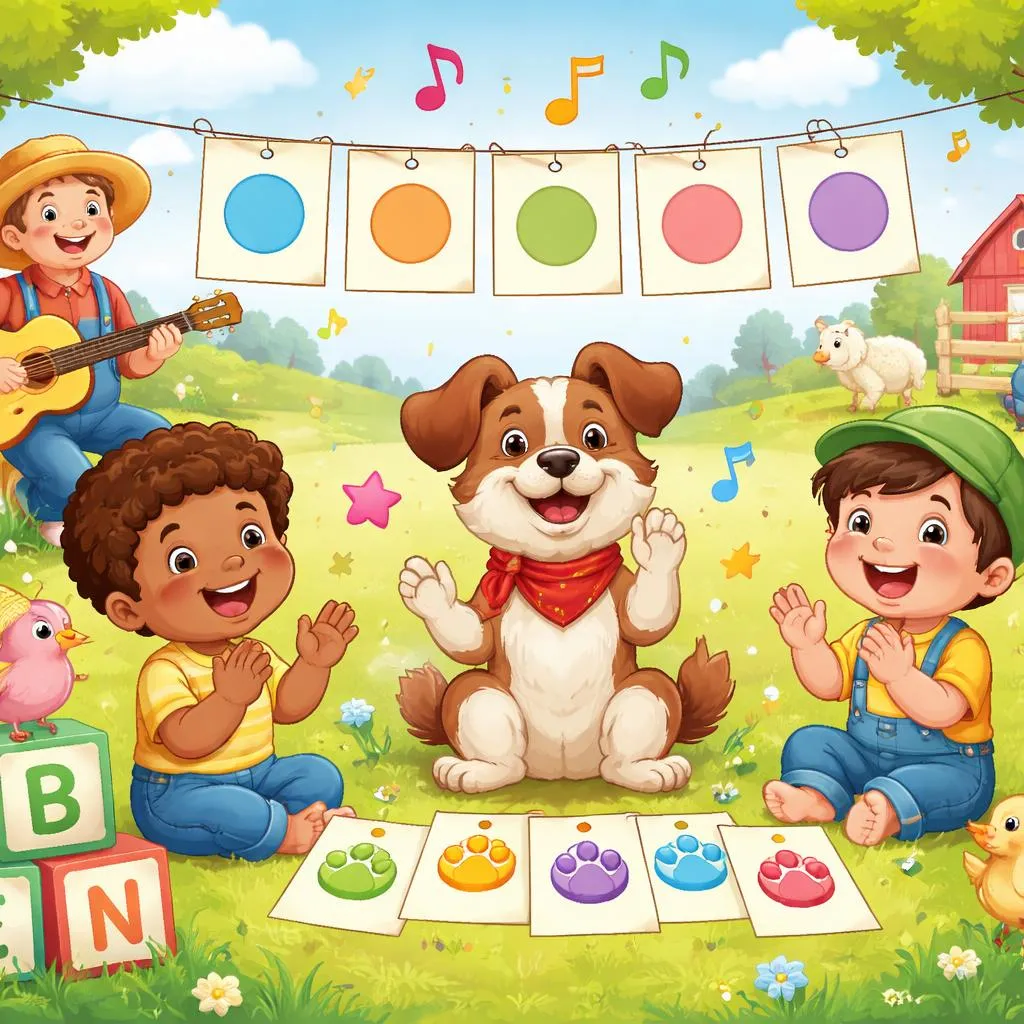

Welcome, everyone! Today, we are going to have a wonderful time with a classic and joyful song. We will explore the "Bingo was his name" nursery rhymes. This is more than just a fun tune. It is a powerful tool for learning English. Through its repetitive and catchy lyrics, we can build spelling skills, learn about animals, and practice rhythm. Let us clap our hands and dive into this musical learning adventure together!
What is the rhyme? The rhyme we are learning today is a very popular children's song. It tells a simple, cheerful story about a farmer and his dog. The dog's name is Bingo. The song is known for its spelling focus and cumulative, clapping rhythm. Each verse repeats the story but removes one letter from the dog's name, replacing it with a clap. This structure makes it incredibly engaging and participatory. It is a call-and-response song, perfect for group settings. Children love the predictability and the fun of clapping along as letters disappear.
The lyrics of nursery rhymes Let's look at the traditional lyrics. Knowing the words helps us understand the song's pattern. There was a farmer had a dog, And Bingo was his name-o. B-I-N-G-O, B-I-N-G-O, B-I-N-G-O, And Bingo was his name-o.
This verse repeats. However, with each new verse, we replace the first letter in the spelling chant with a clap. The second verse goes: (clap)-I-N-G-O. The third verse: (clap)-(clap)-N-G-O, and so on. This continues until we are clapping for all five letters. Finally, we sing the full name again. This playful structure is the heart of the rhyme's educational magic.
Vocabulary learning This rhyme introduces and reinforces several useful English words. The key vocabulary is clear and thematic.
First, we have farmer. A farmer is a person who works on a farm, growing food or raising animals. We can talk about other farm animals too.
Next, we have dog. This is a common pet and farm animal. We can discuss different types of dogs.
The most important word is name. A name is what we call someone or something. This leads to a great discussion about our own names.
The core of the song is spelling the name Bingo. This introduces the five letters: B, I, N, G, O. We learn not just the letter names, but their order to form a word. This is a foundational reading skill.
Phonics points This rhyme is excellent for teaching early phonics, or the connection between letters and sounds. We focus on letter names and the sounds they represent.
The song clearly enunciates each letter name: Bee, Eye, En, Gee, Oh. This helps children recognize and recall the alphabet.
We can also explore the letter sounds. For example, the letter B makes the /b/ sound, like in ball or boy. The letter O makes the /oʊ/ sound in Bingo, which is a long 'O' sound.
The repetitive spelling breaks the word "Bingo" into its individual phonemic components. This practice of segmenting a word into sounds is a crucial pre-reading skill. Singing it makes this skill development feel like play.
Grammar patterns Even a simple rhyme shows us basic grammar. The main sentence structure here is: "There was [a noun]." This is a common way to start a story in the past tense.
We see the past tense verb was used throughout: "There was a farmer," "Bingo was his name." This exposes learners to this important verb form in a natural context.
The phrase "his name-o" uses a possessive pronoun his. It shows ownership. The dog belongs to the farmer, so it is his dog, and his name is Bingo. We can compare this with "her name" or "my name."
The chant "B-I-N-G-O" is a great example of listing items in sequence, which is a foundational language pattern.
Learning activities Here are some engaging activities to extend the learning from this rhyme.
-
Name Spelling Chant: Use the tune and pattern of Bingo to spell other short names or words. Try spelling "C-A-T" or "M-O-M." This reinforces the concept that words are made of letters.
-
Farm Animal Parade: After singing about the farmer's dog, create a parade of other farm animals. Give each animal a 3-5 letter name. Spell and clap for "C-O-W" or "P-I-G." This combines vocabulary with spelling.
-
Letter Hunt: Hide large printed letters B, I, N, G, O around the room. As you sing, have learners find the correct letter and hold it up when it is sung. This connects the auditory letter name with its visual symbol.
-
"Who Has a Pet?" Circle Game: Sit in a circle. Sing "There was a child had a pet, and [Spot] was its name-o!" Let each child have a turn to name an imaginary or real pet. The group then spells the pet's name if it is short enough, or just claps the syllables.
Printable materials Printable resources can make the learning tangible and lasting. Consider creating a "Bingo Song Pack."
Design a story sequence sheet. It has four boxes to draw: 1) The farmer, 2) The dog, 3) The letters B-I-N-G-O, 4) A hand clapping. This helps with story recall and narrative skills.
Create letter cards. Make large, colorful cards for B, I, N, G, O. On the back, include a picture of something with that beginning sound (B for Ball, I for Igloo, etc.). Children can arrange them in order as they sing.
A coloring page of a happy farm dog with its name written in dotted letters for tracing is always a favorite. It builds fine motor skills and letter recognition.
Provide a song lyric sheet with the words and clear markers showing where the claps go in each verse. This supports early reading as children follow along.
Educational games Let's turn this rhyme into structured play with clear learning objectives.
-
Musical Letters: Place the five letter cards (B,I,N,G,O) on the floor. Play the song or sing it. When the music stops, call out a letter sound (e.g., "/b/"). The child must stand on the letter that makes that sound. This game connects phonics to physical movement.
-
Bingo Spelling Bee: Create simple picture cards of CVC (consonant-vowel-consonant) words like 'cat', 'dog', 'sun'. Hold up a picture. The first child to correctly say and spell the word gets a point. For an extra challenge, they can clap the spelling like in the song.
-
Missing Letter Clap Challenge: This is the direct game from the song. Write BINGO on a board. Sing the first verse. Erase or cover the 'B'. Sing again, clapping for the missing letter. Continue erasing letters one by one. This develops memory, sequencing, and auditory discrimination.
Singing "Bingo was his name" is a joyful experience that builds community. The rhythm, the clapping, and the shared focus create a positive learning environment. Each clap represents a sound in a word, a beat in a rhythm, and a step towards literacy. Keep singing, clapping, and spelling. You will find that learning English is full of rhythm, fun, and friendship, just like our good friend Bingo.