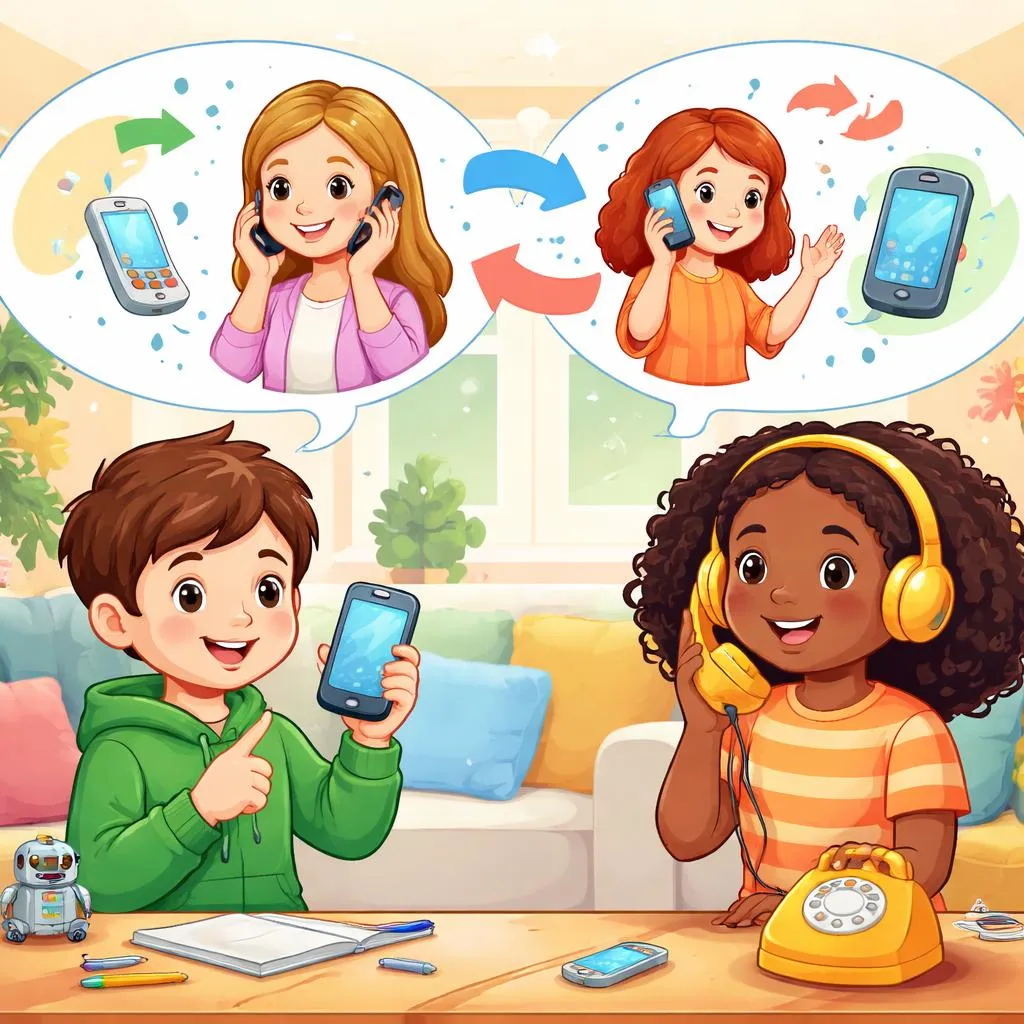

Children hear many communication words every day. Some expressions sound almost the same, but they carry small differences in tone and usage. The phrases “call to” and “ring to” often confuse English learners because both connect to telephones and contacting people.
A child may hear, “I will call my friend after school.” Later, someone else may say, “Please ring your grandma tonight.” Both sentences talk about making contact by phone, so the meanings seem very close.
Still, English speakers choose these expressions differently depending on place, tone, and speaking style. Learning these differences helps children sound more natural and understand conversations more clearly.
Kids also meet these expressions in cartoons, storybooks, school activities, and family conversations. Understanding them step by step makes communication easier and more enjoyable.
What Do These Expressions Mean?
The phrase “call to” usually means contacting someone by phone. People use it when they want to speak with another person through a telephone or mobile device.
For children, a simple explanation is easy: when you call someone, you use a phone to talk to them.
The phrase “ring to” has a very similar meaning. It also means contacting someone by phone. In British English especially, people often say “ring” instead of “call.”
A child-friendly explanation could be this: phones make a ringing sound, so “ring” became another word for calling someone.
The two expressions seem similar because both involve phones and communication. Both expressions also describe reaching another person through a device.
Children may wonder why English needs two expressions for almost the same action. The answer is simple: languages often keep older words while also creating newer or more common ones.
In many countries, “call” sounds more international and modern. “Ring” sounds more traditional or more common in British-style English.
Both expressions remain correct in many situations.
What’s the Difference?
The biggest difference between “call to” and “ring to” is style and regional preference.
“Call” is more common in American English and international English learning materials. Children hear it often in movies, apps, and classrooms.
“Ring” appears more often in British English and casual conversation.
One expression feels more global. The other feels more regional.
For example:
“I will call my teacher.”
“I will ring my teacher.”
Both sentences work, but the second sounds more British.
Another difference involves tone.
“Call” sometimes sounds slightly more formal or neutral. Adults often use it in workplaces, schools, or official communication.
“Ring” sounds a little more friendly and conversational.
For example:
“Please call the office tomorrow.”
“Please ring me later.”
The second sentence feels warmer and more casual.
Children should also know that “ring” originally connected to the ringing sound of older telephones. Even modern smartphones rarely ring loudly now, but the expression still exists.
Language often keeps older habits even after technology changes.
Another small difference appears in grammar patterns.
People commonly say:
call someone
ring someone
The word “to” sometimes appears in longer sentence structures, but native speakers often skip it in everyday speech.
Children mainly need to understand the meaning difference and usage style rather than difficult grammar rules.
When Do We Use Each One?
People use “call” in many daily situations.
Children may call friends after homework. Parents may call schools. Teachers may call families during important events.
This expression appears often in:
school communication
emergency situations
business conversations
customer service
international English
A parent might say:
“I need to call the doctor this afternoon.”
That sentence sounds natural in many English-speaking countries.
People use “ring” mostly in casual speaking situations, especially in British English.
Friends may ring each other after school. Family members may ring grandparents on weekends.
A child may hear:
“I will ring my cousin tonight.”
That sentence sounds warm and conversational.
Children should also understand that context matters.
In American English, “call” appears far more often. In British English, both expressions appear naturally.
Modern TV shows and online videos expose children to many English styles. Learning both expressions helps them understand more speakers around the world.
At school, teachers often prefer “call” because it feels clearer for international learners.
At home, families may use either expression depending on their background or habits.
Example Sentences for Kids
Sentences Using “Call To”
I will call my friend after dinner.
Dad called the school this morning.
Please call me when you arrive home.
These examples show normal phone communication.
Sentences Using “Ring To”
Grandma will ring us tonight.
Can you ring your cousin tomorrow?
My brother rang his friend after soccer practice.
These examples show casual phone conversations.
Reading short examples helps children notice the natural feeling of each expression.
Simple daily situations also make vocabulary easier to remember.
Common Mistakes to Avoid
Many learners believe “call” and “ring” work differently in meaning. Usually, they mean almost the same thing.
Still, some mistakes happen often.
Incorrect:
“I will ring to my teacher.”
Correct:
“I will ring my teacher.”
The verb usually connects directly to the person without extra words.
Another common mistake appears with “call.”
Incorrect:
“She called to her friend on the phone.”
Correct:
“She called her friend on the phone.”
Children sometimes add unnecessary words because they translate directly from another language.
Another confusion happens when learners think “ring” only means a sound.
Yes, “ring” can describe sound:
“The bell rang loudly.”
But it can also mean making a phone call.
Context helps listeners understand the meaning.
Some children also believe “ring” sounds old-fashioned everywhere. In reality, millions of English speakers still use it naturally every day.
Learners should not worry too much about choosing perfectly. Both expressions communicate the idea clearly. The main goal is understanding natural usage patterns.
Easy Memory Tips
A simple memory trick can help children remember the difference.
Think about the words this way:
“Call” connects to communication.
“Ring” connects to ringing sounds.
Another fun trick uses pictures.
Imagine:
A smartphone screen for “call.”
A ringing bell for “ring.”
Children can also remember this:
“Call” feels more worldwide.
“Ring” feels more British.
Watching cartoons or shows from different countries can help children notice this naturally.
Parents can create small practice games too. One person pretends to use a phone, and the child chooses whether to say “call” or “ring.”
Learning becomes stronger when movement, sound, and imagination work together.
Quick Practice Time
Exercise 1: Choose the Correct Word
Mom will ______ Grandma after dinner.
a) call
b) ring
Answer: Both are correct.
My teacher asked Dad to ______ the school office.
a) call
b) ring
Answer: Both are correct, but “call” sounds more common in international English.
Exercise 2: Fill in the Blank
I will ______ my friend tonight.
Answer: call / ring
Please ______ me when you get home.
Answer: call / ring
Exercise 3: True or False
“Ring” can mean making a phone call.
Answer: True
“Call” only works in American English.
Answer: False
Small exercises help children feel comfortable with real communication vocabulary.
Why These Small Differences Matter
Tiny vocabulary differences may not seem important at first. Still, they help children understand natural English more easily.
When learners hear both “call” and “ring,” they become better listeners. They also gain confidence when watching videos, reading books, or speaking with people from different countries.
Language learning becomes smoother when children recognize patterns instead of memorizing long grammar rules.
These expressions also show how English changes across regions. Different countries may prefer different words even when meanings stay similar.
That idea helps children become flexible and open-minded language learners.
Building Confidence Through Everyday Communication
Children learn communication vocabulary best through real experiences.
Parents can involve children in simple daily activities. A child can help call a family member or listen while an adult makes a phone conversation.
Storybooks and cartoons also provide useful examples. Characters often say “call me later” or “ring me tomorrow.”
Repeated exposure helps expressions feel natural over time.
Children do not need to master every regional difference immediately. Understanding the general meaning is the most important step.
As learners hear more English, they naturally notice tone, style, and regional preferences.
“Call to” usually sounds more international and neutral, while “ring to” often sounds more casual and British. Knowing this small difference helps children communicate with greater confidence and understanding.