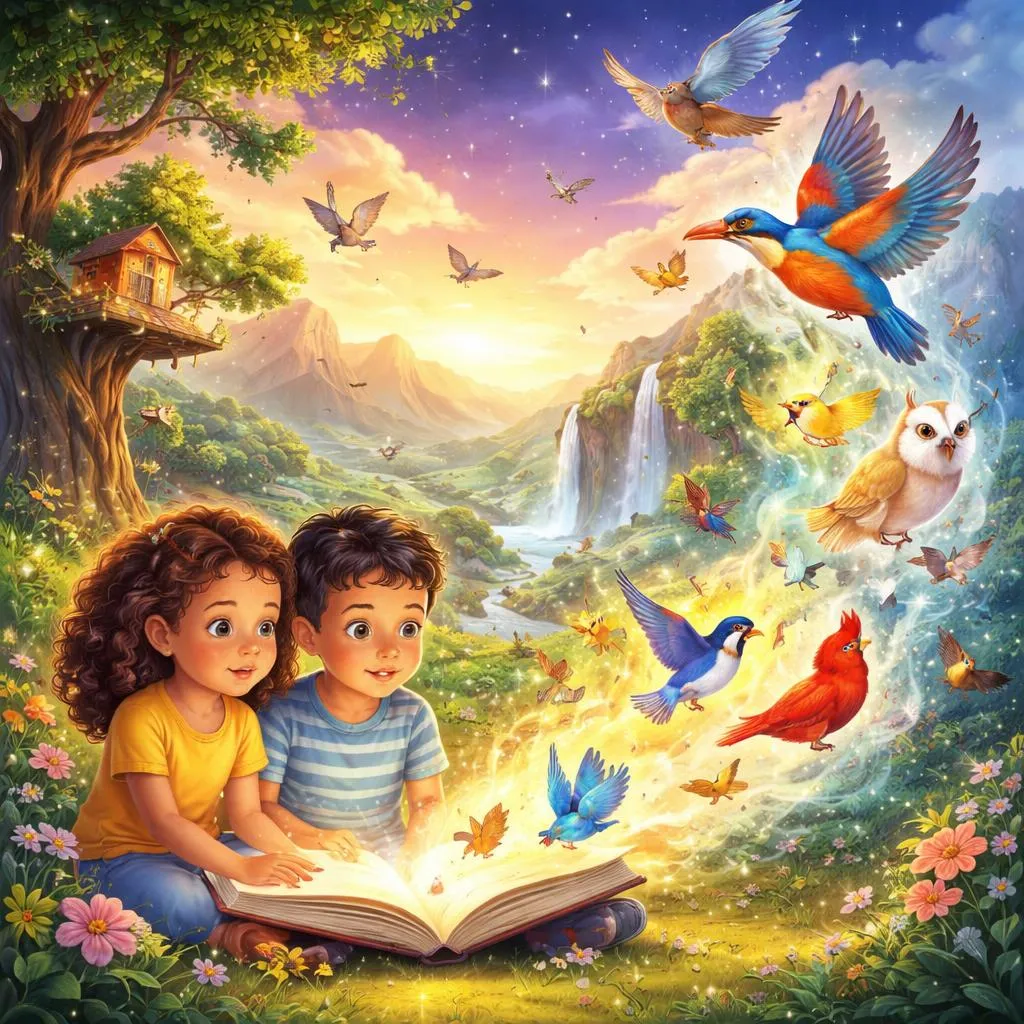

Birds appear in nearly every corner of our world. Their songs greet us in the morning. Their nests appear in trees outside windows. This familiarity makes children's stories about birds a perfect bridge between everyday life and language learning. These tales take something recognizable and add layers of adventure, emotion, and discovery. This article explores effective ways to use these stories in teaching.
What Makes Bird Stories Special for Language Learning?
A children's story about birds typically features feathered characters in leading roles. Some stories present realistic birds with natural behaviors. A robin searching for worms. A sparrow learning to fly. Other tales give birds human qualities. They might wear tiny hats or live in cozy nests with furniture.
Both approaches offer value for language development. Realistic stories introduce factual vocabulary about habitats, behaviors, and physical features. Imaginative tales open doors to creative language use. A bluebird who delivers letters. A penguin who dreams of flying. The variety ensures something for every learner's interest.
Birds appear in stories from every culture. This provides wonderful exposure to diverse perspectives. A Japanese tale about a crane differs greatly from a European story about a nightingale. Through these narratives, learners encounter not just language but also cultural values and traditions.
Vocabulary Learning Through Bird Stories
Bird stories naturally introduce rich vocabulary connected to the natural world. Words for body parts appear frequently. Feather, beak, wing, claw, and tail become meaningful when attached to a character children care about. A story about a parrot losing a feather creates emotional connection to that word.
Action verbs come alive in these narratives. Birds hop, soar, flap, swoop, and glide. Each verb paints a different picture of movement. Reading about a hummingbird hovering above a flower makes that word unforgettable. The visual image from the story supports the meaning.
Bird sounds provide wonderful onomatopoeia practice. Chirp, tweet, caw, hoot, and quack appear throughout these tales. These words are fun to say and easy to remember. They add a playful element to vocabulary building. Encourage learners to make the sounds as they encounter them.
Children's stories about birds also introduce habitat vocabulary. Nest, tree, pond, sky, and roof appear regularly. These words connect to the real world outside the classroom window. This connection makes transfer to daily life natural and immediate.
Simple Phonics Points in Bird Narratives
Bird stories offer excellent material for phonics work. The names of birds often contain clear sound patterns. Robin begins with the "r" sound. Crow features the "cr" blend. Duck starts with "du" and ends with the "ck" pattern. These names serve as memorable anchor words for specific sounds.
Many bird stories feature rhyming text. This is especially common in books for younger learners. "The little blue jay flew away. He wanted somewhere safe to play." Rhyming supports phonemic awareness and makes text more predictable. Learners can guess upcoming words based on sound patterns.
Alliteration appears frequently in descriptive passages. "The proud peacock paraded past." "The wise woodpecker watched." These patterns draw attention to initial sounds. They make the text more memorable and enjoyable to read aloud.
Exploring Grammar Through Bird Adventures
Grammar concepts become clearer when placed within engaging narratives. Bird stories provide natural contexts for observing how language works. The key is to guide observation rather than present rules.
Verb tenses appear clearly in these tales. Many stories use past tense for narration. "The eagle built her nest on the highest cliff. She laid three eggs there." The sequence of events makes the past tense meaningful. Dialogue might shift to present tense. "I must keep my eggs warm," she said. This contrast helps learners understand how tense signals meaning.
Prepositions of place are very easy to teach with bird stories. "The owl sat on the branch." "The duck swam under the water." "The bird flew over the house." Each preposition connects to a clear mental image from the story. The visual support makes these small words concrete.
Comparatives appear naturally when stories describe multiple birds. "The eagle was larger than the hawk. The hummingbird was smaller than the sparrow." These comparisons build understanding of descriptive language and measurement words.
Learning Activities to Bring Bird Stories to Life
Active engagement helps language take root. These activities move learning from listening to doing, all within the bird story theme.
Bird Observation Connection After reading a story, spend time watching real birds if possible. A classroom window works well for this. Guide learners to notice behaviors from the story. "Remember how the robin in our story hopped? Look at that sparrow outside." This connection makes story language part of observing the real world.
Build a Nest Description Activity Ask learners to imagine they are a bird building a nest. Guide them with questions. What materials will you use? Where will you build? What will keep the nest safe? This activity builds descriptive vocabulary and encourages creative thinking. Each answer adds new words to the description.
Bird Movement Game Invite learners to move like birds from different stories. "Show me how the flamingo stands." "Show me how the hummingbird moves." "Show me how the penguin walks." This physical connection to language supports memory and makes learning active and enjoyable.
Character Comparison Chart Create a simple chart comparing two bird characters from different stories. What did they look like? Where did they live? What problems did they face? How did they solve them? This builds comparative language and comprehension skills.
Educational Games Inspired by Bird Tales
Games transform language practice into play. These bird-themed games provide repetition without boredom.
Bird Matching Game Create cards with bird pictures on some and descriptive phrases on others. "The bird with a red chest." "The bird that says 'who'." "The bird that cannot fly." Learners match descriptions to pictures. This builds vocabulary and comprehension skills.
Bird Sound Bingo Create bingo cards with pictures of birds from stories. Play recordings of bird calls or make the sounds yourself. Learners cover the bird that makes that sound. This builds listening skills and connects language to real-world sounds.
Story Sequencing Puzzle Take key events from a bird story and write each on a separate card. Mix them up. Learners work together to put events in correct order. This builds narrative comprehension and encourages discussion about story structure.
Printable Materials for Extended Bird Learning
Tangible materials support continued exploration of bird themes. These resources work well for independent practice or home connection.
Bird Vocabulary Cards Create cards with bird vocabulary words on one side and simple definitions or pictures on the other. Include words like feather, beak, nest, wing, and migrate. Use them for matching games or quick reviews.
My Bird Drawing Page Provide a page with space for drawing and simple prompts. "Draw a bird from our story. Label its body parts. Write one thing it did." This combines creative expression with beginning writing skills.
Bird Watching Journal Create a simple journal page with spaces for date, location, bird description, and behavior notes. Learners can use this when observing real birds. This connects story learning to real-world observation.
Story Map Template Provide a simple template with spaces for characters, setting, problem, and solution. Learners fill this in after reading a bird story. This builds comprehension of narrative structure.
The lasting value of using children's stories about birds lies in their connection to the observable world. After exploring these tales, learners walk outside and see the same creatures in trees and skies. The language from stories becomes part of describing real experiences. A sparrow bathing in a puddle reminds them of a story character. A flock of geese flying south brings migration vocabulary to life. Each story read together builds not just language skills but also a deeper awareness of the natural world waiting outside the classroom door. This connection between story and reality transforms language from something studied into something lived.