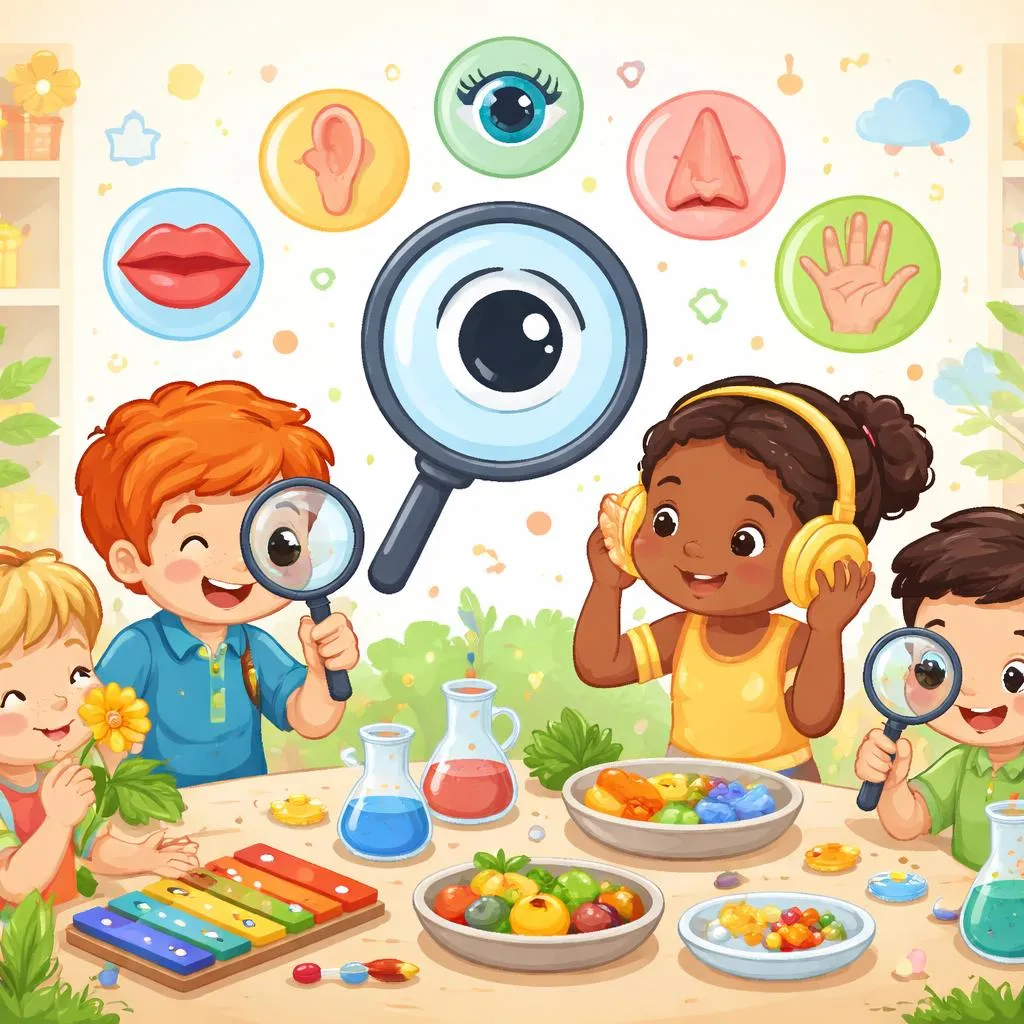

What is five senses activities?
“five senses activities” refer to classroom tasks that teach sight, hearing, smell, taste, and touch. These activities integrate science content with English language learning.
In early education, sensory exploration supports cognitive development. Language learning becomes meaningful when linked to real experiences.
A teacher can use five senses activities in science, English, and daily routines. This approach connects language with real-world perception.
Sensory activities also support curiosity and inquiry. They encourage learners to describe the world in English.
Meaning and explanation
The five senses are basic ways humans understand the environment. They include sight, hearing, smell, taste, and touch.
Sight uses the eyes to see colors and shapes. Hearing uses the ears to hear sounds.
Smell uses the nose to detect scents. Taste uses the tongue to detect flavors.
Touch uses the skin to feel textures and temperature. Teachers can link each sense to real classroom objects.
Language instruction becomes experiential and concrete. This supports comprehension and long-term memory.
Categories or lists
Five senses activities can focus on sensory categories. Sight activities include observing colors, shapes, and pictures.
Hearing activities include listening to music, sounds, and stories. Smell activities include identifying scents like flowers or food.
Taste activities include tasting sweet, sour, salty, and bitter foods. Touch activities include feeling soft, rough, hot, and cold objects.
Teachers can organize activities by sense or by theme. This structure supports systematic learning and curriculum alignment.
Each category introduces descriptive adjectives. Adjectives expand expressive language skills.
Daily life examples
Five senses appear in daily routines. For example, seeing a rainbow uses sight.
Listening to a song uses hearing. Smelling soup uses the sense of smell.
Tasting fruit uses taste. Touching ice uses touch.
Teachers can connect senses to classroom routines. For example, “We hear the bell.”
Daily examples make vocabulary meaningful. They link English words to real experiences.
Simple sentence models support communication. For example, “I see a red apple.”
Teachers can integrate senses into storytelling. Stories often describe sounds, colors, and textures.
Printable flashcards
Printable flashcards can show each sense organ. Pictures of eyes, ears, nose, tongue, and hands support recognition.
Flashcards can include adjectives like loud, soft, sweet, and rough. This expands descriptive vocabulary.
Teachers can use flashcards for quick drills. Learners match pictures with words and sentences.
A sensory chart printable can show all five senses. This chart can stay on the classroom wall.
Flashcards support visual learning and memory. They also support speaking prompts during lessons.
Learning activities or games
A sensory walk activity can start the lesson. Learners observe sights and sounds around the classroom or outdoors.
A mystery bag activity can support touch vocabulary. Objects inside the bag can feel soft, hard, or bumpy.
A sound guessing game can develop listening skills. Teachers play sounds and ask learners to identify them.
A smell station can include safe scented items. Learners describe smells using simple adjectives.
A taste test activity can compare sweet and salty foods. Teachers guide language such as “I like sweet.”
A drawing activity can integrate art and science. Learners draw objects for each sense and label them in English.
A role-play activity can simulate a scientist exploring senses. Learners ask and answer questions using sense vocabulary.
A board game can include sensory prompts. Landing on a square requires describing an object with a sense.
Games transform sensory exploration into structured language practice. They strengthen speaking, listening, and descriptive skills.
“five senses activities” integrate science, observation, and English language learning. They provide concrete experiences that support abstract vocabulary.
In teaching practice, sensory tasks promote inquiry, description, and critical thinking. They also encourage meaningful communication in English.
Through consistent sensory exploration, descriptive practice, and playful activities, learners connect language with perception. They develop curiosity, scientific thinking, and confident English expression through hands-on sensory learning experiences.