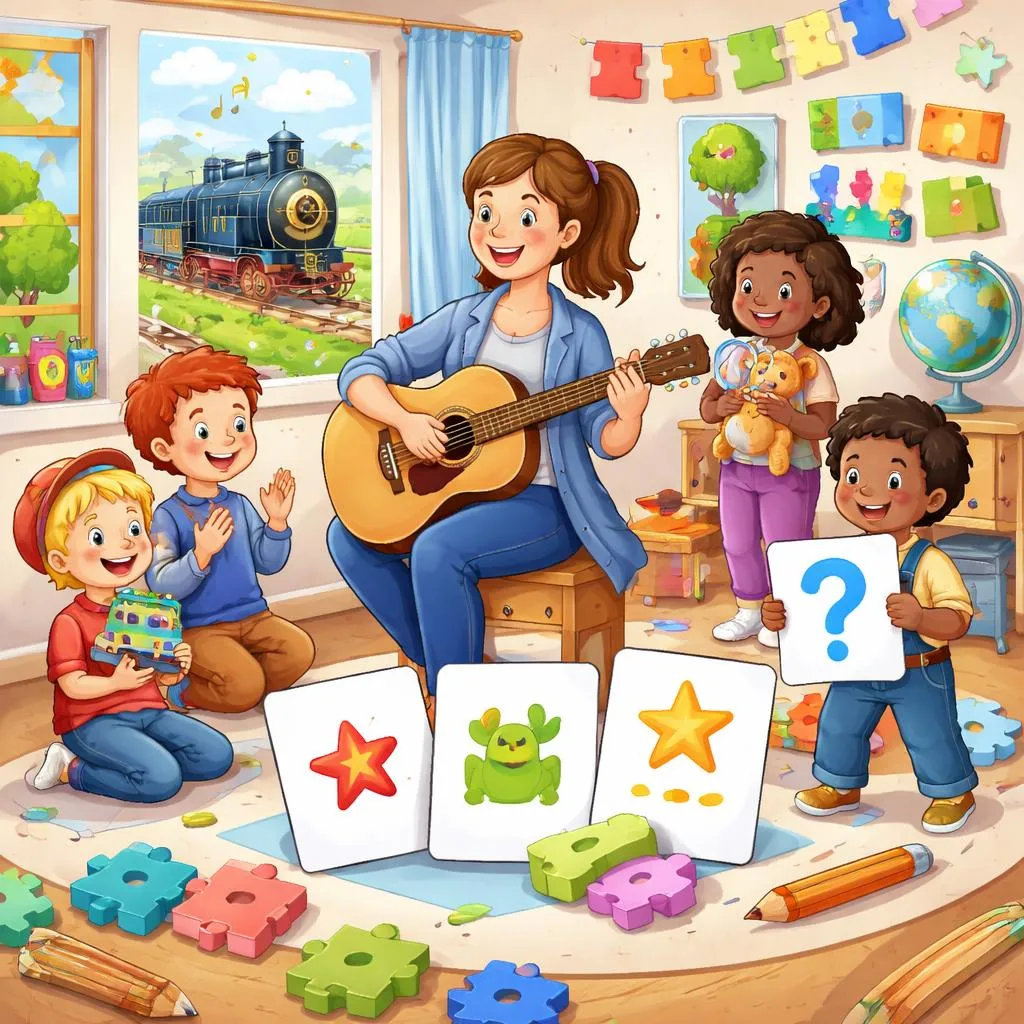

What Is The Rhyme? "I've Been Working on the Railroad" is a classic American folk song. It is not a traditional nursery rhyme but a historical work song. People likely sang it to pass the time while doing physical labor. The song tells a simple story through its I've been working on the railroad lyrics. A narrator describes their work on the railroad. They hear someone playing a banjo. They call out to a friend named Dinah. The melody is cheerful and well-known. This makes the song an engaging tool for teaching English. We can explore its history, vocabulary, and grammar in a fun way.
The Lyrics of Nursery Rhymes Let's examine the core I've been working on the railroad lyrics. The first verse is familiar: "I've been working on the railroad, all the livelong day. I've been working on the railroad, just to pass the time away." The chorus then begins: "Dinah, won't you blow, Dinah, won't you blow, Dinah, won't you blow your horn?" Another verse starts: "Someone's in the kitchen with Dinah..." The lyrics use a lot of repetition. This repetition is perfect for language learners. It allows them to hear and practice phrases many times in a rhythmic, musical context.
Vocabulary Learning The I've been working on the railroad lyrics introduce specific and useful vocabulary. We learn words related to jobs and places: railroad, work, day, kitchen. We learn action verbs: working, blow (a horn), strumming (a banjo), singing. We also find interesting nouns: Dinah (a name), horn, banjo, fee. We can group these words into categories. We can talk about Jobs (worker, cook). We can talk about Instruments (horn, banjo). We can talk about Actions (working, singing, listening). This builds a themed set of English words connected by a memorable story.
Phonics Points These lyrics offer wonderful opportunities for phonics practice. We can focus on the long vowel sound in "rail-road." We can highlight the "ing" ending in "work-ing" and "sing-ing." The "ay" sound in "day" and "away" is clear. The word "Dinah" has a long 'i' sound followed by a schwa sound. This is great for practicing different vowel patterns. We can also listen for consonant blends. Listen to the "str" in "strumming" and the "bl" in "blow." Clapping to the steady beat of the song helps children feel the syllables in each word.
Grammar Patterns The most important grammar in the I've been working on the railroad lyrics is the present perfect continuous tense. The line "I've been working" is a perfect example. "I have" is contracted to "I've." "Been" is the past participle of "be." "Working" is the present participle. Together, "have been + verb-ing" describes an action that started in the past and is still happening. This is an advanced concept, but the song makes it accessible. We also see the future request form: "Dinah, won't you blow your horn?" This is a polite way to ask someone to do something.
Learning Activities We can create fun activities from these lyrics. Try "Lyric Fill-in-the-Blank." Write the lyrics on a board with key words missing (e.g., "I've been ______ on the railroad"). Sing the song and point to the blank. Learners supply the word. Another activity is "Grammar Detective." After learning the song, hunt for other verbs. Can we change "working" to another "-ing" verb that fits? "I've been singing on the railroad..." This encourages creativity with grammar. A "Question and Answer" activity is also good. Ask, "What has the singer been doing?" Answer: "He has been working on the railroad."
Printable Materials Printable resources make the lesson tangible. Create a "Song Lyric Sheet" with illustrations. Next to "railroad," draw train tracks. Next to "blow your horn," draw a trumpet. A "Vocabulary Match" worksheet is helpful. One column has words: railroad, kitchen, horn, banjo. The other column has pictures. Children draw a line to connect them. Design a "Sequence Comic Strip." Have four blank panels. Children draw the story: 1. A person working. 2. Someone with a banjo. 3. Calling to Dinah. 4. Someone in the kitchen. They can write a caption for each using words from the song.
Educational Games Games solidify the learning. Play "Song Chain." Start singing the song. After one line, point to a learner. They must sing the next line. This builds memory and confidence. "Vocabulary Charades" is always fun. A child acts out a word from the lyrics (like "work" or "blow a horn"). Others guess and say the word in English. For a quieter game, create "Bingo Cards" with words from the song. The caller says a definition or shows a picture. Players mark the corresponding word on their card.
Exploring the I've been working on the railroad lyrics is more than singing an old song. It is a doorway to American cultural history and English language structure. The catchy tune makes advanced grammar, like the present perfect continuous tense, memorable and less intimidating. The repetitive verses build vocabulary in a meaningful context. By combining music, movement, and creative activities, we transform a historical work song into a dynamic English lesson. Learners gain not just new words and grammar, but also a sense of rhythm, storytelling, and the joy of using English to share a piece of history. So, gather round, sing loudly, and discover the language hidden within this timeless melody.