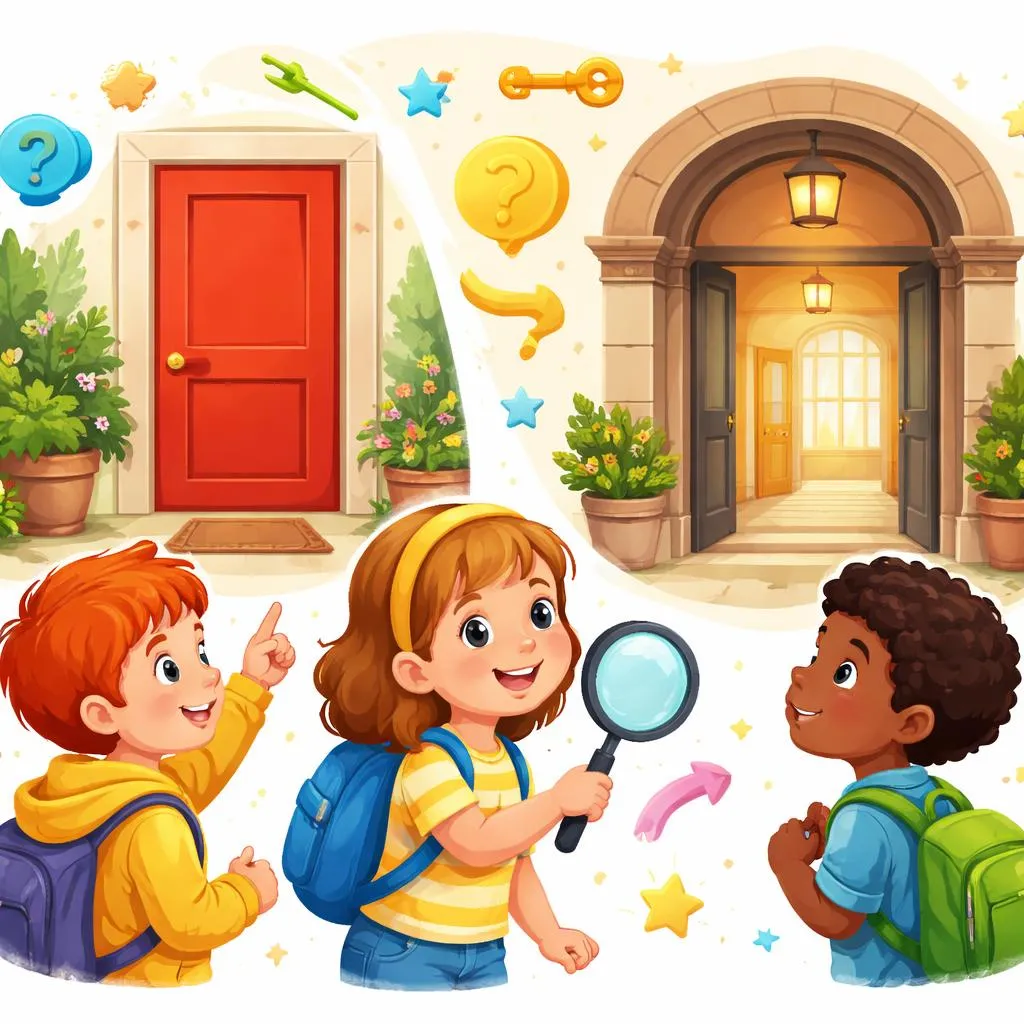

Children often learn simple place words early in English study. Words like “door,” “window,” and “gate” appear in homes, schools, and storybooks every day. As learners grow, they also meet more formal words like “entrance.”
The expressions “door to” and “entrance to” may seem very similar because both connect to entering places. However, native speakers use these words differently depending on meaning, size, and situation.
One word describes a physical object. The other describes an access point or way into a place. Understanding this difference helps children improve reading skills and speak more naturally.
Small vocabulary details often create clearer communication.
What Do These Expressions Mean?
The phrase “door to” comes from the word “door.” A door is a movable object that opens and closes an entry space.
For example:
“The children walked door to door.”
“Please close the door quietly.”
Doors usually appear in:
houses
schools
offices
cars
The phrase “entrance to” comes from the word “entrance.” An entrance is a place or area used to enter somewhere.
For example:
“The entrance to the museum looked beautiful.”
“Visitors waited near the entrance.”
An entrance may include:
doors
gates
hallways
opening areas
A child-friendly explanation is simple:
“Door” means the actual opening panel.
“Entrance” means the way into a place.
The expressions seem similar because many entrances include doors. Still, the meanings are not exactly the same.
What’s the Difference?
The biggest difference comes from focus.
“Door” focuses on the physical object.
“Entrance” focuses on access or entry.
One word describes a thing people open. The other describes the area people enter through.
Here is a simple comparison:
ExpressionMain MeaningFeelingCommon Usagedoor toopening panel or barriereveryday and directhomes and daily lifeentrance toaccess point into a placebroader and formalpublic buildings
Another important difference is size.
A door is usually smaller and more specific.
An entrance can describe a larger area.
For example:
“The entrance to the stadium”
This may include stairs, gates, and several doors.
When Do We Use Each One?
Children hear “door to” often in daily life.
At home:
“Please knock on the door.”
“The dog waited near the door.”
At school:
“Students lined up by the classroom door.”
“The teacher walked door to door.”
The word “door” appears in simple, everyday situations.
“Entrance to” appears more often in public places and formal descriptions.
For example:
“The entrance to the library stayed open.”
“Security guards watched the main entrance.”
Museums, theaters, airports, and hotels often use “entrance” because it sounds broader and more organized.
Children should remember this idea:
“Door” means the physical opening object.
“Entrance” means the way into a place.
Why Writers Choose Different Words
Writers choose words carefully to create clear pictures.
The word “door” creates a close and specific image.
For example:
“The old wooden door creaked loudly.”
Readers imagine the object clearly.
The word “entrance” creates a wider image.
For example:
“The castle entrance stood under tall towers.”
Readers imagine a larger area.
These small vocabulary differences help readers visualize scenes more accurately.
Children who notice these details become stronger readers.
Example Sentences for Kids
Here are simple examples using “door to.”
“The mail carrier walked door to door.”
“Please open the front door.”
“The cat scratched the door.”
Now look at examples using “entrance to.”
“The entrance to the zoo looked colorful.”
“People waited near the entrance.”
“The school entrance became crowded.”
Children may notice that “door” sounds smaller and more specific.
“Entrance” sounds broader and more formal.
How Public Places Use “Entrance”
Large buildings often use the word “entrance.”
Children may hear:
“main entrance”
“side entrance”
“emergency entrance”
The word helps organize movement in busy places.
For example:
malls
airports
stadiums
hospitals
Signs usually say “entrance” because many people need clear directions.
The word sounds professional and practical.
How Daily Conversations Use “Door”
The word “door” appears constantly in normal conversation.
Children hear phrases like:
“close the door”
“front door”
“bedroom door”
“next door”
The word feels simple and familiar.
Storybooks also use “door” often because children can easily picture it.
For example:
“A tiny door appeared behind the bookshelf.”
This creates a strong visual image.
Common Mistakes to Avoid
One common mistake is using “door” when talking about a large access area.
Incorrect:
“The stadium door had many security guards.”
Better:
“The stadium entrance had many security guards.”
Another mistake is thinking “entrance” always means a physical door.
Incorrect:
“An entrance is always a door.”
Correct:
“An entrance may include gates, paths, or open spaces too.”
Children should also avoid using “entrance” in very simple daily situations where “door” sounds more natural.
Incorrect:
“Please shut the entrance.”
Better:
“Please shut the door.”
The correct word depends on focus and situation.
Easy Memory Tips
A simple trick can help children remember the difference.
Think about this:
“Door” = object
“Entrance” = way inside
Another fun memory idea:
A door swings open.
An entrance welcomes people into a place.
Children can also remember:
homes use “door”
public buildings use “entrance”
Simple memory connections help vocabulary stay organized.
Why Vocabulary Precision Improves Communication
Strong communication depends on accurate word choice.
Compare these sentences:
“The boy stood near the door.”
“The boy stood near the entrance.”
The first sentence creates a smaller and more exact picture.
The second sentence sounds broader and more public.
These small differences help speakers and writers communicate more clearly.
Children who understand precise vocabulary become more confident English users.
Quick Practice Time
Choose the Correct Word
The hotel _____ had bright lights.
A. entrance
B. apple
Correct answer: A
Please close the classroom _____.
A. door
B. pencil
Correct answer: A
Fill in the Blank
The cat waited beside the front _____.
Answer: door
Visitors entered through the main _____.
Answer: entrance
How Children Can Practice These Words Naturally
Children can practice these words through books, school life, and everyday conversations.
Daily home activities help learners understand “door.”
Public signs and building descriptions help learners understand “entrance.”
Listening carefully to how native speakers use these words makes the differences easier over time.
Children do not need to memorize every rule immediately. Instead, they should notice examples and patterns.
Step by step, vocabulary becomes clearer and more natural.
Wrap-up
“Door” usually describes the physical object people open and close, while “entrance” describes the way or area people use to enter a place.