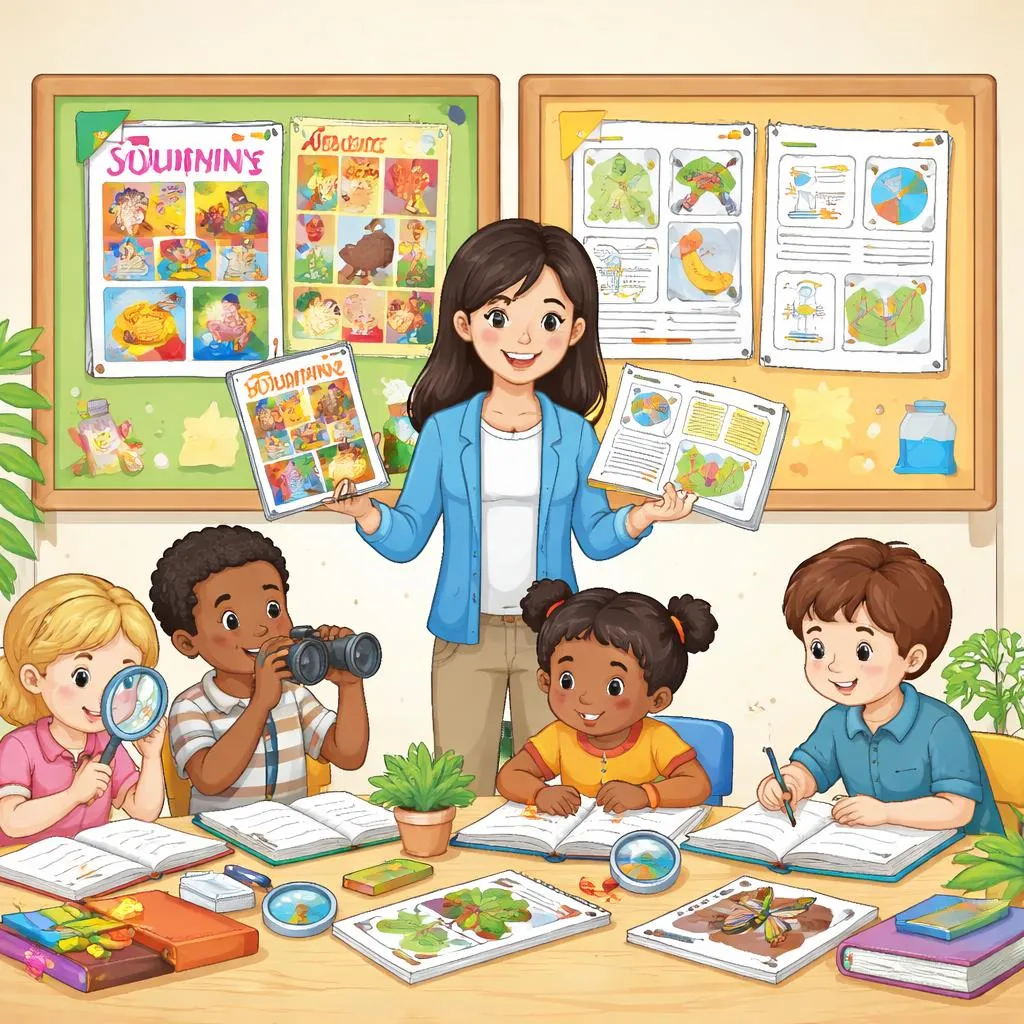

Children often meet the words “magazine” and “journal” while reading at school or visiting libraries. At first glance, the two words seem very similar. Both contain articles, information, and printed pages.
However, native English speakers use these words in different ways. “Magazine” usually feels casual and colorful. “Journal” often sounds more serious, academic, or personal. Understanding this difference helps children read more naturally and choose the right word in conversations.
Learning vocabulary in context gives children stronger English skills. It also helps them feel more confident during reading, writing, and classroom discussions.
What Do These Expressions Mean?
A “magazine” is a printed publication with stories, pictures, news, or fun topics. People usually buy magazines every week or month.
Children often see magazines about animals, sports, games, or science. Many magazines use bright colors and large photos.
A child-friendly explanation is simple. A magazine is something fun and interesting to read.
A “journal” has a different meaning. It can describe a serious publication with research or academic writing. It can also mean a personal notebook where someone writes thoughts and experiences.
This is why children sometimes feel confused. Both magazines and journals contain writing and information.
Still, their purpose is not exactly the same.
Magazines usually entertain or inform many readers. Journals often record ideas, research, or personal reflections.
For example, a child may read a sports magazine at home.
A scientist may publish research in a science journal.
A student may also keep a daily journal to write feelings or memories.
These different uses make the word “journal” more flexible but also more complex.
What’s the Difference?
The biggest difference is tone and purpose.
A “magazine” feels casual, visual, and easy to read.
A “journal” feels more formal, serious, or personal.
One is more public. The other is often more private or academic.
Magazines usually include colorful layouts, short articles, advertisements, and photographs.
Journals often contain detailed writing, research, records, or personal thoughts.
For example:
“I read a movie magazine.”
This sentence sounds natural and relaxed.
Now compare it with:
“My teacher showed us a science journal.”
This sentence sounds more academic.
Another difference involves audience.
Magazines target general readers. Children, families, or hobby fans often enjoy them.
Journals usually target students, researchers, professionals, or private writers.
Children should also notice that “journal” has two common meanings.
First, it can mean an academic publication.
Second, it can mean a personal diary.
Context helps readers understand which meaning fits the sentence.
For example:
“She writes in her journal every night.”
This sentence talks about personal writing.
“The biology journal published a new study.”
This sentence talks about academic research.
Meanwhile, “magazine” almost always refers to a colorful publication for public readers.
When Do We Use Each One?
People use “magazine” in everyday situations.
Children may read magazines in waiting rooms, classrooms, or libraries.
Parents may buy travel magazines or cooking magazines.
Teachers sometimes use children’s magazines for reading practice.
For example:
“My brother loves soccer magazines.”
This sounds natural because magazines often focus on hobbies and entertainment.
People use “journal” in more specific situations.
Students may keep a reading journal at school.
Scientists may publish work in medical journals.
Writers sometimes use journals to record ideas.
For example:
“I wrote about my vacation in my journal.”
This sentence describes personal writing.
Now look at another example:
“The history journal explained ancient Egypt.”
This sentence describes an academic publication.
Native speakers rarely replace “magazine” with “journal” in casual conversation.
Most people say:
“I bought a fashion magazine.”
Very few people say:
“I bought a fashion journal.”
That sounds unusual because magazines focus more on popular reading.
Children can sound more natural when they choose the word that matches the situation.
Example Sentences for Kids
Here are simple examples using “magazine.”
“I read a dinosaur magazine after school.”
“My dad bought a sports magazine.”
“This magazine has funny cartoons.”
Now look at examples using “journal.”
“I write in my journal before bed.”
“Our teacher showed us a science journal.”
“My sister keeps a travel journal.”
These examples show different feelings and uses.
“Magazine” sounds colorful and public.
“Journal” sounds thoughtful, academic, or personal.
Reading many examples helps children notice these patterns naturally.
Why Children Often Confuse These Words
Many learners think both words simply mean “something to read.”
That idea causes confusion.
Children also see magazines and journals together in libraries. Because both contain articles, they may seem interchangeable.
Another reason involves translation.
Some languages use one general word for many printed publications.
When learners translate directly into English, they may not notice the difference in tone.
For example, a child might say:
“I bought a science magazine journal.”
This mixes two different ideas together.
Children also hear “journal” in school writing activities. Teachers may ask students to keep a journal.
At the same time, they read magazines at home.
Without enough examples, the differences feel unclear.
Repeated reading helps children understand these small vocabulary details.
Common Mistakes to Avoid
One common mistake is using “journal” for colorful entertainment reading.
Incorrect:
“I read a movie journal at the dentist’s office.”
Correct:
“I read a movie magazine at the dentist’s office.”
Another mistake happens when learners use “magazine” for personal writing.
Incorrect:
“She writes in her magazine every night.”
Correct:
“She writes in her journal every night.”
Children should also avoid forgetting the academic meaning of “journal.”
For example:
Incorrect:
“The doctor published research in a medical magazine.”
Correct:
“The doctor published research in a medical journal.”
Another mistake involves assuming every journal is private.
Some journals are personal diaries, but many journals are professional publications.
Context changes meaning, so children should look carefully at surrounding words.
Easy Memory Tips
A simple memory trick can help children remember the difference.
Think about “magazine” as something colorful and fun.
Think about “journal” as something serious or personal.
Children can imagine this picture:
A magazine sits on a coffee table with bright pictures and exciting titles.
A journal sits on a desk with notes, ideas, or careful research inside.
Another helpful trick uses the first letters.
“M” in “magazine” can remind children of “many pictures.”
“J” in “journal” can remind children of “journey of thoughts.”
That idea works well for personal journals.
Parents can also encourage children to notice vocabulary during reading time.
Real examples build stronger memory than memorization alone.
How Reading Builds Better Vocabulary Skills
Children learn vocabulary best through repeated exposure.
The more they read, the more naturally they understand word differences.
Storybooks often use “magazine” in casual situations.
School assignments often use “journal” for reflection writing.
Older students may later encounter scientific journals in research projects.
This gradual learning process helps vocabulary feel natural.
Children also learn faster when adults discuss reading materials with them.
Simple questions help a lot.
For example:
“Is this publication for fun reading or research?”
“Does this journal contain personal thoughts or science information?”
These small conversations strengthen language understanding.
Children should also pay attention to design.
Magazines usually contain colorful advertisements and photographs.
Journals often look simpler and more text-focused.
Visual clues can support vocabulary learning.
Quick Practice Time
Try these simple activities.
Choose the Correct Word
My teacher asked us to write in our reading _____.
(magazine / journal)
Answer: journal
I read a cartoon _____ at the library.
(magazine / journal)
Answer: magazine
Fill in the Blank
The scientist published her work in a medical _____.
Answer: journal
My cousin buys a music _____ every month.
Answer: magazine
These short exercises help children practice natural English usage.
Why These Vocabulary Differences Matter
Some learners wonder why small vocabulary details are important.
The answer is simple.
Correct word choice makes communication clearer and more natural.
Children who understand “magazine” and “journal” can read school materials more confidently. They can also express ideas more accurately in conversations and writing.
Small differences help learners sound more fluent over time.
These vocabulary skills also improve reading comprehension.
Children can better understand whether a text is casual, academic, or personal.
That understanding supports stronger learning in every subject.
English becomes easier when learners notice how words fit different situations.
“Magazine” usually describes colorful public reading, while “journal” usually describes personal writing or serious academic publications.