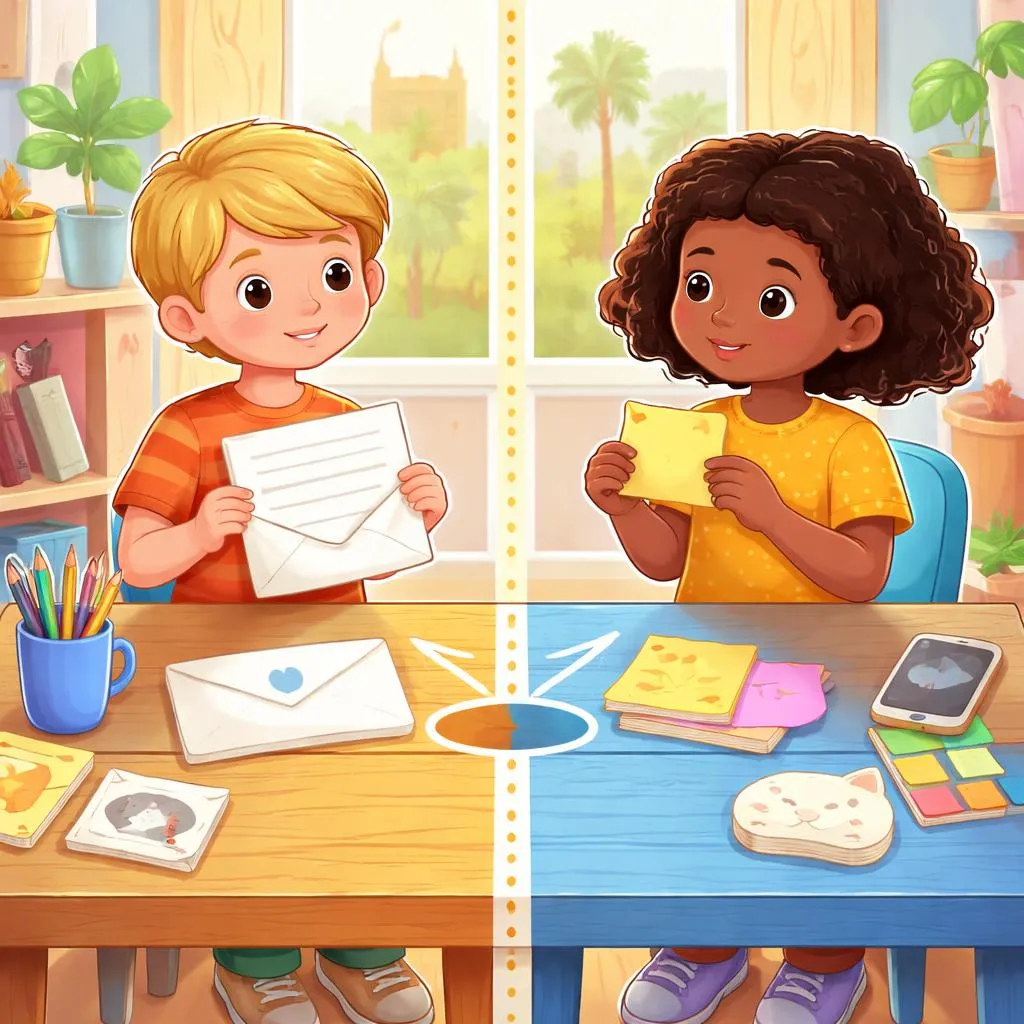

Learning similar English expressions can feel tricky for children. Some words look almost the same, but they carry different feelings and uses. The expressions “letter to” and “note to” are a good example. Both talk about written messages, yet people use them in different situations.
Children often hear these expressions at school, at home, or while reading books. A teacher may write a note to parents. A child may send a letter to a grandparent. Because both involve writing, learners sometimes mix them up.
Understanding the difference helps children sound more natural in English. It also improves reading and writing confidence. Small word choices can change the tone of a message in a big way.
What Do These Expressions Mean?
The expression “letter to” usually describes a longer written message sent to someone. A letter often shares news, feelings, stories, or important information. People may send letters through the mail or online.
A child-friendly way to understand it is this: a letter is like a big conversation on paper.
The expression “note to” usually describes a short message. A note often gives quick information, reminders, or instructions. Notes are usually simple and direct.
Children can think of a note as a tiny message with one quick purpose.
These expressions seem similar because both involve writing to another person. Both connect people through words. Both can appear in school, family life, and friendships. That is why many English learners confuse them at first.
Still, native speakers often choose one expression instead of the other depending on length, tone, and purpose.
What’s the Difference?
The biggest difference is length and detail.
A “letter to” someone is usually longer. It may include greetings, stories, questions, and personal thoughts. A letter often feels warm and careful.
A “note to” someone is shorter. It usually focuses on one point only. A note feels quick and practical.
One expression is more personal and complete. The other is more brief and simple.
For example, a child may write a letter to a cousin during summer vacation. The child may talk about games, food, travel, and feelings.
But a child may write a note to a teacher saying, “I will be absent tomorrow.”
The tone also changes.
Letters often sound friendly, thoughtful, or emotional. Notes often sound direct and useful.
Another difference is structure.
A letter usually has:
A greeting
Several sentences or paragraphs
A closing
A note may only contain one or two lines.
People also keep letters longer because they may hold memories. Notes often serve short-term purposes.
Children should remember this simple idea:
A letter shares more. A note says something quickly.
When Do We Use Each One?
People use “letter to” in situations that need more detail or emotion.
Children may write letters:
To grandparents
To pen pals
To friends who moved away
To authors or teachers
During holiday projects
A letter gives space for storytelling and feelings.
For example, a child writing a letter to a cousin may explain:
What happened at school
Favorite games
Family trips
Future plans
Letters help children practice communication in a deeper way.
People use “note to” when they need quick communication.
Children may leave notes:
On the refrigerator
In lunch boxes
On homework
On a classroom desk
Inside a library book
Notes usually focus on one simple message.
A parent may leave a note to a child saying:
“Dinner is in the kitchen.”
A teacher may write:
“Please finish page 12.”
A student may leave:
“I borrowed your ruler.”
These everyday situations help children see how natural the expression feels.
In school life, notes appear more often because school communication is usually short and practical.
In family life, letters may appear during birthdays, holidays, or special moments.
Friendship also changes the choice.
A child may pass a quick note during class. But that same child may write a long birthday letter to a best friend.
Understanding context helps learners choose the right expression naturally.
Why Do Native Speakers Choose Different Words?
English speakers often choose words based on feeling.
“Letter to” sounds more complete and thoughtful. It suggests effort and time.
“Note to” sounds smaller and faster. It suggests convenience and speed.
This emotional difference matters in English.
Imagine these two examples:
“I wrote a letter to my grandmother.”
This sentence sounds warm and meaningful.
Now compare it with:
“I wrote a note to my grandmother.”
This sounds much shorter. Maybe the writer only shared one quick message.
Native speakers notice these small differences immediately.
Children do not need difficult grammar rules to understand this. They only need to notice how the expressions feel in real life.
One feels deep and detailed.
The other feels quick and simple.
Example Sentences for Kids
Here are some simple examples using “letter to.”
I wrote a letter to my uncle last weekend.
Emma sent a letter to her friend in Canada.
Our class made a letter to the school principal.
Now look at examples using “note to.”
Mom left a note to me on the table.
Jake wrote a note to his teacher.
There was a note to Dad on the fridge.
Children should read these sentences aloud. Hearing the rhythm helps learners notice the difference naturally.
How These Expressions Appear in Books and Movies
Children often see letters in stories because letters help show emotions and adventures.
Many novels include:
Letters from family members
Secret letters
Invitation letters
Thank-you letters
Letters create excitement and emotional connection.
Notes appear differently in stories.
A note may:
Give a clue
Share a warning
Remind someone about something
Create mystery
For example, a detective story may include a secret note.
A fantasy story may include a magical letter.
Writers choose carefully because the two expressions create different feelings for readers.
This is another reason children should learn the difference early.
Common Mistakes to Avoid
One common mistake is using “note” for long writing.
Incorrect:
“I wrote a five-page note to my cousin.”
Correct:
“I wrote a five-page letter to my cousin.”
A long personal message should usually be called a letter.
Another mistake is using “letter” for tiny reminders.
Incorrect:
“Dad left a letter to me saying dinner is ready.”
Correct:
“Dad left a note to me saying dinner is ready.”
Short reminders fit the word “note” better.
Some learners also confuse formality.
A letter usually feels more formal or emotional.
A note usually feels casual and quick.
Children should also avoid thinking that every written message is a letter.
Length and purpose matter.
Easy Memory Tips
Here is a simple trick:
“Letter” has more letters in the word itself.
That can remind children that a letter usually contains more writing.
“Note” is short.
That can remind learners that a note is also short.
Another memory idea uses pictures.
Imagine:
A big envelope for a letter
A tiny sticky paper for a note
Visual memory often helps children remember vocabulary faster.
Children can also connect emotions:
Letters hold stories and feelings
Notes hold quick information
These small memory tools make learning easier and more fun.
Quick Practice Time
Choose the correct answer.
Mia wrote three pages about her vacation to her aunt.
a) note to
b) letter to
Answer: b) letter to
Dad wrote “See you at 6!” on the kitchen table.
a) letter to
b) note to
Answer: b) note to
Now fill in the blank.
I left a ______ to my teacher about my homework.
Answer: note
Ben mailed a long ______ to his grandfather.
Answer: letter
Short practice activities help children remember vocabulary longer.
Why Learning Small Differences Matters
Some children wonder why English has many similar words.
The answer is simple. Different words help people express different feelings and situations.
When learners understand these small differences, their English becomes clearer and more natural.
Instead of sounding robotic, children begin to sound thoughtful and confident.
They also improve reading skills because books, stories, and conversations become easier to understand.
Learning vocabulary in pairs is especially useful because children compare meaning directly.
This comparison builds stronger language memory.
Fun Activities Families Can Try at Home
Parents can help children practice these expressions through simple activities.
One idea is a family mailbox.
Family members can write:
Small notes during the week
Longer letters on weekends
Children quickly notice the difference through practice.
Another activity uses storybooks.
Parents can ask:
“Is this a note or a letter?”
Children then explain why.
Art projects also work well.
Children can decorate:
A colorful letter envelope
A tiny sticky note pad
Creative activities help vocabulary stay in memory longer.
Building Better Writing Habits Through Everyday English
Children do not need perfect grammar to begin writing. They only need simple practice and clear understanding.
Learning expressions like “letter to” and “note to” teaches children how English changes depending on purpose and feeling.
A letter usually shares more details and emotion. A note usually shares quick information.
Once children understand this difference, they can communicate more naturally in school, at home, and with friends. Small vocabulary choices often create stronger and clearer English writing skills.