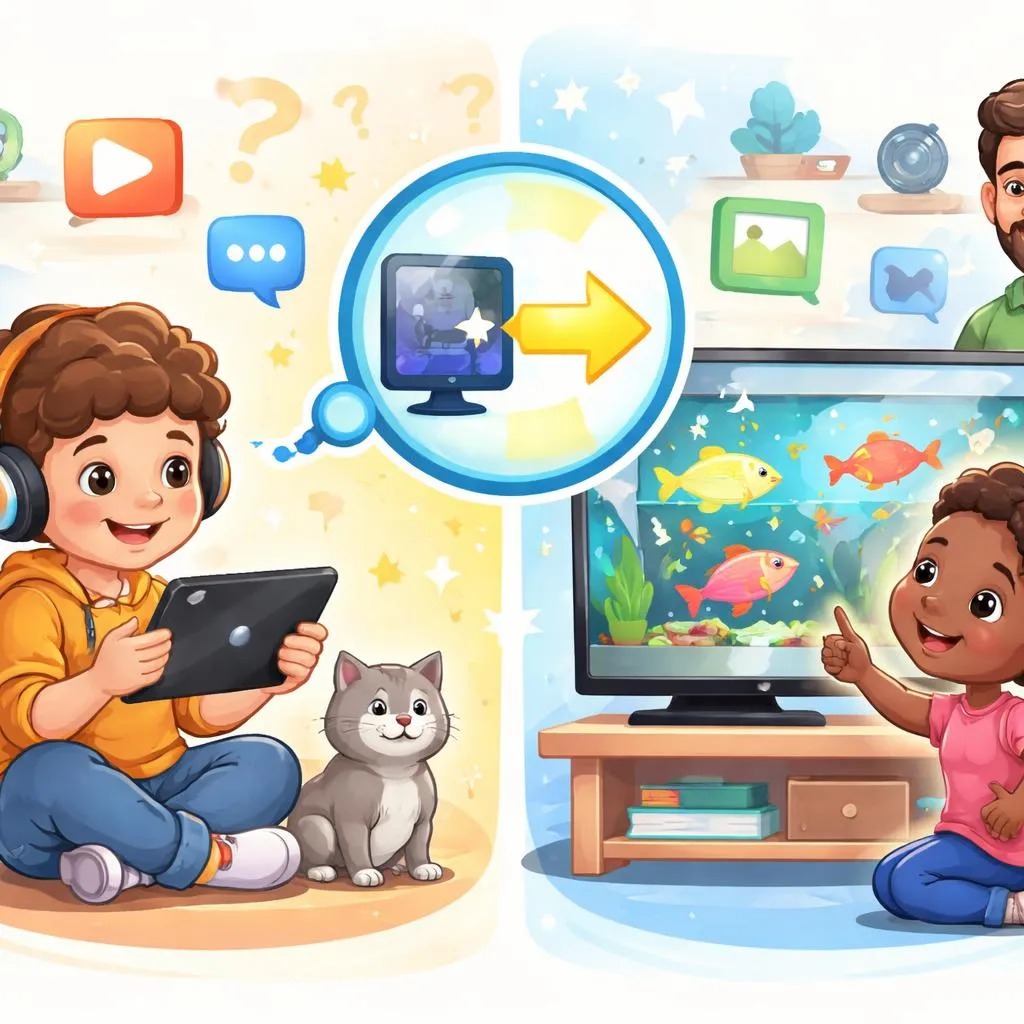

Children hear technology words every day. They use tablets at school, watch videos at home, and play games with friends. Because of this, words like “screen” and “display” appear often in conversations. Many learners think these two words mean exactly the same thing. In some situations, they do look similar.
Still, English uses these words in slightly different ways. Understanding the small difference helps children speak more naturally. It also improves reading and listening skills. Learning these details can make everyday English feel clearer and easier.
What Do These Expressions Mean?
The keyword pair “screen to, display to” includes two technology-related words that often connect with showing pictures, videos, or information.
A “screen” is usually the flat part of a device where people look at images or words. Phones, televisions, tablets, and computers all have screens.
A “display” means something that shows information. It can describe the picture on a device or the action of showing something.
Children can think about it this way:
A screen is often the physical surface.
A display is the image or information people see.
These words seem similar because both connect to seeing things on electronic devices. A child may say, “Look at the screen,” or “The display looks bright.” Both sentences relate to visual information.
Still, native speakers often choose one word over the other depending on the situation.
What’s the Difference?
The difference between “screen” and “display” is small but important.
“Screen” is more common in daily conversation. Children hear it often at home and school. It sounds simple and natural.
“Display” sounds a little more technical or formal. People use it when talking about settings, technology, or presentation features.
For example:
“My screen is dirty.”
“The display has high resolution.”
The first sentence talks about the actual surface. The second sentence talks more about picture quality.
Another difference is usage.
“Screen” usually refers to one specific object:
phone screen
TV screen
computer screen
“Display” can refer to the visual output itself:
digital display
bright display
touch display
One is more physical. The other is more connected to visual presentation.
Children may also notice that “display” can work as a verb.
For example:
“The computer displays the weather.”
But “screen” as a verb has a different meaning:
“The teacher screened the movie.”
That means showed a movie, not displayed information on a monitor.
These small differences help learners sound more natural.
When Do We Use Each One?
Children use “screen” most often during everyday conversations.
At school:
“The screen in our classroom is very big.”
“My tablet screen cracked.”
At home:
“I cleaned my TV screen.”
“Do not touch the laptop screen.”
With friends:
“Your phone screen looks cool.”
“The game screen is colorful.”
“Display” appears more often in technology discussions or written English.
At school:
“The display on the smart board is clear.”
“This watch has a digital display.”
At home:
“Dad changed the display settings.”
“The display became brighter.”
In stores:
“The tablet display looks sharp.”
“The store display showed new phones.”
“Display” also works when talking about showing information publicly.
For example:
“The museum displayed old maps.”
“The screen showed old maps.”
Both can work, but the feeling changes slightly.
“Screen” feels connected to devices.
“Display” feels connected to presenting information.
Why Do Children Mix These Words Up?
Many English learners translate words directly from their first language. In some languages, one word may cover both meanings.
Technology also changes language quickly. Advertisements often use “display,” while children usually hear “screen” in daily speech.
For example, a commercial may say:
“This device has an advanced display.”
But a child says:
“The screen is big.”
Both are correct in context.
Another reason is that devices combine many features. A phone has:
a screen
a display
touch controls
brightness settings
Because the meanings overlap, learners sometimes feel confused.
The good news is that native speakers usually understand both words. Children only need practice to learn which one sounds more natural in each situation.
Example Sentences for Kids
Sentences Using “Screen”
My phone screen is very bright.
The movie played on a giant screen.
I wiped the tablet screen with a soft cloth.
The classroom screen showed a science video.
His computer screen turned black.
I saw my name on the game screen.
Sentences Using “Display”
The watch display shows the time clearly.
The store display looked colorful.
The computer display became brighter after dinner.
This tablet has a sharp display.
The display showed today’s weather.
The robot display changed colors quickly.
These examples help children hear natural patterns.
Screen in Technology Vocabulary
Modern English uses “screen” in many common phrases.
Children may hear:
touch screen
screen time
screen saver
full screen
These phrases appear often in schools and homes.
“Screen time” is especially common. Parents and teachers use it when talking about device use.
For example:
“Too much screen time can hurt your eyes.”
Children quickly learn that “screen” connects strongly with devices people look at directly.
Movies also use the word often:
movie screen
cinema screen
big screen
This makes “screen” feel familiar and easy to understand.
Display in Technology Vocabulary
“Display” appears often in product descriptions and technology settings.
Common phrases include:
digital display
display settings
LED display
display quality
These phrases sound more formal than “screen.”
For example:
“Adjust the display brightness.”
“The display resolution is high.”
Teachers may also use “display” in classrooms:
“The project display looked beautiful.”
Museums and stores use the word too:
“The dinosaur display attracted many visitors.”
In these situations, “display” means something arranged for people to see.
This wider meaning makes “display” more flexible than “screen.”
Common Mistakes to Avoid
Children sometimes use these words in unnatural ways. Small corrections can help a lot.
Incorrect:
“My display is cracked.”
Correct:
“My screen is cracked.”
Why?
People usually talk about cracking the physical surface, so “screen” sounds better.
Incorrect:
“The screen settings changed.”
Correct:
“The display settings changed.”
Why?
Settings usually control brightness or picture quality, so “display” fits better.
Incorrect:
“The display protector fell off.”
Correct:
“The screen protector fell off.”
Why?
Native speakers almost always say “screen protector.”
Another common mistake happens with verbs.
Incorrect:
“The computer screened my homework.”
Correct:
“The computer displayed my homework.”
Why?
“Display” means show information visually.
Children should remember that some technology phrases are fixed expressions. English often follows common patterns instead of strict rules.
Easy Memory Tips
A simple trick can help children remember the difference.
Think about touching.
You touch a screen.
You see a display.
A screen feels physical.
A display feels visual.
Another memory tip:
Screen = surface
Display = shown information
Children can also picture this:
A phone has a screen. The picture on it is the display.
This quick image helps many learners remember the difference naturally.
Fun Real-Life Examples
Imagine a child playing a game.
The child says:
“The screen is dirty.”
That talks about the outside part.
Then the child says:
“The display looks amazing.”
That talks about the colors and graphics.
Now imagine a classroom.
The teacher says:
“Look at the screen.”
Students look at the large board.
Later the teacher says:
“The display quality is excellent.”
Now the teacher talks about how clear the image looks.
These examples show how both words work together in natural English.
How Movies and Games Use These Words
Gaming and movies make these words very common for children.
Gamers often say:
loading screen
game screen
split screen
Movie fans hear:
silver screen
big screen
Technology reviews often say:
high-quality display
bright display
curved display
This pattern appears everywhere online.
Children who watch English videos may notice that YouTubers usually say “screen” during casual speech. Technology reviewers often use “display” when describing product features.
Understanding this difference helps children sound more confident.
Quick Practice Time
Exercise 1: Choose the Correct Word
My tablet _____ is cracked.
a) display
b) screen
The watch _____ shows the date.
a) display
b) screen
We watched the movie on a giant _____.
a) screen
b) display
Answers:
b
a
a
Exercise 2: Fill in the Blank
The phone __________ became brighter.
Please clean the TV __________.
The museum __________ showed ancient art.
Answers:
display
screen
display
These short exercises help children remember natural usage.
Which Word Sounds More Natural in Daily English?
In daily conversation, “screen” appears more often.
Children usually say:
phone screen
TV screen
computer screen
“Display” becomes more common in:
advertisements
manuals
technology reviews
formal descriptions
This means learners should feel comfortable using “screen” in most casual conversations.
Still, learning “display” helps children understand technology vocabulary better. It also improves reading skills because many apps and devices use the word in menus and instructions.
How Parents Can Help Children Practice
Parents can turn simple device use into vocabulary practice.
At home, they can ask:
“Is the screen clean?”
“How bright is the display?”
Children learn faster when words connect to real objects.
Families can also compare devices:
“Which screen is bigger?”
“Which display looks sharper?”
Short conversations build confidence naturally.
Reading technology labels together also helps. Many boxes and websites use the word “display.” Children begin to notice how companies describe products.
Wrap-up
“Screen” usually means the physical surface you look at, while “display” usually means the visual information being shown.