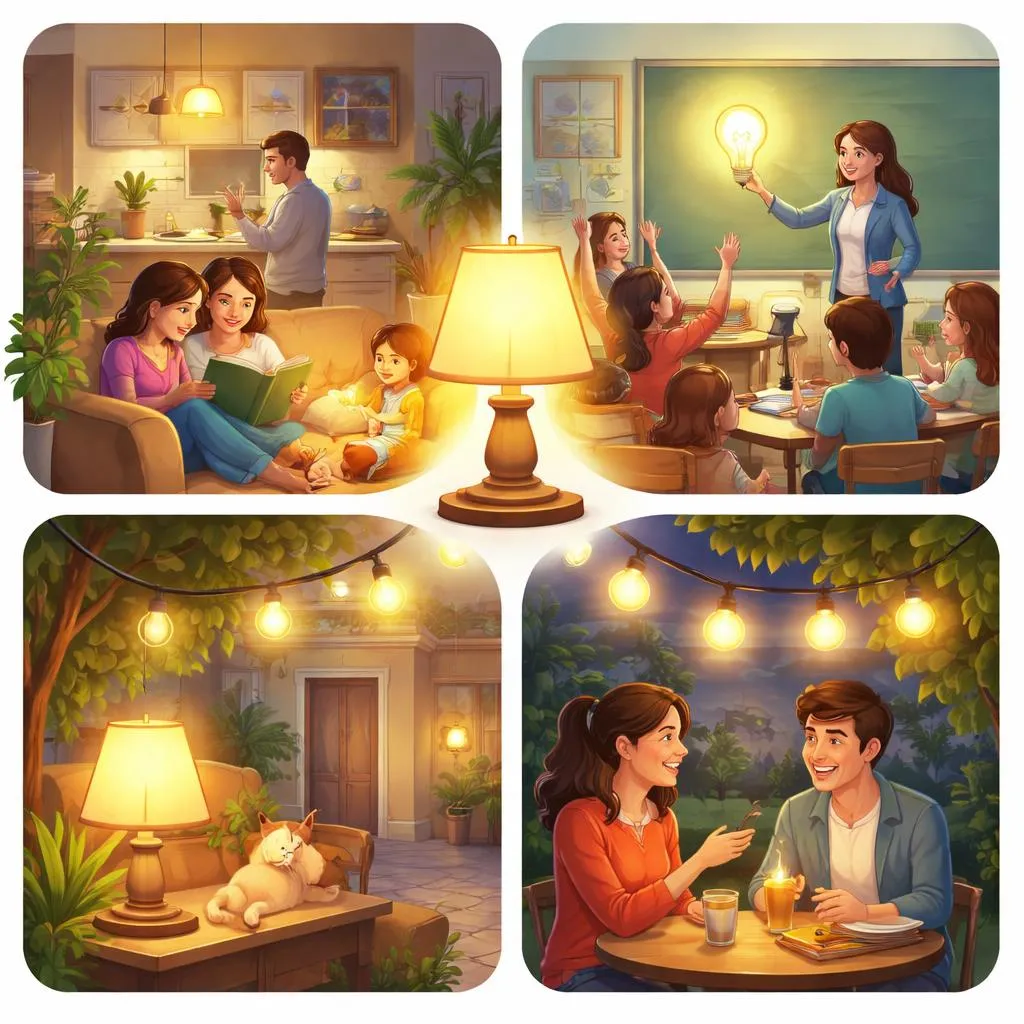

Children learn many household words during early English study. Words like “chair,” “window,” and “lamp” appear in homes, classrooms, and storybooks every day. As learners grow, they begin noticing that some English words seem closely connected but still have different meanings.
The expressions “lamp to” and “light to” often confuse young learners because both relate to brightness and seeing in the dark. Lamps give light, and lights brighten rooms. However, native speakers use these words differently depending on object, function, and situation.
One word usually describes a physical object. The other often describes brightness itself or many kinds of lighting devices. Understanding this difference helps children speak more naturally and understand English conversations more clearly.
Small vocabulary differences improve communication and reading skills.
What Do These Expressions Mean?
The phrase “lamp to” comes from the word “lamp.” A lamp is a device that produces light.
For example:
“The lamp stood beside the bed.”
“Dad turned on the desk lamp.”
Lamps often appear in:
bedrooms
living rooms
classrooms
offices
Many lamps include:
a bulb
a stand
a shade
The phrase “light to” comes from the word “light.” Light means brightness that helps people see.
For example:
“The light filled the room.”
“Please turn on the light.”
The word “light” can also describe lighting devices themselves.
For example:
ceiling lights
traffic lights
street lights
A child-friendly explanation is simple:
“Lamp” means a lighting object.
“Light” means brightness or lighting in general.
The expressions seem similar because lamps create light.
What’s the Difference?
The biggest difference comes from specificity.
“Lamp” describes one kind of object.
“Light” has a much broader meaning.
One word names a device. The other names brightness or many lighting forms.
Here is a simple comparison:
ExpressionMain MeaningFeelingCommon Usagelamp tolighting furniture or devicespecific and physicalbedrooms and deskslight tobrightness or lighting systembroad and flexiblehomes and public places
Another important difference comes from usage.
People can touch a lamp.
People usually cannot touch “light” itself because it means brightness.
Children can imagine this easily:
A lamp sits on a table.
Light spreads through a room.
When Do We Use Each One?
Children hear “lamp to” when talking about furniture or objects.
For example:
“The reading lamp looked bright.”
“The lamp fell off the table.”
The word usually describes a visible item.
“Light to” appears more often when talking about brightness or electricity.
For example:
“Please turn off the light.”
“Sunlight filled the classroom.”
The word also appears in many expressions.
For example:
flashlight
night light
traffic light
Children should remember this idea:
“Lamp” usually means an object.
“Light” means brightness or lighting in general.
Why “Light” Has Many Meanings
The word “light” is very flexible in English.
It can work as:
a noun
a verb
an adjective
For example:
noun: “The light is bright.”
verb: “Please light the candle.”
adjective: “The box feels light.”
This flexibility sometimes confuses learners.
The word “lamp” stays more specific and simple.
It almost always describes a lighting object.
Children who notice these differences become stronger readers and listeners.
How Homes Use These Words Naturally
Families often use “lamp” for small lighting furniture.
For example:
bedside lamp
desk lamp
floor lamp
The word sounds concrete and visual.
Families use “light” more broadly.
For example:
kitchen light
bathroom light
hallway light
Sometimes “light” refers to the bulb or electrical system instead of a specific object.
Context helps listeners understand the meaning.
Example Sentences for Kids
Here are simple examples using “lamp to.”
“The lamp stood near the sofa.”
“My reading lamp helps me study.”
“The cat knocked over the lamp.”
Now look at examples using “light to.”
“The light brightened the room.”
“Please switch off the light.”
“Sunlight came through the window.”
Children may notice that “lamp” sounds more physical.
“Light” sounds broader and more flexible.
Common Mistakes to Avoid
One common mistake is calling every light source a lamp.
Incorrect:
“The traffic lamp turned red.”
Better:
“The traffic light turned red.”
Another mistake happens when learners replace “light” with “lamp” in general brightness situations.
Incorrect:
“The lamp from the sun felt warm.”
Better:
“The light from the sun felt warm.”
Children should also remember that lamps create light, but not all lights are lamps.
The correct word depends on meaning and context.
Easy Memory Tips
A simple trick can help children remember the difference.
Think about this:
“Lamp” = object
“Light” = brightness
Another fun memory idea:
You place a lamp on a desk.
You see light across a room.
Children can also remember:
lamps are things
light spreads everywhere
Simple visual ideas make vocabulary easier to organize.
Why Lighting Vocabulary Matters
Lighting vocabulary appears everywhere in English.
Children hear these words in:
classrooms
bedtime stories
science lessons
family conversations
Understanding small differences improves listening and speaking skills.
Compare these sentences:
“The lamp stood beside the bed.”
“The light felt too bright.”
The first sentence describes an object.
The second sentence describes brightness.
Precise vocabulary helps children create clearer mental pictures while reading.
Quick Practice Time
Choose the Correct Word
Please turn on the _____ before reading.
A. light
B. sandwich
Correct answer: A
The desk _____ helped the student study.
A. lamp
B. blanket
Correct answer: A
Fill in the Blank
Sun _____ entered through the window.
Answer: light
The small _____ stood beside the sofa.
Answer: lamp
How Children Can Practice These Words Naturally
Children can practice these words by observing rooms and lighting around them.
At home, they can notice lamps on desks or tables.
At night, they can notice different kinds of lights inside and outside buildings.
Books and cartoons also help learners hear natural vocabulary use.
For example:
“The lamp glowed beside the bed.”
“Bright light covered the hallway.”
These examples help children connect vocabulary with real situations.
Children do not need to memorize every rule immediately. Repeated listening and reading help vocabulary understanding grow naturally over time.
Wrap-up
“Lamp” usually describes a physical lighting object, while “light” describes brightness or lighting in a broader and more flexible way.