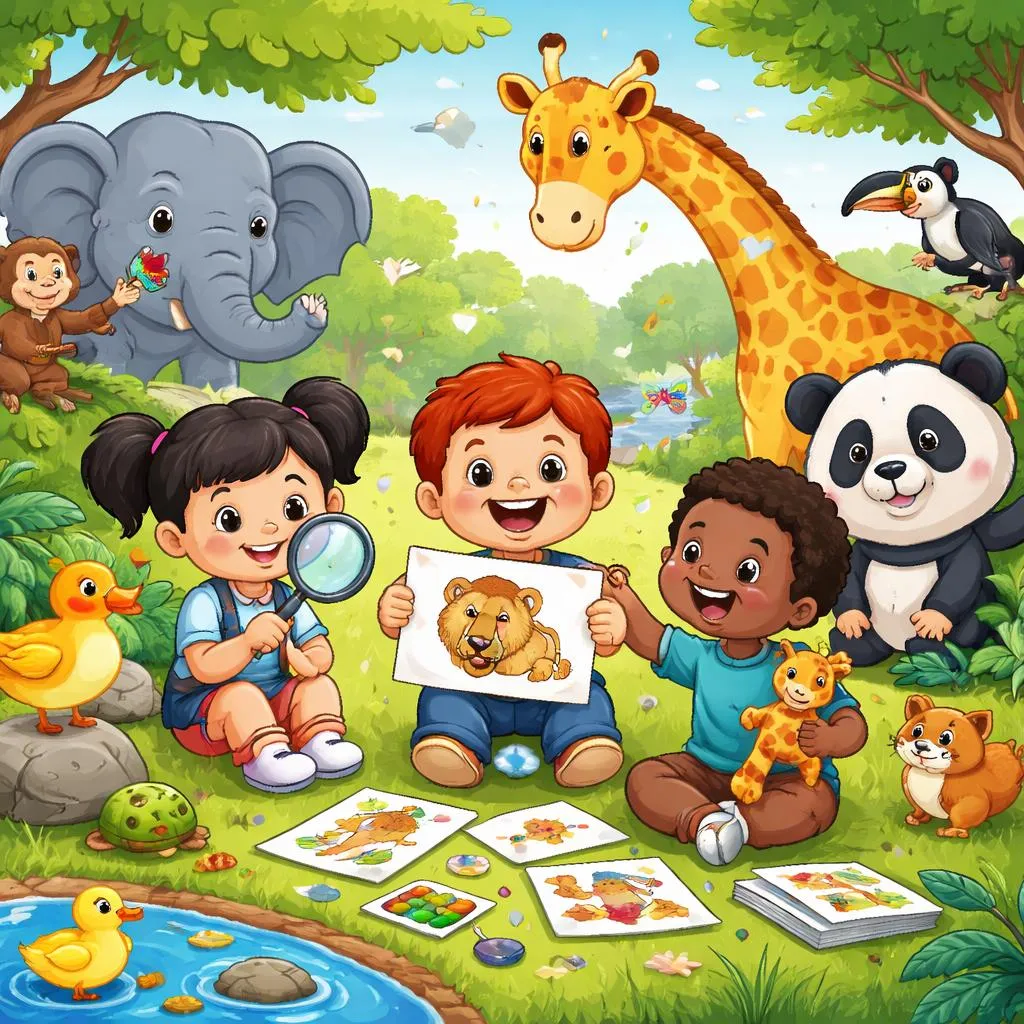

Hello, young animal lovers and wonderful teachers! Today we explore a fascinating topic that children naturally adore. Animals are everywhere. They live in our homes as pets. They live on farms and in forests. They swim in oceans and fly in the sky. Learning animal in english helps children connect with the natural world. It builds vocabulary for describing creatures big and small. It sparks curiosity about nature. Let us discover the wonderful world of animal names together. Let us meet pets, farm animals, wild animals, and more.
What Are Animal Names in English? Animal names are the words we use for different creatures. They range from common pets like dogs and cats to exotic animals like elephants and giraffes. Each animal has a special name. Learning these names helps children talk about the world around them.
Animals can be grouped in many ways. Some live with people as pets. Some live on farms and provide food. Some live in the wild, far from humans. Some live in the ocean. Some fly through the air. Each group has its own set of names.
Learning animal names also teaches children about sounds animals make. Dogs bark. Cats meow. Cows moo. Ducks quack. These sound words are fun to learn and say. They add another layer to animal vocabulary.
Meaning and Explanation of Animal Categories Organizing animals into categories helps children learn. Each category has common characteristics.
Pets are animals that live with people. They are often furry and friendly. Dogs, cats, rabbits, hamsters, and fish are common pets. Children love to talk about their own pets. This makes learning personal and meaningful.
Farm animals live on farms. They provide food, wool, or help with work. Cows give milk. Chickens lay eggs. Sheep give wool. Horses help with farming. Pigs provide meat. Children learn where food comes from through these animals.
Wild animals live in nature, away from people. They can be found in forests, jungles, deserts, and mountains. Lions, tigers, elephants, monkeys, bears, and wolves are wild animals. Children are fascinated by these exotic creatures.
Ocean animals live in water. Fish, dolphins, whales, sharks, octopuses, and crabs live in seas and oceans. Many children love learning about these underwater creatures.
Birds have feathers and wings. They can fly through the air. Eagles, sparrows, parrots, penguins, and owls are all birds. Each has unique characteristics.
Insects are small creatures with six legs. Ants, bees, butterflies, ladybugs, and grasshoppers are insects. Children often encounter these in gardens and parks.
Categories or Lists of Animal Names Here are common animal names organized by category.
Pets: Dog, cat, rabbit, hamster, guinea pig, fish, bird, parrot, turtle, snake, lizard, mouse, rat, ferret
Farm Animals: Cow, pig, horse, sheep, goat, chicken, rooster, duck, goose, turkey, donkey, llama, rabbit (also on farms)
Wild Animals: Lion, tiger, elephant, giraffe, zebra, monkey, gorilla, bear, wolf, fox, deer, moose, raccoon, skunk, kangaroo, koala, panda, rhinoceros, hippopotamus, camel, snake (wild)
Ocean Animals: Fish, dolphin, whale, shark, octopus, crab, lobster, shrimp, jellyfish, starfish, seahorse, eel, seal, walrus, penguin (also a bird)
Birds: Eagle, hawk, owl, parrot, penguin, flamingo, peacock, sparrow, robin, blue jay, crow, pigeon, duck, goose, swan, turkey
Insects and Small Creatures: Ant, bee, butterfly, caterpillar, ladybug, grasshopper, cricket, spider (arachnid), worm, snail, slug, mosquito, fly, dragonfly
Reptiles and Amphibians: Snake, lizard, turtle, tortoise, crocodile, alligator, frog, toad, salamander, chameleon
Daily Life Examples of Animal Names Animal names appear throughout daily life. Pointing them out helps children learn naturally.
At home, pets are wonderful teachers. "The dog wants to go outside." "The cat is sleeping on the sofa." "The fish are swimming in the tank." Children learn animal names through their own pets.
In books and stories, animals appear everywhere. "Look at the lion in this story." "The three little pigs built houses." "The hungry caterpillar ate through the apple." Stories make animals memorable.
At the zoo or aquarium, children see animals up close. "The elephants are so big!" "Look at the penguins waddling." "The dolphins are jumping!" These experiences create lasting memories.
During nature walks, children might spot animals. "I see a bird in that tree." "Look at the squirrel running." "There is a butterfly on the flower!" Real encounters build vocabulary.
Printable Flashcards for Animal Names Flashcards help children learn animal vocabulary visually. They provide clear images with words.
Pet Flashcards: Create cards showing common pets. Dog, cat, rabbit, hamster, fish, bird. Each card has a clear picture and the word.
Farm Animal Flashcards: Create cards for farm animals. Cow, pig, horse, sheep, chicken, duck. Use bright, appealing pictures.
Wild Animal Flashcards: Create cards for wild animals. Lion, tiger, elephant, giraffe, monkey, bear. Children love these exotic creatures.
Ocean Animal Flashcards: Create cards for sea creatures. Fish, dolphin, whale, shark, octopus, crab. These are fascinating to children.
Bird Flashcards: Create cards for common birds. Eagle, owl, parrot, penguin, duck, sparrow.
Insect Flashcards: Create cards for insects. Ant, bee, butterfly, ladybug, grasshopper.
Use the cards for games. Hold up a card and name the animal. Ask children what sound it makes. Play memory match with two sets.
Learning Activities or Games for Animal Names Games make learning animal vocabulary active and fun.
Animal Sounds Game: Make an animal sound. Children guess which animal makes that sound. "Moo!" "It's a cow!" "Quack!" "It's a duck!" This builds listening and animal recognition.
Animal Charades: Act out an animal without speaking. Hop like a frog. Stomp like an elephant. Slither like a snake. Others guess the animal. This builds observation and vocabulary.
Animal Sort: Gather animal picture cards. Have children sort them into categories. Pets in one group. Farm animals in another. Wild animals in another. This builds classification skills.
What Am I?: Describe an animal without naming it. "I am big and gray. I have a long trunk. I have big ears. What am I?" Children guess "elephant!" This builds descriptive language.
Animal Bingo: Create bingo cards with animal pictures. Call out animal names. Children cover the matching picture. When someone gets BINGO, they make the sound of each animal in their winning row.
Printable Materials for Animal Names Printable resources support learning about animals. They provide structure for activities.
Animal Coloring Pages: Create coloring pages for different animals. Children color them and practice saying the names. This reinforces vocabulary quietly.
Animal Matching Worksheets: Create pages where children match the animal picture to its name. Draw a line from the cow to the word "cow."
Animal Habitats: Create pages showing different habitats. Farm, jungle, ocean, forest. Children cut out animals and place them in the correct habitat.
My Favorite Animal Book: Create a small booklet where children draw and write about their favorite animal. "My favorite animal is the elephant. It is big and gray."
Educational Games for Animal Names Games extend animal vocabulary learning in joyful ways.
Animal Memory Game: Place animal picture cards face down. Children flip two trying to find matches. When they find a match, they name the animal and make its sound.
Animal Hunt: Hide animal picture cards around the room. Children search for them. When they find one, they name it and say one thing about it. "I found a lion. It lives in the jungle."
Animal Categories Game: Call out an animal. Children must say what category it belongs to. "Cow!" "Farm animal!" "Dolphin!" "Ocean animal!" This builds categorization skills.
What's Missing?: Place several animal cards in a row. Children close their eyes. Remove one card. They open their eyes and guess which animal is missing.
Animal Puzzle: Create simple puzzles with animal pictures. Children put the pieces together and name the animal.
Through learning about animal in english, children connect with the natural world. They learn to name the creatures around them. They discover animals from farms, jungles, and oceans. Every new animal name expands their vocabulary and understanding. Animals become familiar friends they can talk about and describe.