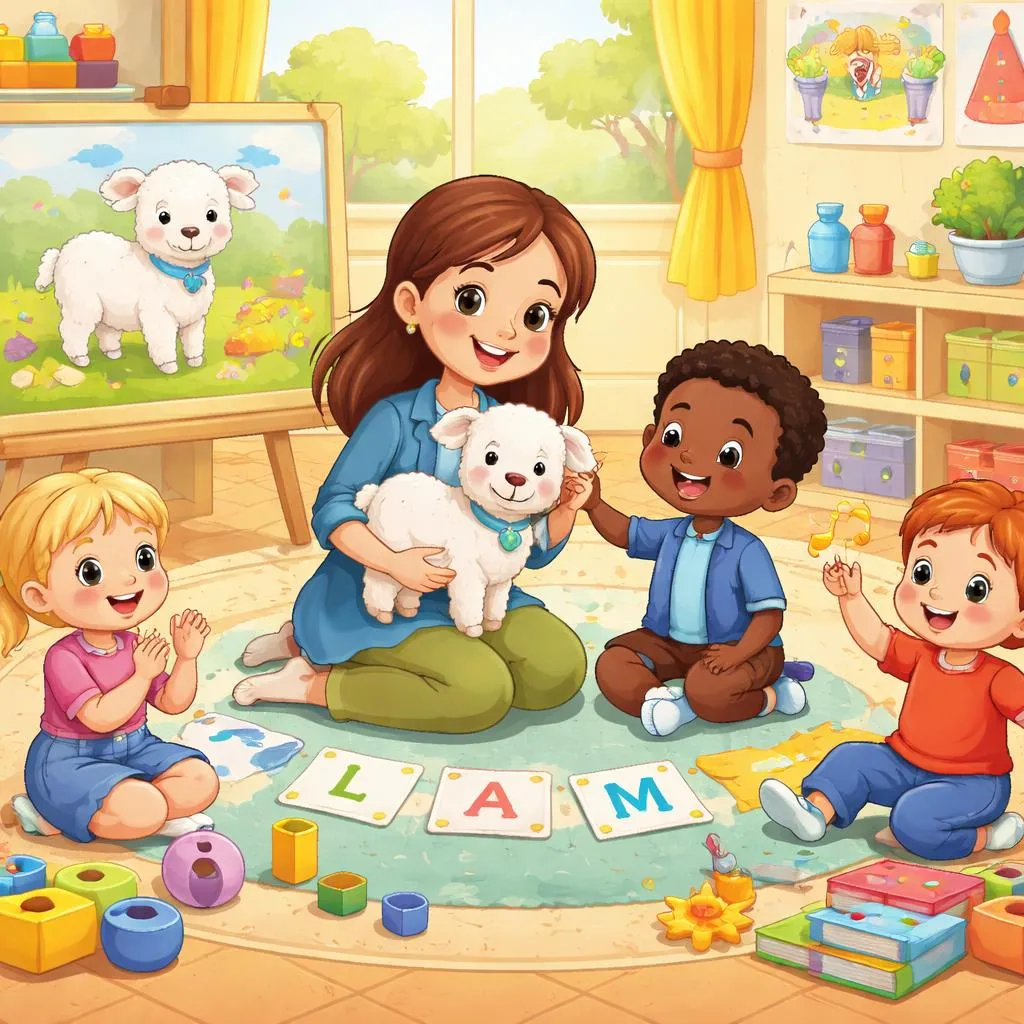

What is the rhyme?
The lyrics mary had a little lamb come from a classic English nursery rhyme. This rhyme tells a simple story about a girl named Mary and her pet lamb.
The lamb follows Mary to school. This creates a playful and memorable scene for young learners.
Teachers use this rhyme to introduce stories, rhythm, and early reading skills. The repetitive structure makes it ideal for guided language practice.
The lyrics of nursery rhymes
The lyrics mary had a little lamb describe Mary and her white lamb. The rhyme begins with Mary owning a lamb whose fleece is white as snow.
The lamb follows her everywhere. One day, it follows her to school and surprises everyone.
Teachers can recite the rhyme line by line. Pause after each line to explain meaning and rhythm.
This rhyme structure supports listening skills and narrative comprehension.
Vocabulary learning
The lyrics mary had a little lamb introduce simple and concrete vocabulary. “Mary” is a person’s name. “Lamb” is a young sheep.
“Fleece” refers to sheep’s wool. “White as snow” describes color and comparison.
“School” and “teacher” connect the story to daily learning contexts. “Laugh” and “play” express emotions and actions.
Teachers can model simple sentences. “Mary has a lamb.” “The lamb is white.” “The lamb goes to school.”
Visual aids strengthen vocabulary retention.
Phonics points
This rhyme offers strong phonics practice. “Mary” highlights the long /eə/ sound. “Lamb” shows the silent “b” pattern.
“Snow” reinforces the long /oʊ/ sound. “Play” introduces the /eɪ/ vowel pattern.
Teachers can clap syllables in “Ma-ry” and “lam-b.” Segment sounds in “snow” and “school.”
Choral reading builds pronunciation and rhythm awareness.
Grammar patterns
The lyrics mary had a little lamb include simple past tense verbs. “Had” and “went” describe completed actions.
Teachers can model past tense sentences. “Mary had a lamb.” “The lamb went to school.”
The rhyme also includes descriptive clauses. “Whose fleece was white as snow” describes the lamb.
Teachers can explain adjectives and relative clauses with simple examples. “The dog whose tail is long runs fast.”
This supports early sentence expansion skills.
Learning activities
The lyrics mary had a little lamb support interactive classroom activities. Role play helps learners act out Mary and the lamb.
Story sequencing tasks help with narrative order. Use picture cards to show the lamb at home and at school.
Drawing tasks deepen comprehension. Draw Mary, the lamb, and the classroom.
Listening tasks improve attention. Pause the rhyme and ask what happens next.
Guided retelling builds speaking confidence.
Printable materials
Printable worksheets support structured practice. Create lyric fill-in-the-blank sheets. Remove key words like “lamb,” “school,” and “snow.”
Flashcards help vocabulary review. Use cards for “lamb,” “school,” “teacher,” and “snow.”
Mini storybooks encourage reading practice. Each page shows one part of the rhyme with pictures.
Sentence strips help grammar practice. “Mary had a lamb.” “The lamb followed her.”
Educational games
Games make the lyrics mary had a little lamb engaging and memorable. A “Follow the Lamb” movement game builds listening skills. Say “Mary goes to school” and walk like Mary.
A rhyme rhythm game builds phonological awareness. Clap the beat of each line.
A vocabulary matching game pairs words with pictures. Match “lamb” with a sheep picture.
A storytelling dice game prompts oral production. Roll a dice and describe the next scene in the rhyme.
Digital sing-along activities strengthen pronunciation and fluency.
The lyrics mary had a little lamb provide a powerful entry point into English learning. They connect storytelling, phonics, vocabulary, and grammar in a friendly and rhythmic format. With guided explanation, visuals, and structured activities, this rhyme supports early literacy development and encourages joyful engagement with English language learning.