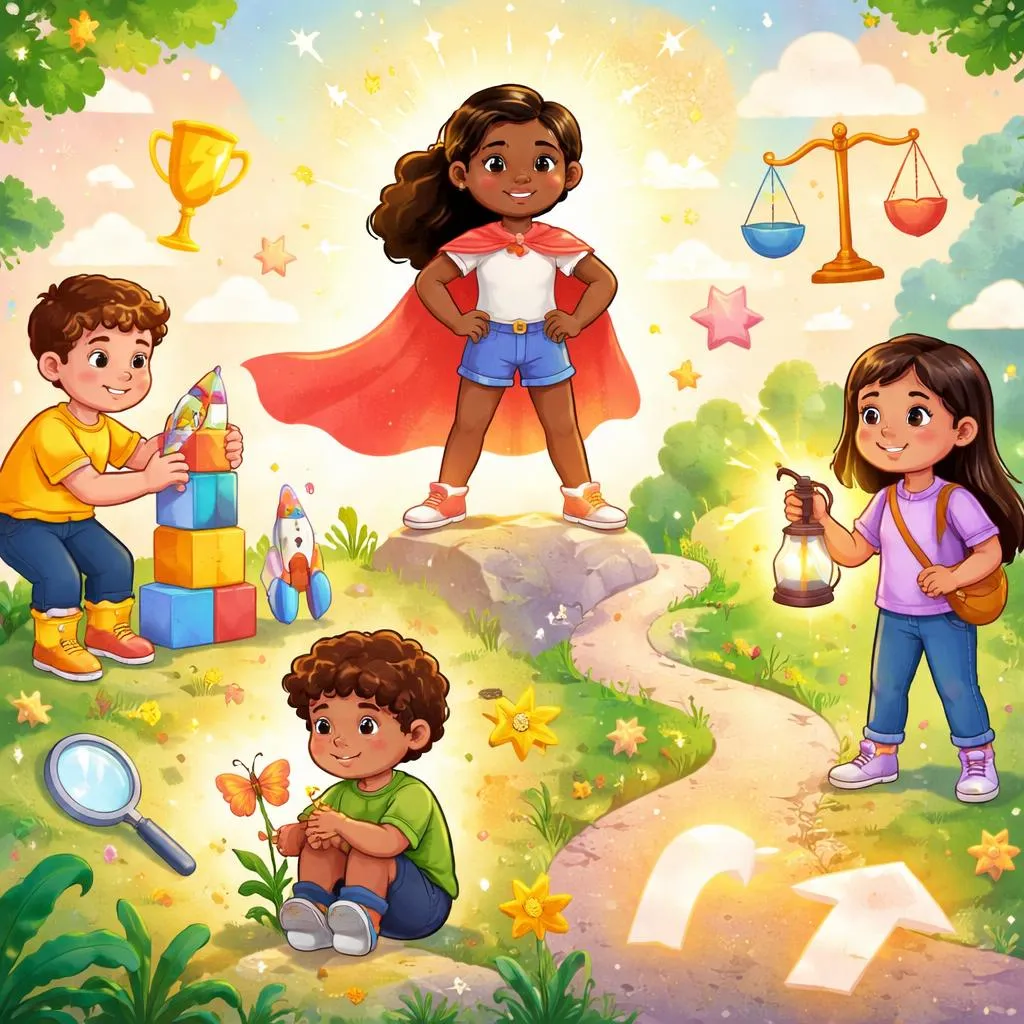

Every child wants power. Not over people. Power over their own choices. Power to help others. Power to change things. English gives us a strong family of words for this force. The root is “power.” From this root come three more words. “Powerful” describes someone or something with great strength. “Powerfully” describes an action done with strength. “Powerless” describes the feeling of having no control. These four words help children understand their own strength. They also help children build resilience. Let us explore this strong family.
What Does “Same Word, Different Forms” Mean? One force takes different word shapes. “Power” is the noun. Power can be electricity or influence. “Powerful” is the adjective. A powerful engine pulls the train. “Powerfully” is the adverb. The speaker argued powerfully for kindness. “Powerless” is the opposite adjective. She felt powerless to stop the rain. Your child sees this pattern in other words. “Strength” becomes “strong.” “Force” becomes “forceful.” “Power” gives us even more range.
Personal Pronouns Change Their Form Pronouns shift shape too. “I” becomes “me.” “She” becomes “her.” “We” becomes “us.” This shows that English changes words for grammar. Our word family “power” changes for grammar as well. But it also changes for meaning. A noun names a force. An adjective describes. An adverb describes an action. Learning these roles helps your child talk about strength and control clearly.
From Noun to Adjective to Adverb – One Family, Many Words “Power” is the noun. The power of the wind knocked down trees. “Powerful” is the adjective. A powerful voice can calm a crowd. “Powerfully” is the adverb. The sun shone powerfully in the desert. “Powerless” is the adjective. A powerless phone cannot make calls. This family gives your child four tools for understanding strength. One root. Four ways to talk about force and control.
One Root, Many Roles – How Words Grow from Force to Feeling Let us follow a power story. A child learns about the power of wind and water. The child becomes powerful by learning new skills. The child writes powerfully about protecting nature. Sometimes the child feels powerless, like during a scary storm. But the child remembers that learning is real power. See how “power” runs through all four sentences. Each form adds a new layer. Your child can say “Wind has power.” “You are powerful when you learn.” “You can write powerfully.” “A broken toy feels powerless.” One root tells a whole story of growth and resilience.
Same Meaning, Different Jobs – Is It a Noun or an Adjective? How does your child know the job? Look at the sentence position. As a subject or object, use the noun “power.” Example: “Power without kindness is dangerous.” Before a noun or after “be,” use “powerful.” Example: “That is a powerful magnet.” Before a verb or at the end of a clause, use “powerfully.” Example: “The engine hummed powerfully.” Before a noun or after “be,” use “powerless.” Example: “Without batteries, the toy is powerless.” Endings give clues. “Power” is the noun. “-ful” signals full of power. “-fully” signals an adverb. “-less” signals without power.
Adjectives and Adverbs – When Do We Add -ly? This family shows the “-ly” rule clearly. Take the adjective “powerful.” Add “-ly” to make “powerfully.” No spelling change. Many adjectives work this way. “Quick” becomes “quickly.” “Kind” becomes “kindly.” “Powerful” becomes “powerfully.” Also from “powerless” we can make “powerlessly.” Example: “He stood powerlessly as the balloon floated away.” That is useful. Most “-ful” adjectives become “-fully” adverbs. “Careful” becomes “carefully.” “Powerful” becomes “powerfully.”
Watch Out for Tricky Spelling Changes (Double Letters, y to i, and More) “Power” has no double letters. Ends with “er.” When we add “-ful” to make “powerful,” keep the “er.” No change. “Power” + “ful” = “powerful.” Not “powerfull” with double “l.” One “l” in “ful.” When we add “-ly” to make “powerfully,” keep the “ful.” “Powerful” + “ly” = “powerfully.” Now there is double “l”? “Powerful” ends with one “l.” Adding “ly” makes two “l”s together. That is correct. When we add “-less” to make “powerless,” keep the “er.” “Power” + “less” = “powerless.” One “s” in “less”? “Less” has one “s.” So “powerless” has one “s.” No double letters besides the “ll” in “powerfully.” The main challenge is remembering that “power” has “ow” not “oa.” “Power” not “poar.”
Let’s Practice – Can You Choose the Right Form? Try these simple sentences with your child.
The (power / powerful) of the sun gives us light. (Answer: power)
A (power / powerful) speaker can inspire a whole room. (Answer: powerful)
She argued (powerful / powerfully) for more playground time. (Answer: powerfully)
Without fuel, the car is (powerful / powerless). (Answer: powerless)
The wind blew (powerful / powerfully) during the storm. (Answer: powerfully)
Make your own sentences from daily life. Say “Electricity gives power to lights.” Say “You have a powerful imagination.” Say “The horse galloped powerfully across the field.” Say “A broken clock is powerless to tell time.”
Tips for Parents – Help Your Child Learn Word Families in a Fun Way Name different kinds of power. “The power of a smile.” “The power of kind words.” “The power of practice.” “The power of saying no.” Use the words. “You are powerful when you speak up.” “You can act powerfully kind.” “Feeling powerless is okay. It means you need help.” This builds a nuanced view of power.
Play the powerful game. Ask “What makes you feel powerful?” Learning a new word. Helping a friend. Riding a bike. Say “You can write powerfully about it.” “Even small people have powerful hearts.” “When you feel powerless, ask for a hug.” This builds emotional intelligence.
Read books about heroes, activists, and inventors. All of them used power for good. Pause during reading. Ask “What power does this character have?” Ask “What makes them powerful?” Ask “How do they act powerfully?” Ask “When do they feel powerless?” These questions build character education.
Create a family “power” list. Write down powers you have. “Power to choose our food.” “Power to forgive.” “Power to read.” “Power to help.” Say “We use our power for good.” “We are powerful when we work together.” “A powerless moment is a chance to grow.” This builds gratitude and agency.
Distinguish “power” from “control.” Power can be shared. Control is often keeping things for yourself. Say “A powerful leader shares power.” “Taking power from others is not true strength.” “True power helps people feel more powerful.” This builds leadership values.
Use “powerless” to name frustration. When your child feels stuck, say “You feel powerless. That is hard. What small power do you have right now?” “You can choose to breathe. You can choose to ask for help.” This builds problem-solving.
Now you have a complete guide. Recognize the power you have. Be a powerful voice for good. Act powerfully with kindness. Support others who feel powerless. This word family does more than teach English. It teaches that true power lifts others. It teaches that even a child has power to change a moment. It teaches that feeling powerless is temporary. Keep building your power. Keep growing together. One word family at a time.