
Meaning
The verb to have is one of the most important verbs in English. It shows possession, relationships, and experiences.
In early English learning, verb to have helps describe what someone owns or feels. Teachers often introduce it early because it appears in many daily sentences.
Simple examples include “I have a book” and “She has a cat.” These sentences show ownership and basic sentence structure.
The verb to have also appears in phrases about feelings and health. Examples include “I have a headache” and “They have fun.”
Teachers guide learners to see that have connects a subject with an object. This concept supports sentence building and communication skills.
Conjugation
Verb to have changes its form with different subjects. This change is called conjugation.
In the present tense, English uses have and has. In the past tense, English uses had for all subjects.
Teachers explain that English verbs change depending on the subject and time. Short patterns help learners remember forms easily.
Conjugation practice helps learners build correct sentence structures. It also supports subject-verb agreement understanding.
Teachers model patterns with clear and repeated examples. Repetition builds automatic recognition of forms.
Present tense
In the present tense, verb to have appears as have or has. The choice depends on the subject.
“I,” “You,” “We,” and “They” use have. “He,” “She,” and “It” use has.
Teachers provide simple sentences such as “I have a pen.” Another example is “She has a doll.”
The present tense describes what exists now. It also describes daily routines and facts.
Teachers connect present tense with classroom objects. For example, “We have a classroom” or “The teacher has a book.”
Practice with real objects makes meaning clear. This approach links grammar with real-world context.
Past tense
The past tense of verb to have is had. All subjects use had.
Teachers explain that the past tense talks about before now. Simple timelines help illustrate this concept.
Examples include “I had a dog” and “They had a party.” These sentences describe past possession or experiences.
Teachers can connect past tense with stories and memories. For example, “Yesterday, we had English class.”
Storytelling activities support past tense practice. Narratives make grammar meaningful and memorable.
Future tense
The future tense uses will have. This form describes something that will happen later.
Teachers explain that will shows the future. Short examples help understanding.
Examples include “I will have lunch at noon.” Another example is “She will have a test tomorrow.”
Teachers connect future tense with schedules and plans. This integrates grammar with real-life time concepts.
Calendar activities help visualize future events. This supports comprehension of time expressions.
Questions
Questions with verb to have use do or does in the present tense. Teachers model question patterns clearly.
Examples include “Do you have a pencil?” Another example is “Does he have a bike?”
In the past tense, questions use did. For example, “Did they have fun?”
Teachers explain that the main verb returns to have in questions. This highlights auxiliary verb structure.
Short answers help practice communication. Examples include “Yes, I do” or “No, I don’t.”
Question practice encourages speaking and interaction. This builds conversational confidence.
Other uses
Verb to have appears in many fixed expressions. Examples include “have breakfast,” “have a shower,” and “have a rest.”
Teachers explain that have can mean “eat,” “drink,” or “experience.” Context determines meaning.
The verb to have also appears in perfect tenses. For example, “I have finished my homework.”
Teachers introduce perfect tense later with clear timelines. This builds advanced grammar understanding step by step.
Have also appears in modal-like expressions such as “have to.” For example, “We have to study.”
Teachers clarify that “have to” expresses obligation. This connects grammar with classroom rules and routines.
Learning tips
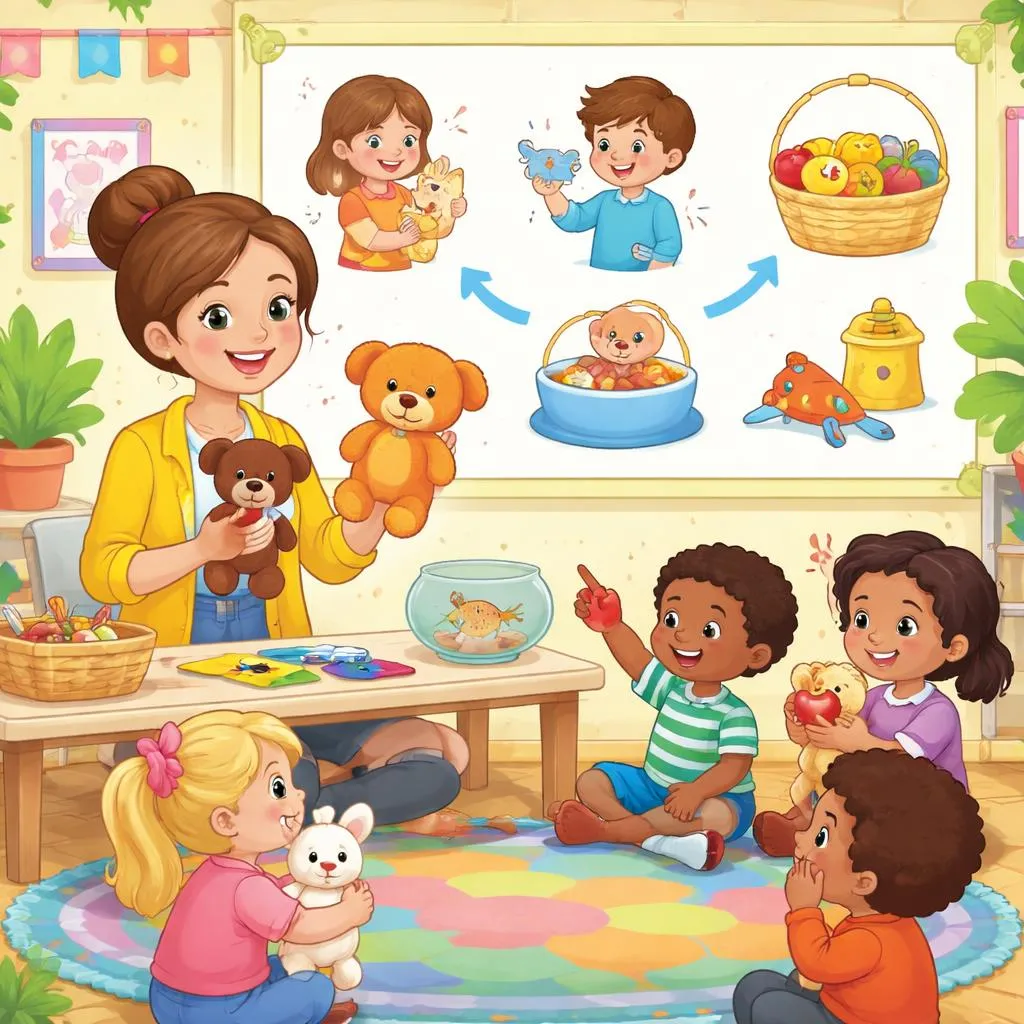
Teachers introduce verb to have with real objects in the classroom. Visual aids make meaning clear and concrete.
Short and repeated sentences support memory. Chants and rhythm help internalize forms.
Contrast practice helps learners see have versus has. Teachers use subject cards to demonstrate changes.
Sentence frames guide structured practice. For example, “I have a ___” and “She has a ___.”
Daily routine practice integrates grammar with real life. For example, “We have English on Monday.”
Error correction focuses on meaning first, then form. Positive feedback encourages continued practice.
Visual charts showing conjugation patterns support reference learning. Learners revisit charts during independent practice.
Educational games
Role-play activities encourage real communication with verb to have. Learners pretend to shop and say what they have.
Classroom scavenger hunts use sentences like “I have a red pen.” This combines movement and speaking.
Memory card games pair subjects with correct verb forms. This reinforces conjugation patterns.
Question games practice interaction. Learners ask, “Do you have a pet?” and answer in full sentences.
Story-building games use prompts with have. For example, “The boy had a magic hat.”
Digital quizzes provide instant feedback on verb forms. Technology supports independent practice.
Board games include spaces with sentence prompts using verb to have. Each move requires a spoken sentence.
Group projects involve creating posters with sentences using have and has. Visual presentation supports grammar awareness.
Verb to have forms a core foundation in English grammar learning. It connects ownership, experiences, routines, and obligations in daily language. Through structured explanation, meaningful examples, and engaging activities, verb to have becomes a powerful tool for building accurate and confident communication in early English education.