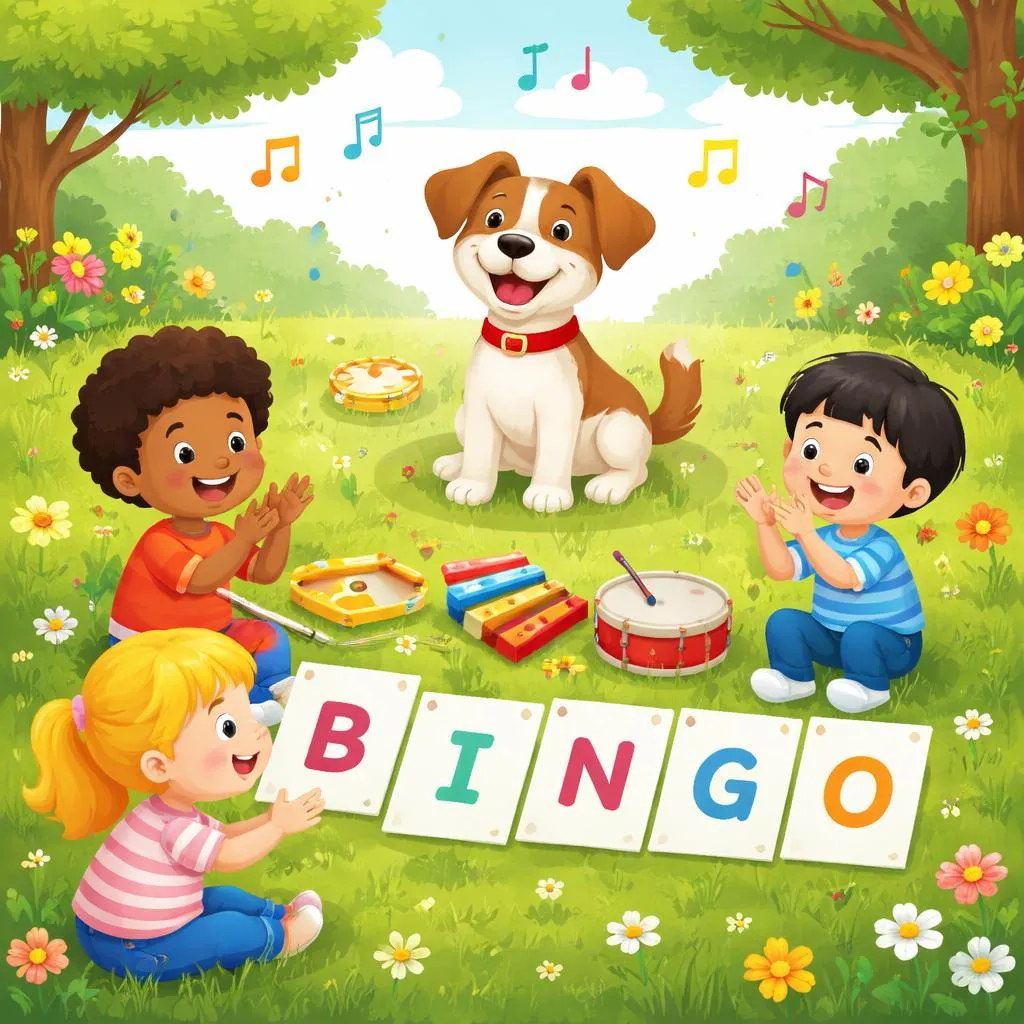

What Is The Rhyme? The Bingo nursery rhyme song is a classic and energetic call-and-response tune. It tells a short, repetitive story about a farmer and his dog. This song is beloved in classrooms worldwide. Its core mechanic is spelling the dog's name: B-I-N-G-O. With each verse, one letter is replaced by a hand clap. This creates a engaging and participatory experience. The Bingo nursery rhyme song is not just fun. It is a powerful pedagogical tool. It seamlessly combines music, spelling, and rhythm practice for effective language learning.
The Lyrics of Nursery Rhymes The lyrics of nursery rhymes for Bingo are highly structured and predictable. The standard version begins: "There was a farmer had a dog, and Bingo was his name-o. B-I-N-G-O, B-I-N-G-O, B-I-N-G-O, and Bingo was his name-o!" Each subsequent verse removes the first letter in the sequence, replacing it with a clap. The second verse goes: "(clap)-I-N-G-O." The lyrics remain constant except for this one change. This extreme repetition is the song's genius. It allows children to master the letter sequence and the rhythm through joyful, cumulative participation.
Vocabulary Learning While the Bingo nursery rhyme song is focused on spelling, it introduces useful vocabulary. The key nouns are farmer, dog, and name. We can expand this theme. We can discuss other farm words: barn, field, tractor. We can talk about pet words: puppy, tail, bark. The song also provides a perfect context for learning the verb to have in a past narrative form: "There was a farmer had a dog." We can practice question forms: "What is the dog's name?" "His name is Bingo." This builds a small but meaningful thematic vocabulary set.
Phonics Points This song is a stellar phonics resource. It isolates and emphasizes the individual sounds of five consonants: B, I, N, G, O. We focus on the pure sound of each letter, not its name. The /b/ sound, the /i/ sound (short i), the /n/ sound, the /g/ sound, and the /o/ sound. The song allows us to practice blending these sounds together to form the word "Bingo." We can also use the tune to spell other simple CVC or VC words. For example, "There was a cat, and Moe was his name-o. M-O-E!" This transfers the phonics skill to new words, reinforcing letter-sound correspondence.
Grammar Patterns The Bingo nursery rhyme song models specific, useful grammar patterns. The opening line uses an informal narrative structure common in folk songs: "There was a farmer had a dog." This can be gently corrected to the more standard "There was a farmer who had a dog" in follow-up lessons. The song consistently uses the past tense (was, had), setting a story in the past. It also practices possessive pronouns: "his name-o." The repetitive spelling chant itself reinforces the fixed order of letters in a word, a foundational concept for writing.
Learning Activities Dynamic activities extend the learning from the song. Try "Word Substitution." Keep the tune, but change the character, name, and spelling. "There was a teacher had a pet, and Spot was her name-o. S-P-O-T!" This encourages creativity and application. Another activity is "Kinesthetic Spelling." Assign each letter a unique movement (jump for B, spin for I). Children perform the movements as they spell. Also, use "Missing Letter Flashcards." Hold up cards for B-I-N-G-O with one letter missing. Children sing the song, clapping for the missing letter shown on the card.
Printable Materials Printable resources make the lesson concrete. Create a "Bingo Song Sequence Chart." It shows the six verses visually, with clap symbols replacing letters step-by-step. This helps visual learners track the pattern. Design "Letter Cards" for B, I, N, G, O. Children can hold them up and flip them over to a "clap" symbol as the song progresses. A "Cut and Paste" worksheet lets children order the letters to spell BINGO. Another printable is a "My Own Song" template with blanks: "There was a ______ had a ______, and ______ was his/her name-o. _ - _ - _ - _ - _ !"
Educational Games Games solidify the song's lessons in play. "Letter Sound Bingo" is a natural extension. Use picture cards. The caller says a sound, "/b/," and players mark a picture starting with that sound (ball, bat). "Rhythm Copycat" is great for listening. Clap the rhythm pattern of "B-I-N-G-O" (short, short, short, short, long). Children echo it back. Then, clap the pattern with one silent beat (clap, clap, clap, clap, [silence]). They must identify which "letter" (beat) is missing. This builds acute auditory discrimination skills tied directly to the song's structure.
The Bingo nursery rhyme song is a masterclass in educational design. It turns spelling practice into an energetic, communal game. Its clear, incremental progression builds confidence. Each successful verse feels like a victory. By leveraging music and movement, it teaches far more than five letters. It teaches children to isolate sounds, follow a sequence, keep a steady beat, and participate in a group language activity. These are foundational literacy skills. The song's adaptable frame allows for endless creativity, ensuring it remains fresh and challenging. Ultimately, it proves that the most powerful English lessons are often the ones we sing, clap, and shout with joy.