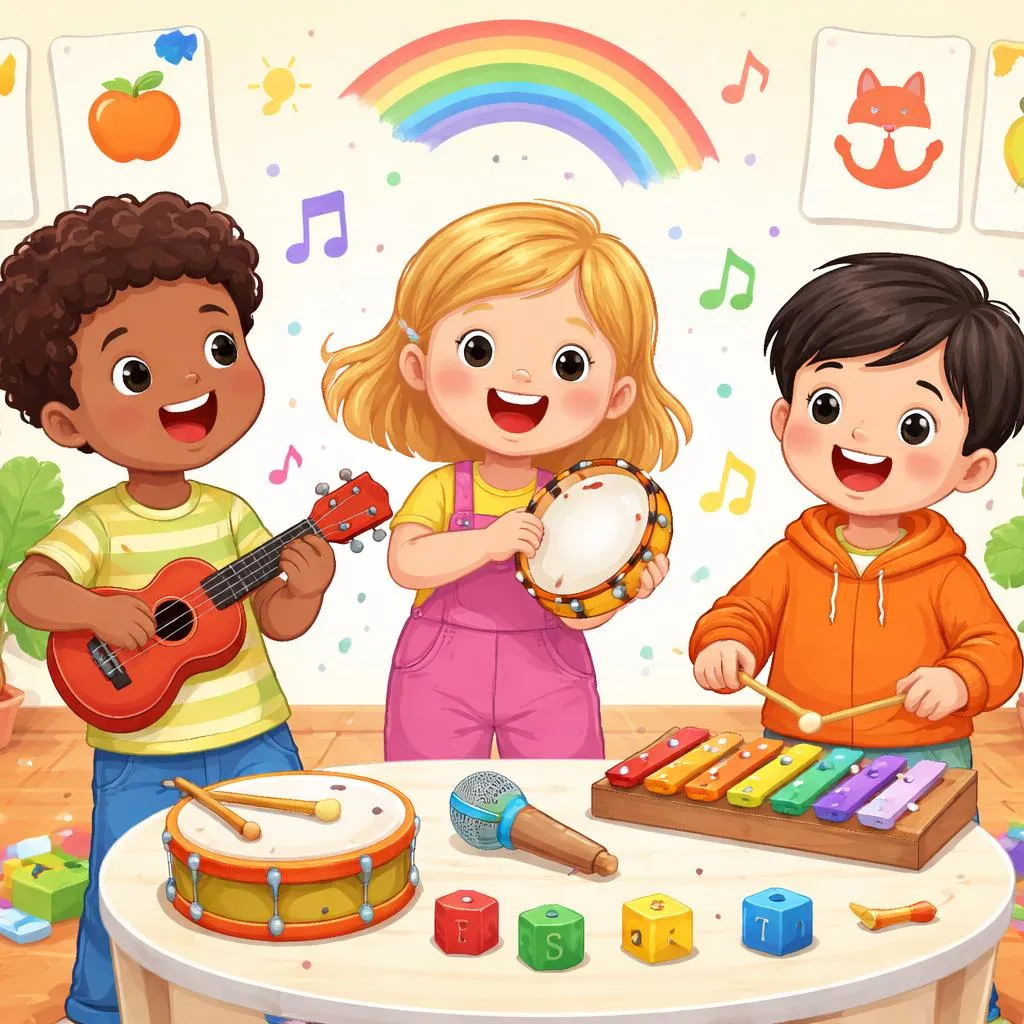

What Is The Rhyme? Many nursery rhymes and songs are directly about playing instruments children know and love. Songs like "I Am the Music Man" or "If You're Happy and You Know It (Clap Your Hands)" celebrate making music. These are action songs. They invite participation with instruments or body percussion. The melody is engaging and often cumulative, adding one instrument at a time. A rhyme about playing instruments children enjoy turns a music lesson into a language lesson. It connects specific English vocabulary to sounds, actions, and a great deal of fun. The song provides the perfect context for learning new words.
The Lyrics of Nursery Rhymes The lyrics of nursery rhymes about instruments are wonderfully descriptive. "I Am the Music Man" goes: "I am the Music Man, I come from far away, and I can play. What can you play? I play the piano! Pia-pia-piano, piano, piano!" The lyrics name the instrument and often include its sound. Another classic is "This Old Man." He plays "nick-nack on my drum." The lyrics pair the instrument with a simple, repetitive action verb. This makes the vocabulary memorable. The predictable structure lets children anticipate the next instrument, building confidence.
Vocabulary Learning This theme builds a rich and active vocabulary. We learn the names of instruments: drum, piano, guitar, violin, flute, trumpet, xylophone, tambourine, maracas. We can categorize them. String instruments: guitar, violin. Wind instruments: flute, trumpet. Percussion instruments: drum, xylophone, tambourine. We learn action verbs: play, hit, strum, blow, shake, tap. We learn sound words: bang, strum, toot, ding, shake, pluck. Descriptive words are also key: loud, quiet, fast, slow, high, low. We build full sentences: "I play the drum loudly." "She taps the xylophone gently."
Phonics Points Instrument names are excellent for phonics practice. We focus on beginning blends and sounds. The /dr/ blend in drum. The /tr/ blend in trumpet. The /fl/ blend in flute. We practice the hard /g/ sound in guitar. The /v/ sound in violin. We can break down compound words like xylo-phone or tam-bour-ine by syllables. We also explore onomatopoeia—words that sound like the noise they describe. Bang, tap, boom, ding. Clapping the rhythm of the instrument names (gui-tar has two claps) connects phonics to the beat of the music.
Grammar Patterns Songs about playing instruments children teach core grammar. We practice the structure "I can play the..." to express ability. "I can play the piano." We use the present continuous tense for actions happening now. "He is playing the drums." We learn questions. "What instrument do you play?" "Can you play the guitar?" We use the preposition "on" with many instruments. "Play a tune on the piano." We also use possessive pronouns. "This is my tambourine. That is your maraca." These patterns are essential for talking about hobbies and abilities.
Learning Activities Interactive activities deepen the connection between music and language. Try "Instrument Guessing Game." Make the sound of an instrument behind a screen. Children guess and say, "It's a drum!" Another is "Conductor Says." Like Simon Says, but for instruments. "Conductor says, play your shaker slowly." "Conductor says, stop playing." Also, create a "Classroom Band." Assign simple instrument parts to a known song. This teaches listening, taking turns, and following instructions in English, like "ready, stop, loud, soft."
Printable Materials Printable resources provide visual support. Create "Instrument Flashcards" with a picture on one side and the word on the back. Design a "My Instrument Book" where children draw or glue pictures of instruments and write, "I like the ______." A "Matching Worksheet" can connect an instrument picture to its sound word (drum - bang). A "Color-by-Instrument" sheet is also fun, where a color key corresponds to different instruments (color all trumpets yellow). This combines art, reading, and vocabulary.
Educational Games Games make practice playful. "Musical Instrument Bingo" is always popular. Use picture bingo cards. The caller makes the sound or says the word. "Instrument Charades" is fun. A child acts out playing an instrument. Others guess, "You are playing the violin!" For a listening and movement game, play "Freeze Dance with Instruments." Play music while children play simple shakers or bells. When the music stops, they freeze and say the name of their instrument. "Maraca!" This builds quick word recall.
Integrating playing instruments children into English learning is a powerful multisensory strategy. It links vocabulary to sound, touch, and movement. This creates stronger memory pathways. The joy and engagement of making music lower anxiety and increase motivation to use new words. Children learn more than just nouns; they learn verbs, adjectives, and full sentence structures to describe their creative actions. From forming a band to guessing sounds, each activity builds confidence in both musical expression and English communication. It shows that language, like music, is about rhythm, pattern, and joyful participation.