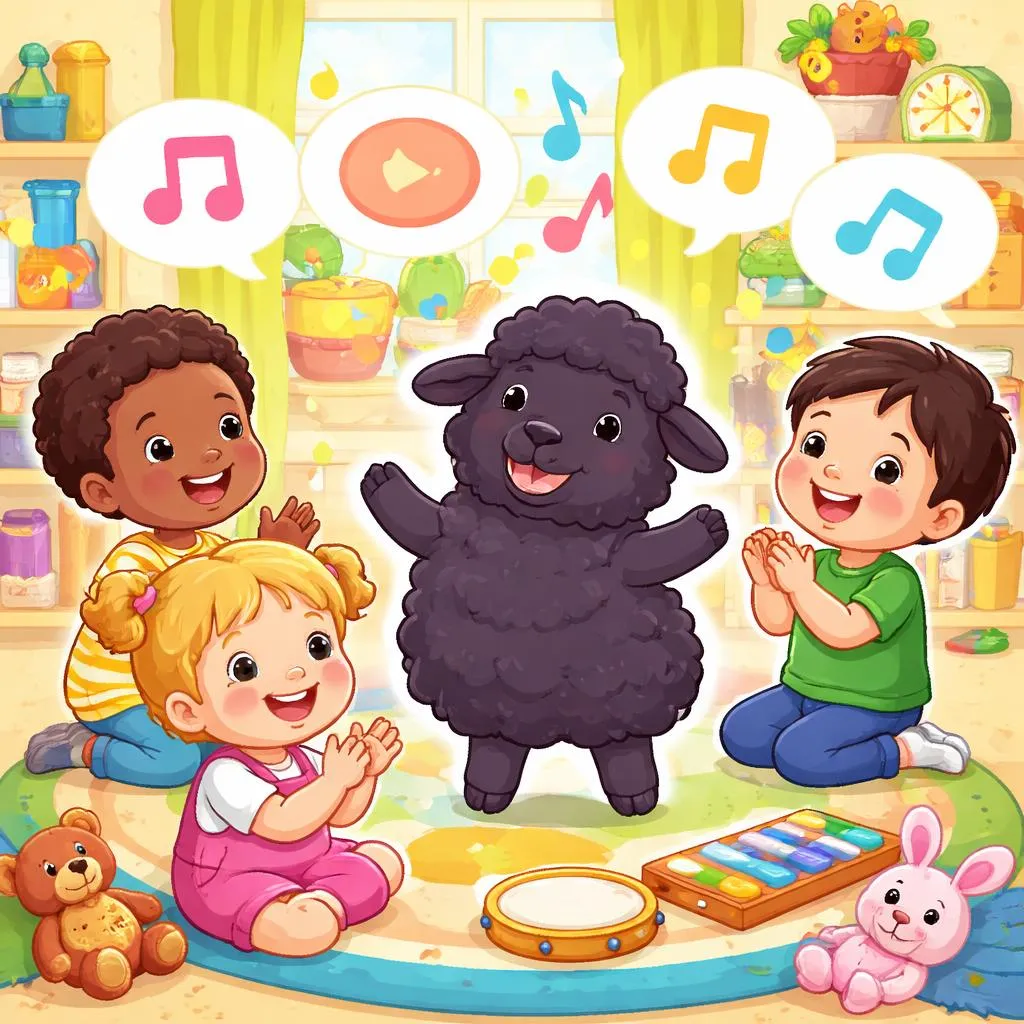

What Is The Rhyme? When we see a phrase like “baba baba baba baba black sheep”, it looks like a playful variation. It is likely a child's joyful, repetitive exploration of the famous nursery rhyme "Baa Baa Black Sheep." Children often play with sounds and words before mastering them. This repetition of “baba” mimics the rhythm and initial sound of “baa.” This exploration is a natural and important part of language development. We can use this curiosity to gently guide children toward the standard lyrics of nursery rhymes. This builds a bridge from playful babbling to clear English pronunciation.
The Lyrics of Nursery Rhymes The traditional lyrics of nursery rhymes for "Baa Baa Black Sheep" are clear and polite. They go: “Baa, baa, black sheep, have you any wool? Yes sir, yes sir, three bags full.” The variation “baba baba baba baba black sheep” focuses only on the first part. It repeats the consonant-vowel pattern “ba” many times. This repetitive chanting is fun. It helps children practice the /b/ sound and the rhythm of language. We can acknowledge this playfulness. Then, we can model the full, correct lyrics, turning their sound play into a complete and meaningful English song.
Vocabulary Learning Even from the playful phrase “baba baba baba baba black sheep”, we can start building vocabulary. The clear word at the end is sheep. We can introduce that word as the animal. We can add the color black. When we sing the full rhyme, we learn more words: wool, bag, full, master, dame, boy, lane. We can group these words. Farm words: sheep, wool. People words: master, dame, boy. Place words: lane. We also learn the number three and the concept of sharing. This turns simple sound repetition into a rich lesson about animals, counting, and kindness.
Phonics Points The phrase “baba baba baba baba black sheep” is actually wonderful for phonics. It highlights the /b/ sound, one of the first sounds babies make. Repeating “ba-ba” practices this plosive consonant. The word black continues the /bl/ blend. When we sing the full rhyme, we get more sounds. The /w/ in wool. The /th/ in three. The /m/ in master and my. The long ‘a’ in baa and lane. We can show how “baba” is a playful step toward saying “baa” clearly. Clapping with each “ba” also teaches the steady beat of English, which is key for future reading skills.
Grammar Patterns The full “Baa Baa Black Sheep” rhyme teaches simple grammar. The playful “baba baba baba baba black sheep” is just a naming phrase. But the real song asks a question: “Have you any wool?” This uses the “have you” structure for asking about possession. The answer is polite: “Yes sir, yes sir.” This shows how to reply formally. The line “three bags full” puts the number before the noun. The following lines use the preposition “for” to show giving: “One for my master.” This introduces basic sentence structure in a memorable way.
Learning Activities We can build activities from the sound “baba”. Try “Sound Matching.” Make cards with pictures of things that start with /b/: ball, bat, bed, and a sheep. Children say “b-b-ball” and match it to the picture. For the full rhyme, try “Wool Bag Counting.” Use cotton balls and small bags. Count “one bag full, two bags full, three bags full.” Another is “Who Gets the Wool?” Use puppets or pictures of the master, dame, and boy. Children give a “bag” to each as we sing, practicing the vocabulary.
Printable Materials Printable resources can support this learning. Create a “Sheep Sound” sheet. It has a large picture of a sheep and the letters “B” and “Ba” in big, dotted fonts for tracing. This links the sound to the letter. Design a “Three Bags” coloring page. It has three bags to color and the number 3 to trace. A simple “B Word” wheel can have a window that spins to show /b/ pictures (ball, bus, book, sheep). For the full song, a storyboard with four scenes (asking the sheep, three bags, giving to the master, giving to the boy) helps with sequencing.
Educational Games Games make sound practice fun. Play “Guess the Animal.” Start with the sound “baa baa” or “baba baba.” Children guess “sheep!” Then do other animals. “Pass the Sound” is a good circle game. Whisper “baa” or “baba” around the circle. The last child says it aloud. For the full rhyme, “Musical Bags” is fun. Place three paper “bags” on the floor. Play music. When it stops, children find a bag to stand near. They say, “I am near a bag of wool!” This connects movement to the new words.
The journey from “baba baba baba baba black sheep” to “Baa, baa, black sheep, have you any wool?” is a beautiful example of language acquisition. We celebrate the playful repetition as a sign of engagement. Then, we gently model the complete, correct English. This approach builds confidence. It shows children that their experiments with sound are the first step to speaking clearly. By using their interest as a starting point, we teach phonics, vocabulary, and grammar in a way that feels natural and joyful. This turns a simple nursery rhyme into a powerful tool for building a strong, happy foundation in English.