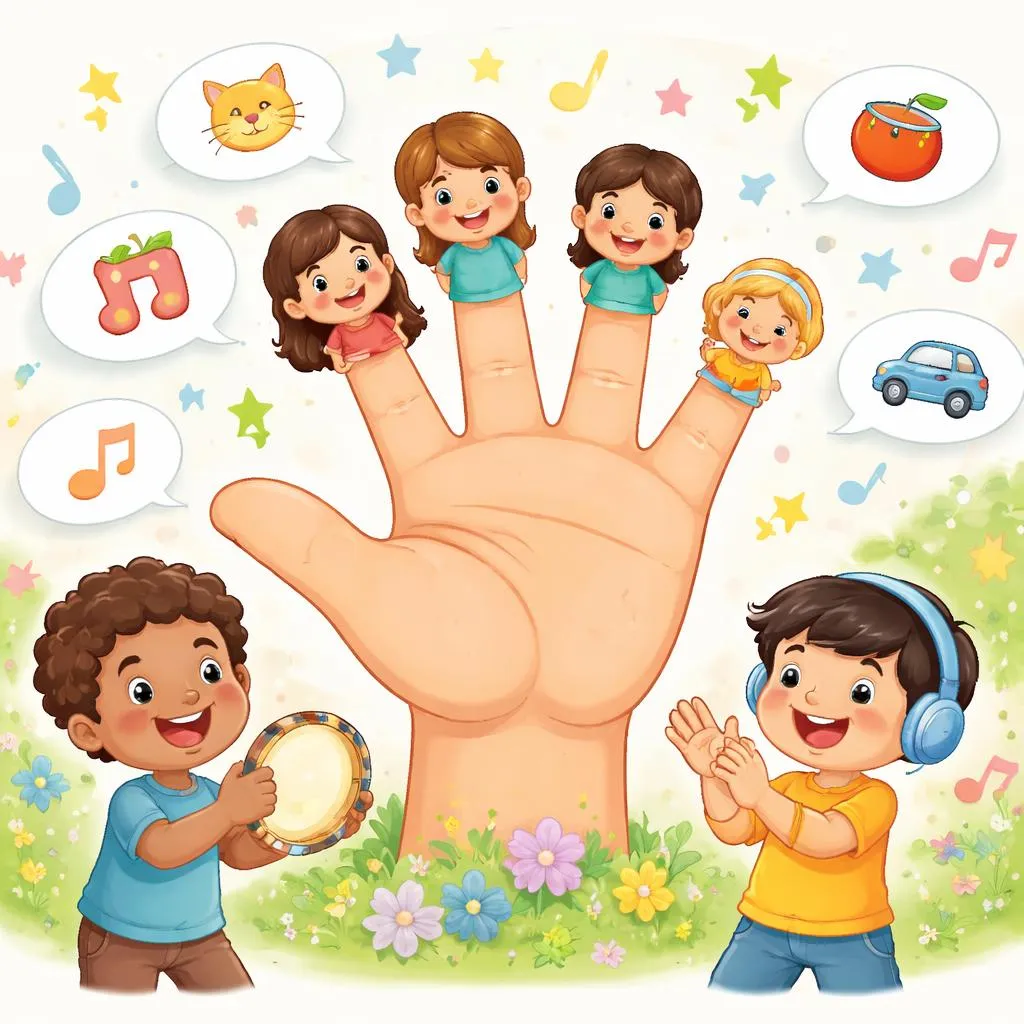

Welcome, everyone! Today, we are going to sing, move, and learn with a delightful classic. We will explore the "song family finger". This is a charming and interactive finger play song. It is a wonderful tool for teaching about family members, body parts, and simple English sentences. Let us wiggle our fingers and start this joyful learning journey together!
What is the rhyme? The rhyme we are learning is a beloved children's finger play. It is often called "Where Is Thumbkin?" or "Family Finger Song." This rhyme assigns each finger on the hand to a different family member. The song uses a simple call-and-response format. We sing a question about where a family member is. Then, we make that finger "appear" and introduce itself. The rhyme is short, repetitive, and full of movement. This makes it perfect for capturing young learners' attention. It combines music, physical action, and language in a powerful way.
The lyrics of nursery rhymes Let's look at the common lyrics for this finger play. The traditional version often goes like this:
Daddy finger, daddy finger, where are you? Here I am, here I am. How do you do?
This pattern repeats for each family member, typically in this order: Daddy Finger (thumb), Mommy Finger (index finger), Brother Finger (middle finger), Sister Finger (ring finger), and Baby Finger (pinky). Sometimes, the Baby Finger verse ends with "I love you" instead of "How do you do?" The song is simple, allowing children to learn it quickly and sing along with confidence.
Vocabulary learning This rhyme is a treasure chest of basic but essential English vocabulary.
The core vocabulary revolves around the family. We learn the words daddy, mommy, brother, sister, and baby. These are fundamental kinship terms.
We also learn the names of fingers, or we associate each family member with a specific digit. This reinforces the word finger itself.
The song introduces key question words and phrases. The phrase "Where are you?" is a very common and useful question. The response, "Here I am," is a standard way to announce one's presence.
The greeting "How do you do?" is a formal but classic English greeting. The alternative ending, "I love you," teaches an important expression of affection.
Phonics points This rhyme offers excellent practice for clear pronunciation and specific sounds.
The repetition of the /f/ sound in "family, finger" is great for phonics. It is a continuous sound that children can practice easily.
The /ð/ sound in "where are you?" and "How do you do?" is important. It is the soft "th" sound in words like "the" and "this." Singing helps practice this sound in a flowing sentence.
The song also highlights vowel sounds. For example, the long /aɪ/ sound in "I am" and the /uː/ sound in "you" and "do." The clear, slow enunciation in singing helps distinguish these sounds.
The repetitive structure allows children to hear and produce correct word stress and sentence rhythm, which is a foundational skill for speaking.
Grammar patterns Even a simple song like this demonstrates basic English grammar patterns in action.
The most prominent pattern is the question-and-answer structure. "Where are you?" receives the answer "Here I am." This models a complete conversational exchange.
The song consistently uses the verb "to be" in the present tense: "Where are you?" and "Here I am." This reinforces these crucial verb forms.
We see the use of the subject pronoun "I". Each finger says, "I am here." This teaches self-identification in English.
The listing sequence from Daddy to Baby presents a natural order, introducing the concept of sequencing within a family structure.
Learning activities We can extend the learning from this song with many fun activities.
-
Family Puppet Show: Create simple finger puppets for each family member. As you sing, children can bring the correct puppet "on stage." They can even create puppets for grandparents or pets and make new verses.
-
"Where Is...?" Scavenger Hunt: Hide pictures of family members around the room. Sing "Daddy finger, where are you?" The children then search for the Daddy picture. When they find it, they bring it back and say, "Here I am!" This connects the song to a physical game.
-
Feelings Variation: Change the ending line. Instead of "How do you do?" try "I am happy!" or "I am sleepy!" Make the corresponding finger look happy or tired. This introduces emotion vocabulary.
-
Speed Singing Challenge: Sing the song at different speeds—very slowly like a giant, very fast like a mouse. This helps with listening comprehension and pronunciation control, and it is simply hilarious fun.
Printable materials Printable resources can make this song even more interactive and lasting.
Create a finger puppet template. Provide outlines of hands or simple paper strips that can be wrapped around fingers. Children can color and cut out a daddy, mommy, brother, sister, and baby to wear as they sing.
Design a family matching sheet. On one side, have drawings of the five family members. On the other side, have drawings of the five fingers. Draw a line to match Daddy to the thumb, etc. This reinforces the association.
A lyrics sheet with pictures is very helpful. Next to the words "Daddy finger," include a small picture of a father and a thumb. This supports pre-readers in following along.
Make a "My Family" drawing page inspired by the song. It has five boxes, each labeled with a family member. Children can draw their own family members in the boxes, personalizing the vocabulary.
Educational games Let's turn this rhyme into structured games with clear learning goals.
-
Finger Freeze Dance: Play the song. Children wiggle all their fingers. When the music pauses, call out "Brother Finger!" Children must freeze, holding up only their middle finger. This builds listening skills and finger differentiation.
-
Sequence Memory Game: Lay out picture cards of the five family members in order. Sing the song. Then, flip one card over. Sing again, but the children must remember and say the name of the hidden family member. Flip over more cards to increase the challenge.
-
"Who Am I?" Guessing Game: Put a family finger puppet on your hand without showing the child. Give a clue. "I am tall. I have a deep voice. Who am I?" The child guesses "Daddy Finger!" This encourages listening for descriptive vocabulary beyond the song.
The "song family finger" is a gateway to language. Its magic lies in combining words, music, and movement. This multi-sensory approach helps vocabulary and grammar stick in a child's memory. As you sing and play, you are building more than just English skills. You are building joyful connections to learning. So keep wiggling those fingers, singing those questions, and answering with a smile. Your classroom or home is filled with the sound of learning and laughter.