
Meaning
The phrase this is the way expresses a method, a routine, or a correct path. Teachers often use it to model how to do something.
This phrase appears in daily routines and children’s songs. It guides learners to notice how people act in everyday life.
For example, “This is the way we brush our teeth.” This sentence shows a repeated action.
The phrase also shows direction and guidance. It can mean “this is how we do it.”
Conjugation
The phrase this is the way includes the verb “is.” “Is” comes from the verb “to be.”
Teachers explain that “this” is a subject. “Is” links the subject to the noun “way.”
Simple sentence structure helps early learners. “This is the way.” “That is the way.”
The phrase does not change with tense in this fixed expression. The verb inside the sentence changes instead.
Present tense
In the present tense, this is the way describes daily habits. It connects with verbs that show routine actions.
Examples support understanding. “This is the way we wash our hands.” “This is the way we go to school.”
Teachers can model present simple patterns. “We wash.” “We go.”
The phrase helps explain habits and schedules. It connects language with real life.
Past tense
In the past tense, this is the way can introduce past routines. Teachers change the action verb to the past form.
“This is the way we washed our hands yesterday.” “This is the way we went to the park.”
The phrase stays the same, but the verb changes. This contrast supports tense awareness.
Teachers can compare present and past forms in guided practice. Short sentences improve clarity.
Future tense
In the future tense, this is the way can guide upcoming actions. Teachers add future forms after the phrase.
“This is the way we will brush our teeth tonight.” “This is the way we will learn English tomorrow.”
This structure shows planning and intention. Learners connect grammar with daily planning tasks.
Questions
Teachers can use this is the way to form simple questions. Questions support speaking practice.
“Is this the way to the classroom?” “Is this the way we play the game?”
Learners respond with yes or no answers. This pattern supports functional communication.
Teachers can ask open questions too. “What is the way you study English?”
Other uses
The phrase this is the way appears in songs, stories, and daily talk. It often appears in routine songs for children.
“This is the way we brush our teeth, early in the morning.” This song connects language with life skills.
The phrase also appears in guidance. “This is the way to solve the problem.”
It can show directions. “This is the way to the library.”
These uses broaden meaning and context.
Learning tips
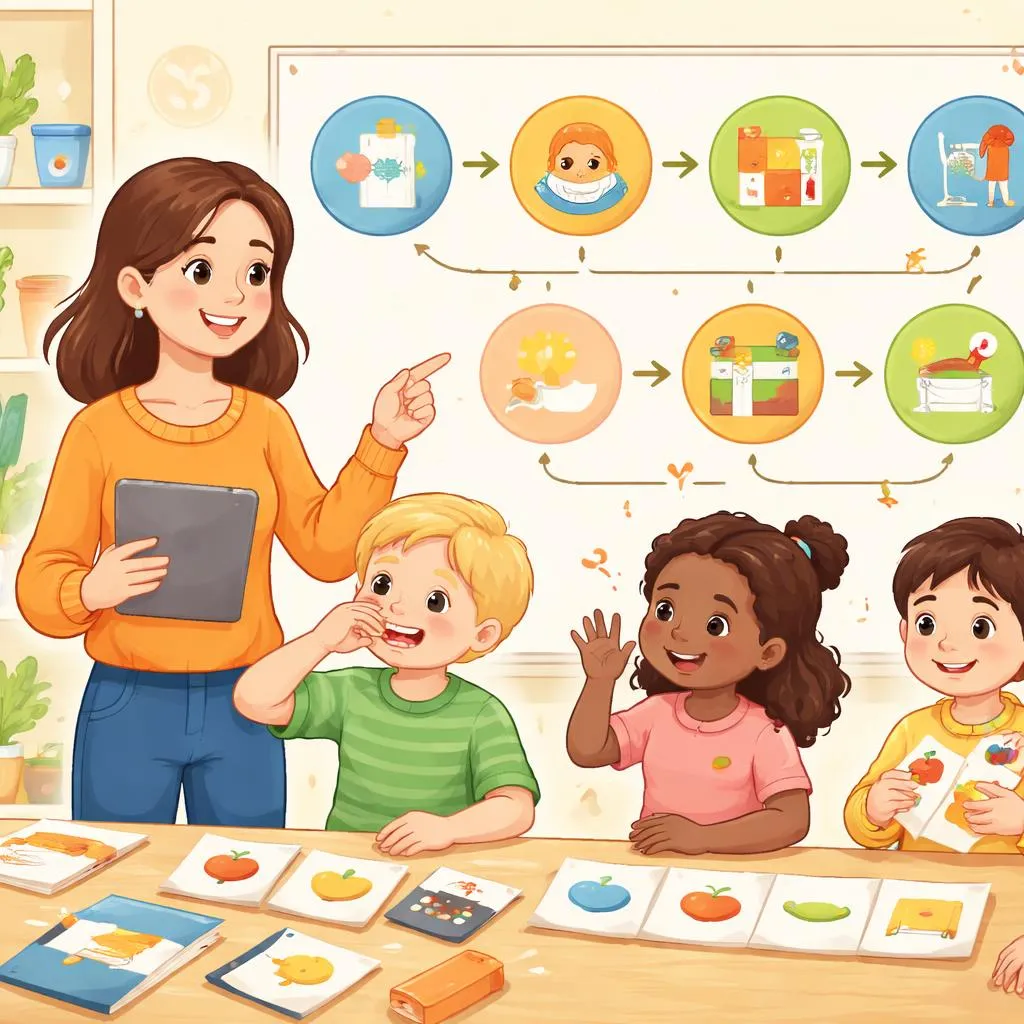
Teachers can connect this is the way with classroom routines. Use it during hand washing, lining up, or cleaning up.
Model actions while speaking. “This is the way we line up.”
Use gestures and repetition. Repetition strengthens memory and pronunciation.
Encourage learners to create new sentences. “This is the way we read a book.”
Use visuals to support meaning. Pictures connect words with actions.
Educational games
Games make this is the way engaging and memorable. A routine action game supports listening skills. Say a sentence and perform the action.
A classroom chant game builds rhythm and pronunciation. Clap and chant the phrase with actions.
A sentence building game supports grammar practice. Provide action cards and form new sentences.
A role-play game develops speaking skills. One learner leads and says, “This is the way we…”
Digital interactive songs also strengthen fluency. Sing-along videos support pronunciation and rhythm.
The phrase this is the way connects grammar, routines, and communication. It guides learners to notice patterns in daily language. With clear modeling, repetition, and guided activities, this expression becomes a powerful tool for early English instruction and confident classroom communication.