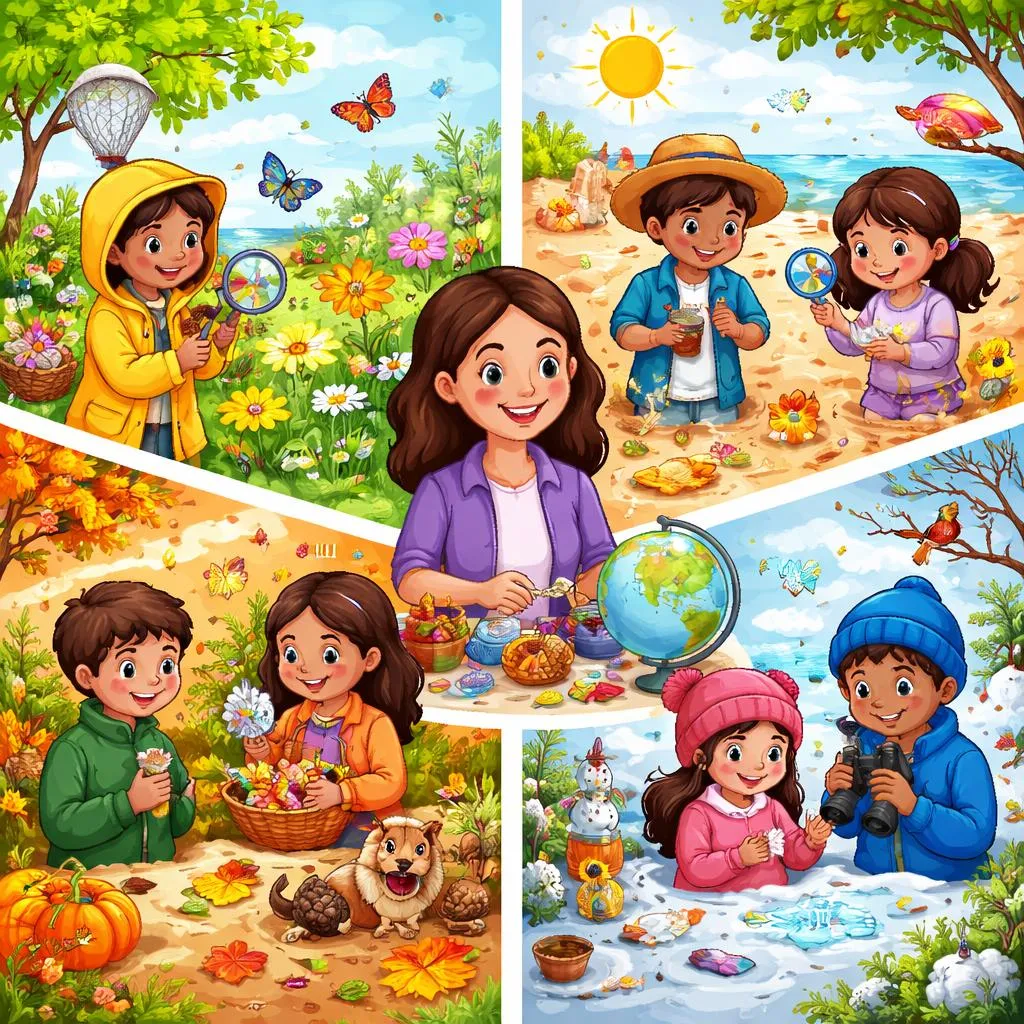

What is a Season of the Year?
Let’s look outside the window. What do you see today? Perhaps the sun is shining brightly, or maybe leaves are falling. What we see and feel changes throughout the year. We call these changes the seasons. A season of the year is a time period with its own special weather, light, and natural events. The Earth takes a full journey around the sun to complete all the seasons.
Understanding seasons helps us understand our world. We learn why we wear different clothes. We notice why trees look different. We discover why animals act in certain ways. Learning about each season of the year connects us to nature’s beautiful rhythm. It is a perfect topic for observation, discovery, and joyful learning.
Meaning and Explanation
Why do we have seasons? The reason is both simple and fascinating. Our Earth is tilted on its axis as it travels around the Sun. This tilt means that different parts of the Earth receive more direct sunlight at different times. When a part of the Earth tilts toward the Sun, we experience warmer, longer days. We call this summer.
When it tilts away, the days become shorter and colder. We call this winter. The times in between are spring and autumn. This cycle repeats every year. So, a season of the year is not just about temperature. It is a combination of daylight length, weather patterns, and changes in nature. This cycle affects plants, animals, and our own daily activities.
Categories or Lists
We typically divide the year into four main seasons. Each season of the year has a distinct character. Let’s meet them one by one. First is Spring. Spring arrives after winter. The weather grows warmer. Days get longer. We see new leaves and flowers. Baby animals are often born in spring. It is a season of new beginnings.
Next comes Summer. Summer has the longest and warmest days. The sun shines brightly. Trees are full of green leaves. We enjoy activities like swimming and playing outside. After summer, we welcome Autumn, also called Fall. The weather cools down. Leaves change color to red, orange, and yellow. Then they fall from the trees. Animals gather food for the coming winter.
Finally, we have Winter. Winter brings the shortest days and coldest weather. In many places, it might snow. Trees lose their leaves and rest. Some animals hibernate. Each season of the year lasts about three months. Their order always stays the same: Spring, Summer, Autumn, Winter. Then the cycle begins again with spring.
Daily Life Examples
We can see examples of each season all around us. Let’s think about our own lives. In Spring, we might put away heavy coats. We see blooming daffodils and tulips. We hear birds singing in the morning. The air smells fresh and rainy. Puddles appear for splashing.
During Summer, we wear sunglasses and hats. We eat ice cream and cold watermelon. The smell of sunscreen becomes familiar. We hear the sound of lawnmowers and buzzing bees. The feeling of cool grass under our feet is a summer treat.
In Autumn, we pull out sweaters and jackets. We see pumpkins and colorful leaves everywhere. We hear the crunch of leaves under our shoes. The air smells like apples and chimney smoke. We taste warm apple cider or pumpkin pie.
In Winter, we bundle up in scarves and gloves. We see frost on windows and perhaps snowmen. We hear the quiet that comes with a snowy day. The smell of hot chocolate fills the kitchen. We feel the warmth of a cozy blanket. Noticing these small details makes learning about each season of the year personal and memorable.
Printable Flashcards
Printable flashcards are excellent tools for season learning. A good set focuses on clear, visual associations. You can create cards with four main categories: Weather, Clothing, Activities, and Nature. For example, a “Spring” card might show a picture of rain boots, a budding flower, a kite, and a rainbow.
For “Summer,” show a sun, a swimming suit, an ice pop, and a green tree. “Autumn” cards can feature a leaf, a sweater, a rake, and a pumpkin. “Winter” cards might show a snowflake, a mittens, a sled, and a bare tree. Use these cards for sorting and matching games. Ask questions like, “Which season do we build a snowman?” This visual practice builds a strong mental library for each season of the year.
Learning Activities and Games
Now, let’s bring the seasons to life with activities! The best learning happens through play and exploration. Here are some engaging ways to understand the cycle of the year.
First, create a Seasonal Sensory Table. This is a hands-on discovery zone. For spring, fill a bin with potting soil, faux flowers, small gardening tools, and plastic insects. For summer, use sand, seashells, small buckets, and blue fabric for water. Autumn calls for dried corn kernels, colorful leaves, pinecones, and small gourds. Winter can be represented with fake snow (or shredded white paper), cotton balls, silver glitter, and small plastic penguins.
Another wonderful activity is a Seasonal Tree Art Project. Draw or paint a large, bare tree trunk with four main branches on a big poster board. Divide the board into four sections. Each quarter represents one season of the year. For spring, glue on pink and white tissue paper blossoms. For summer, use thick green paint or tissue for full leaves. For autumn, use red, orange, and yellow paper for fall leaves. For winter, leave the branches bare and add cotton ball “snow” at the base. This provides a powerful visual of the annual cycle.
Let’s play a Seasonal Sorting Game. Gather a large collection of images or small objects. Include items like a sun hat, a mitten, a seed packet, a maple leaf, a bathing suit, and a scarf. Provide four boxes or hoops labeled with each season. The task is to sort each item into the correct season of the year. This encourages critical thinking and vocabulary use.
For a movement-based game, try Seasonal Charades. Write down simple seasonal actions on cards. Ideas include “building a snowman,” “flying a kite,” “jumping in leaves,” or “swimming.” Players take turns acting out the activity while others guess. This connects physical memory to seasonal concepts.
A Weather Calendar is a fantastic long-term project. Track the weather each day for a month. Use simple symbols: a sun for sunny, a cloud for cloudy, raindrops for rain, a snowflake for snow. At the end of the month, count how many days were sunny or rainy. Compare charts from different months to see patterns. This introduces basic data collection and shows how weather changes within a season.
Don’t forget the power of music and stories. Learn songs about the seasons. “Spring is Here” or “Autumn Leaves are Falling Down” are classics. Read stories that feature seasonal settings. After reading, ask questions. “What season is it in this story? How do you know? What clothes are the characters wearing?”
These activities do more than teach facts. They build observation skills, vocabulary, and an understanding of cycles and time. Encourage descriptive language. Ask, “What does summer feel like? What does autumn sound like?” This multi-sensory approach makes the concept of each season of the year rich and full.
The world outside our window is the best classroom of all. A simple walk in the park can be a season lesson. Notice the signs. Point them out. Collect safe treasures like leaves or stones. This connection fosters a lifelong curiosity about the natural world and its beautiful, predictable rhythm. Every day offers a new clue in the wonderful story of the seasons.