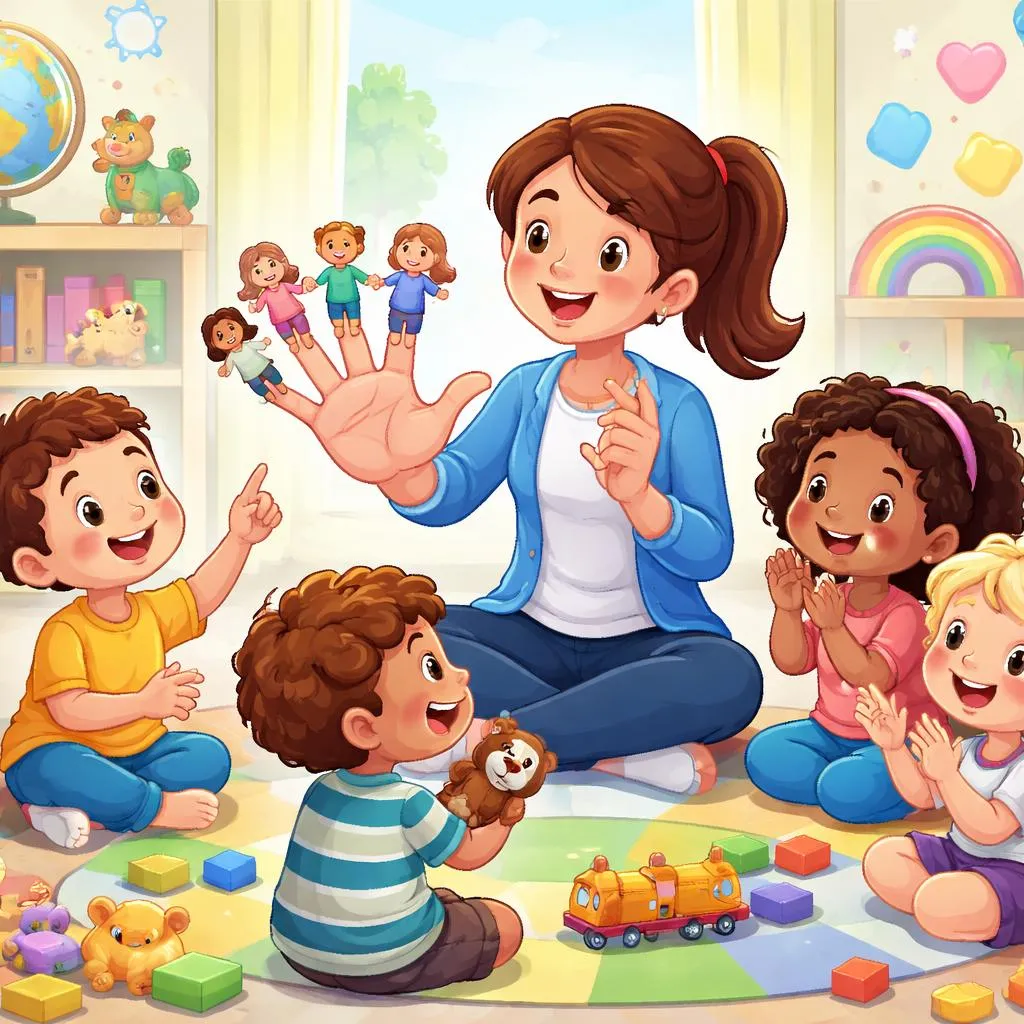

Hello, wonderful educators and parents. Today, we have a delightful tool for our teaching toolkit. We are going to explore a song that almost every child loves. It is a simple tune with a repetitive structure. Of course, I am talking about the classic nursery rhyme, often called the Finger Family song. Let us look closely at the daddy finger where are you lyrics and see how we can turn this song into a comprehensive English lesson.
What is the Nursery Rhyme? First, let us understand what this song is. The "Finger Family" is a popular children's song. It is a simple, repetitive rhyme that teaches family names. The song features fingers on a hand. Each finger represents a different family member. We have Daddy Finger, Mommy Finger, Brother Finger, Sister Finger, and Baby Finger.
The melody is very simple and easy to follow. The structure is always a question and an answer. One finger asks, "Where are you?" The other finger replies, "Here I am." This back-and-forth makes it perfect for young learners. It feels like a game of hide-and-seek on our own hands.
The Lyrics of Nursery Rhyme To teach effectively, we must know the words by heart. The daddy finger where are you lyrics are the foundation of our lesson. Here is the standard version we will use:
Daddy finger, daddy finger, where are you? Here I am, here I am. How do you do?
Mommy finger, mommy finger, where are you? Here I am, here I am. How do you do?
Brother finger, brother finger, where are you? Here I am, here I am. How do you do?
Sister finger, sister finger, where are you? Here I am, here I am. How do you do?
Baby finger, baby finger, where are you? Here I am, here I am. How do you do?
You can see the pattern. It repeats for each family member. This repetition is a powerful learning tool.
Vocabulary Learning Now, let us look at the key words. This song introduces two main categories of vocabulary. First, we have family members. We learn the words: daddy, mommy, brother, sister, and baby. These are essential words for a child's social world.
Second, we have simple action words. The phrase "where are you" introduces question words. The answer "Here I am" teaches a common phrase. We also have the greeting "How do you do?" This is a formal greeting, but it is a great phrase to learn. We can explain that it is another way to say "hello."
Phonics Points We can use this song to practice specific sounds. Listen to the repetition of the 'f' sound. We have "finger" and "family." The 'f' sound is a voiceless labiodental fricative. We can ask the children to put their top teeth on their bottom lip and blow air. This makes the 'f' sound.
We also have the 'd' sound in "daddy." This is a simple sound made by tapping the tongue behind the teeth. Practicing these sounds within the context of a song is much more fun than drilling them in isolation. The music provides a natural rhythm for pronunciation practice.
Grammar Patterns There is valuable grammar hidden in this simple song. The main pattern is the question form. We see the present tense question: "Where are you?" This is a great introduction to the verb "to be" in questions.
We also see the present tense answer: "Here I am." This shows the inversion of subject and verb. Usually, we say "I am here." In this answer, we put "here" first for emphasis. We do not need to explain the grammar rules to small children. We just want them to absorb the correct pattern through repetition.
Learning Activities How can we practice this beyond singing? We can do a lot. One activity is the puppet game. We can put simple paper puppets on our fingers. As we sing, we hide the finger behind our back. When we sing "Here I am," we bring it forward and wiggle it.
Another idea is to create a family drawing. Children can draw their own family. Then, they can point to each person and sing the song, replacing the finger names with their family members' names. For example, "Grandma finger, where are you?" This personalizes the learning.
Printable Materials Printable materials can support this lesson. You can create simple finger puppets. Draw the faces of the family members on small strips of paper. Cut them out and tape them into rings that fit a child's finger. Children can color them first.
You can also create a matching worksheet. On one side, print the names: Daddy, Mommy, Brother, Sister, Baby. On the other side, print pictures of the fingers. Ask the children to draw a line to match the name to the correct finger. This helps with reading recognition.
Educational Games Let us turn this into a game. One fun game is "Freeze Dance" with the song. Play the music and let the children dance. When the music stops, they must freeze. Then, you call out a family member, like "Sister Finger!" The children must hold up that finger.
Another game is the "Mystery Finger." Have the children close their eyes. Take one of the finger puppets and hide it behind your back. Sing the song for that specific finger. The children open their eyes and guess which finger is hidden. They can only guess after you finish the song.
Bringing It All Together As we work with this song, we see how much it offers. It is not just a fun tune. It is a complete language lesson. We cover listening, speaking, and even early reading. The gentle repetition builds confidence in young speakers.
Remember to use the song often. Sing it during transition times, like when washing hands or lining up. The more the children hear the daddy finger where are you lyrics, the more natural the words become. They will start using the phrases in their daily play without even realizing they are learning.