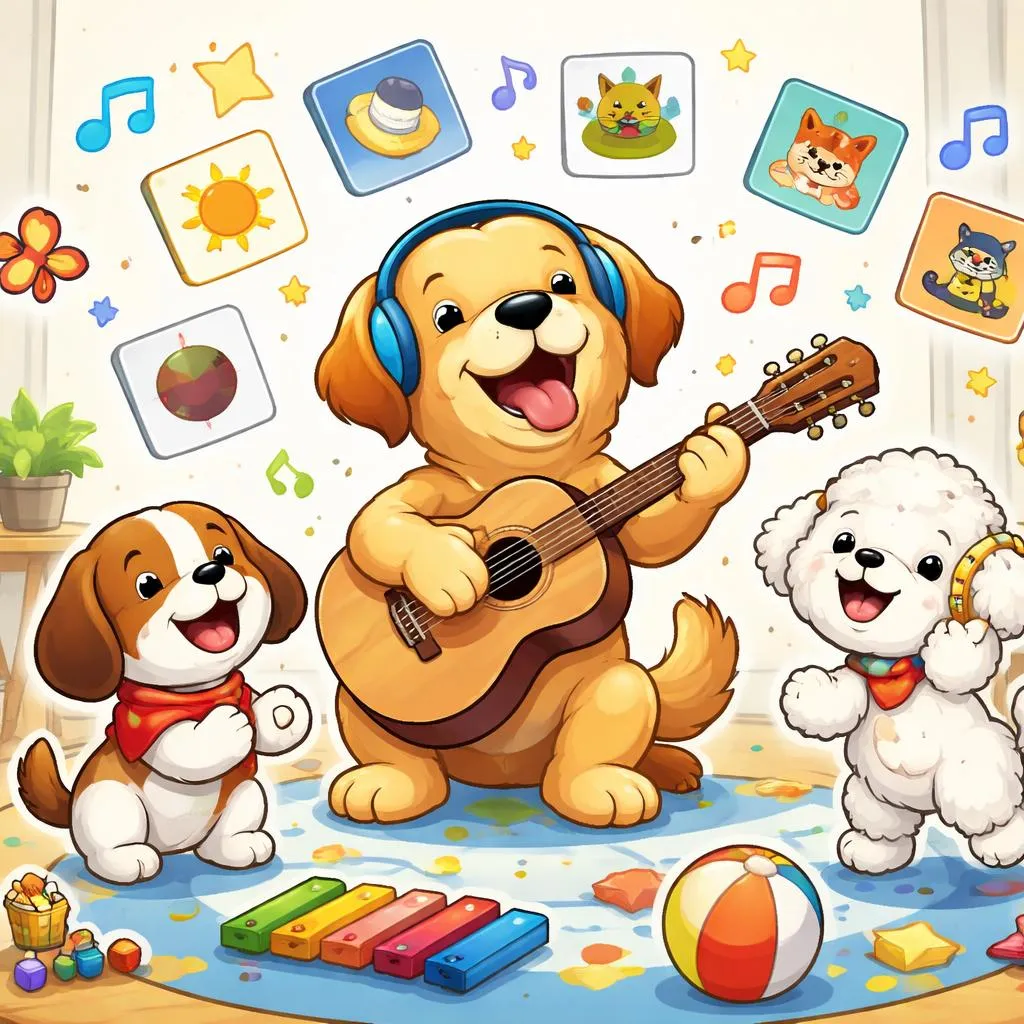

What Is The Rhyme? Many children love songs about animals. Dog song lyrics often form the core of playful and engaging nursery rhymes. These are not just random words. They are structured verses set to music. They talk about our furry friends. The songs might describe a dog's actions, sounds, or appearance. Classics like "Bingo" or "How Much Is That Doggie in the Window?" are perfect examples. These dog song lyrics use repetition and simple language. This makes them powerful tools for language learning. They capture a child's natural interest. We can use that interest to build strong English skills.
The Lyrics of Nursery Rhymes Let's examine typical dog song lyrics. They are usually very repetitive and rhythmic. Take the song "Bingo." The lyrics go: "There was a farmer had a dog, and Bingo was his name-o. B-I-N-G-O!" This structure is brilliant for learning. Each verse repeats most of the words. It only changes one letter sound at a time. Other songs might list actions. "My dog can run. My dog can jump. My dog can play." The predictable pattern helps children anticipate the next word. This builds confidence in using the language.
Vocabulary Learning Dog song lyrics are full of useful vocabulary. We learn the obvious words first: dog, puppy, tail, paw, bark. Then we expand. We find action verbs from the songs: run, jump, play, fetch, sit. We learn descriptive words: furry, big, small, happy, fast. We can group these words into categories. This is called semantic mapping. We create a "Dog Word" poster. We list body parts, actions, and sounds. Singing the words in context helps them stick. The music creates a strong memory link for the new English terms.
Phonics Points The repetitive nature of dog song lyrics is perfect for phonics. The song "Bingo" focuses on letter names and sounds. It highlights the consonants B, I, N, G, O. We can create new verses with other simple words. What about a dog named "S-P-O-T"? We also hear clear rhyming pairs. Words like dog and log, or bark and park, often appear in songs. We can practice the "ar" sound in bark and park. We can clap out the syllables in words like pup-py or wag-ging. This builds phonemic awareness in a fun, musical way.
Grammar Patterns Simple songs teach basic grammar naturally. Look at common patterns in dog song lyrics. We often see the structure "My dog can + verb." This teaches the modal verb can for ability. "My dog can run." It also shows the base form of the action verb. We see present continuous tense. "The dog is barking." That teaches the "is + verb-ing" pattern. We find simple commands. "Sit, dog, sit!" These short, musical sentences model correct grammar. Children learn these patterns by heart through repetition. They then can use the patterns to make their own sentences.
Learning Activities Great learning starts with interactive activities. Try "Lyrics Sequencing." Write lines from a known dog song on separate cards. Mix them up. Work together to put them in the correct order while singing. Another activity is "Word Substitution." Take the song "My dog can run." Change the verb. "My dog can spin!" or "My dog can dig!" This encourages creativity with vocabulary. For a listening game, play "Action Charades." One child acts out a verb from a dog song. Others guess and say the full sentence in English. "You are jumping!"
Printable Materials Printable resources make learning tangible. Create a "Dog Song Lyric Sheet" with pictures. Next to the word "bark," draw a speech bubble with "Woof!" This supports visual learners. Design "Vocabulary Puppets." Print out a simple dog figure. Attach separate, printable pieces: a tail, ears, paws. Label each body part. Children can assemble their dog while naming the parts. A "Match the Action" worksheet is also helpful. It has pictures of a dog running, sitting, and sleeping. Children draw a line to the correct verb word.
Educational Games Turn practice into play with engaging games. "Musical Word Mats" is a fun group game. Place mats on the floor with pictures from the songs (dog bowl, ball, leash). Play music. When it stops, each child stands on a mat and says the word. "Bowl!" For a quiet game, try "Rhyme Time Bingo." Use words from dog song lyrics that have easy rhymes. The caller says "log." Players mark "dog" on their card. A "Create-a-Dog-Song" station is wonderful. Provide word cards (dog, big, ball, catch) and a simple tune. Let children arrange the cards to write their own short song verse.
Using dog song lyrics is more than just singing. It is about building a bridge from music to language. Each song offers a familiar, joyful context. Within that context, we discover new words, sounds, and sentence patterns. The repetition builds memory and confidence. The silly actions and sounds make children want to participate. Start by finding a favorite dog song. Sing it together. Then, slowly pull the language apart to explore its pieces. Finally, put it back together in new, creative ways. This process turns a simple tune into a powerful English lesson filled with tail-wagging fun.