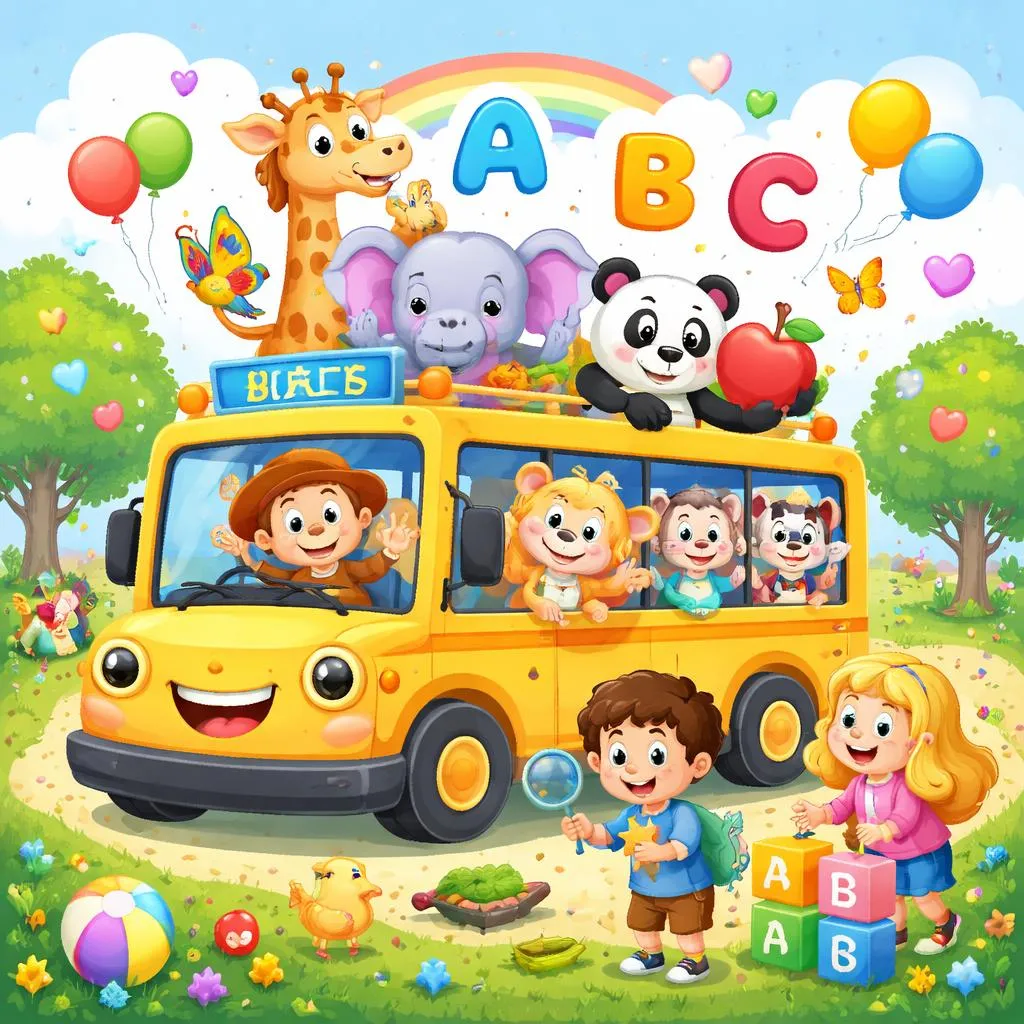

The classic song "Wheels on the Bus" holds a special place in every classroom. Children love the repetitive melody and the simple actions. Adding animals to this familiar tune creates a whole new world of learning possibilities. When we introduce wheels on bus animals, we combine two things children adore: music and creatures. This combination opens doors for vocabulary expansion, sound exploration, and creative play. Let us explore how to use this lively variation as an effective teaching tool in the young learners' classroom.
What Is the Wheels on Bus Animals Song? The "Wheels on the Bus" is a traditional children's song. It describes a bus ride filled with everyday sounds and actions. The standard version includes wheels going round, wipers going swish, and people going up and down. The animal version takes this familiar structure and adds new characters. Instead of people, animals become the passengers on the bus. Each animal brings its own sound and movement. This variation keeps the comforting repetition of the original. It also introduces fresh vocabulary and exciting new sounds. Children already know the tune. This familiarity gives them confidence to try the new words and actions.
The Lyrics to a Popular Animal Version Let us look at a typical version of this song. Having the complete lyrics helps us plan our lessons effectively.
The wheels on the bus go round and round, Round and round, round and round. The wheels on the bus go round and round, All through the town.
The monkey on the bus goes ooh ooh ooh, Ooh ooh ooh, ooh ooh ooh. The monkey on the bus goes ooh ooh ooh, All through the town.
The elephant on the bus goes stomp stomp stomp, Stomp stomp stomp, stomp stomp stomp. The elephant on the bus goes stomp stomp stomp, All through the town.
The lion on the bus goes roar roar roar, Roar roar roar, roar roar roar. The lion on the bus goes roar roar roar, All through the town.
The snake on the bus goes hiss hiss hiss, Hiss hiss hiss, hiss hiss hiss. The snake on the bus goes hiss hiss hiss, All through the town.
The children on the bus laugh and play, Laugh and play, laugh and play. The children on the bus laugh and play, All through the town.
This structure allows for endless verses. Teachers can add any animal they choose. Each verse follows the same simple pattern, making it easy for children to join in.
Vocabulary Learning from the Song This song offers rich vocabulary opportunities. We can introduce animal names, action words, and sound words all at once.
Animal Names: Monkey, elephant, lion, snake. These are common animals that children encounter in books and media. Each name becomes easy to remember through the song.
Action Words: Stomp, hiss, roar. These verbs describe what the animals do. They are lively and easy to demonstrate physically.
Sound Words: Ooh ooh, stomp stomp, roar, hiss. These onomatopoeic words mimic real sounds. Children love making these noises. They practice important speech sounds while having fun.
Bus Vocabulary: Wheels, bus, town. These words provide the setting for the whole song.
We can use these words in daily conversations after singing. What sound does a lion make? How does an elephant move? This reinforces learning throughout the day.
Phonics Points in the Song The animal version offers excellent phonics practice. Each animal sound highlights different speech sounds.
Monkey sounds: The "ooh" sound practices the long "oo" vowel. This sound appears in many English words like "moon" and "spoon."
Snake sounds: The "hiss" sound practices the "s" sound. Stretching out the hiss helps children feel the continuous airflow. This supports correct pronunciation of the "s" phoneme.
Lion sounds: The "roar" sound practices the "r" sound. This can be tricky for some learners. Exaggerating the roar helps them feel the tongue position.
Elephant sounds: "Stomp" practices the consonant blend "st" at the beginning. It also features the short "o" vowel sound.
We can isolate these sounds during phonics time. Practice the "ssss" sound like a snake. Practice the "rrrr" sound like a lion. The song provides a meaningful context for this practice.
Grammar Patterns in the Lyrics The song follows a simple and repetitive grammatical structure. This makes it perfect for introducing basic English sentence patterns.
Subject plus verb: "The wheels go round." This is a simple present tense statement. It describes an action that happens regularly.
Subject plus verb plus sound: "The monkey goes ooh ooh ooh." This pattern extends the basic sentence. It adds a direct object that represents the sound.
Prepositional phrases: "On the bus" and "through the town" appear in every verse. These phrases teach location and movement. Children learn that things happen "on the bus" and the bus travels "through the town."
Repetition for emphasis: The repeated lines "round and round" and "ooh ooh ooh" show how English uses repetition for effect. This is different from many other languages.
We can use these patterns to create new verses together. The children on the bus go "la la la." The teacher on the bus goes "clap clap clap." This builds confidence in sentence construction.
Learning Activities with the Song Songs become powerful learning tools when we add engaging activities. Here are some ideas for using wheels on bus animals in the classroom.
Animal Movement Game: Play the song and pause after naming an animal. Children move like that animal around the room. Monkeys swing arms. Elephants stomp heavily. Snakes slither on the floor. This gross motor activity burns energy while reinforcing learning.
Sound Matching: Create picture cards of different animals. Play animal sounds from a device. Children hold up the card that matches the sound they hear. This builds listening discrimination skills.
Create a New Verse: Ask the class to choose a new animal for the bus. What sound does it make? How does it move? Write the new verse together on the board. Sing it together as a class. This fosters creativity and ownership of the learning.
Bus Craft: Create a large cardboard bus in the classroom. Add paper wheels. Children can draw animal faces on paper plates. Tape a craft stick to each plate to make puppets. During singing, children hold up the animal puppet for its verse.
Printable Materials for Classroom Use Having printable resources ready makes lesson planning smoother. Here are some materials to prepare for this song.
Animal Flashcards: Create a set of flashcards featuring the animals from the song. Include the animal picture on one side and the word on the other. Use them for vocabulary review games.
Lyric Poster: Make a large poster with the song lyrics. Add simple drawings next to key words. Display it during singing time for early readers to follow along.
Animal Masks: Design printable masks for each animal. Children can color and cut them out. Attach string or a craft stick to hold them up. Wearing masks during singing adds a dramatic play element.
Matching Worksheet: Create a simple worksheet. On one side, list the animals. On the other side, list the sounds they make. Children draw lines to match each animal to its sound.
Educational Games for Deeper Learning Games make repetition fun and engaging. Here are some game ideas centered around the song.
Animal Sound Bingo: Create bingo cards with animal pictures. Instead of calling numbers, play animal sounds. Children cover the animal that makes that sound. The first to cover a row wins.
Pass the Animal: Sit in a circle with a small stuffed animal. Play the song softly. When the music stops, the child holding the animal must name it and make its sound. This builds quick recall in a low-pressure way.
Animal Action Dice: Create a large die with animal pictures on each side. Children take turns rolling the die. Everyone moves and sounds like the animal shown. This adds a game element to the physical activity.
Bus Stop Sorting: Set up different areas of the room as "bus stops." Label each stop with an animal picture. Play music. Children walk around. When the music stops, they go to a bus stop. At the stop, they must make that animal's sound together. This combines music, movement, and animal recognition.
Connecting Animals to Real Life The song provides a starting point for broader discussions about animals. We can extend the learning beyond the lyrics.
Talk about where these animals live. Monkeys live in trees in warm places. Lions live on grasslands called savannas. Snakes live in many different habitats. Elephants live in forests and grasslands. This introduces basic science concepts about habitats.
Discuss what these animals eat. Some eat plants. Some eat other animals. This builds vocabulary around diet and survival.
Compare animal movements. Why do snakes slither? Why do monkeys swing? This encourages curiosity and observation skills.
These discussions turn a simple song into a cross-curricular learning experience. Children practice language while learning about the natural world.
Using the Song for Classroom Management The song can also serve practical purposes in daily classroom life. Transition times can be challenging with young children. Using familiar songs helps smooth these moments.
Play the animal version during cleanup time. Children pretend to be elephants as they put away blocks. They become monkeys as they hang up their bags. This adds joy to routine tasks.
Use the song to gather children on the carpet. Sing a verse about the children coming to story time. The familiar melody signals that a transition is happening.
Create a quiet version for calming down. Sing slowly and softly. Children close their eyes and imagine the bus ride. They listen for each animal sound. This works well after active play.
The versatility of this song makes it valuable throughout the school day. From high-energy play to quiet listening, it adapts to many needs.
The wheels on bus animals variation brings fresh energy to a beloved classic. It combines the comfort of familiarity with the excitement of new characters. Through vocabulary building, phonics practice, and creative play, children develop language skills naturally. The song creates a joyful learning environment where English feels like play. And that is exactly how young children learn best.