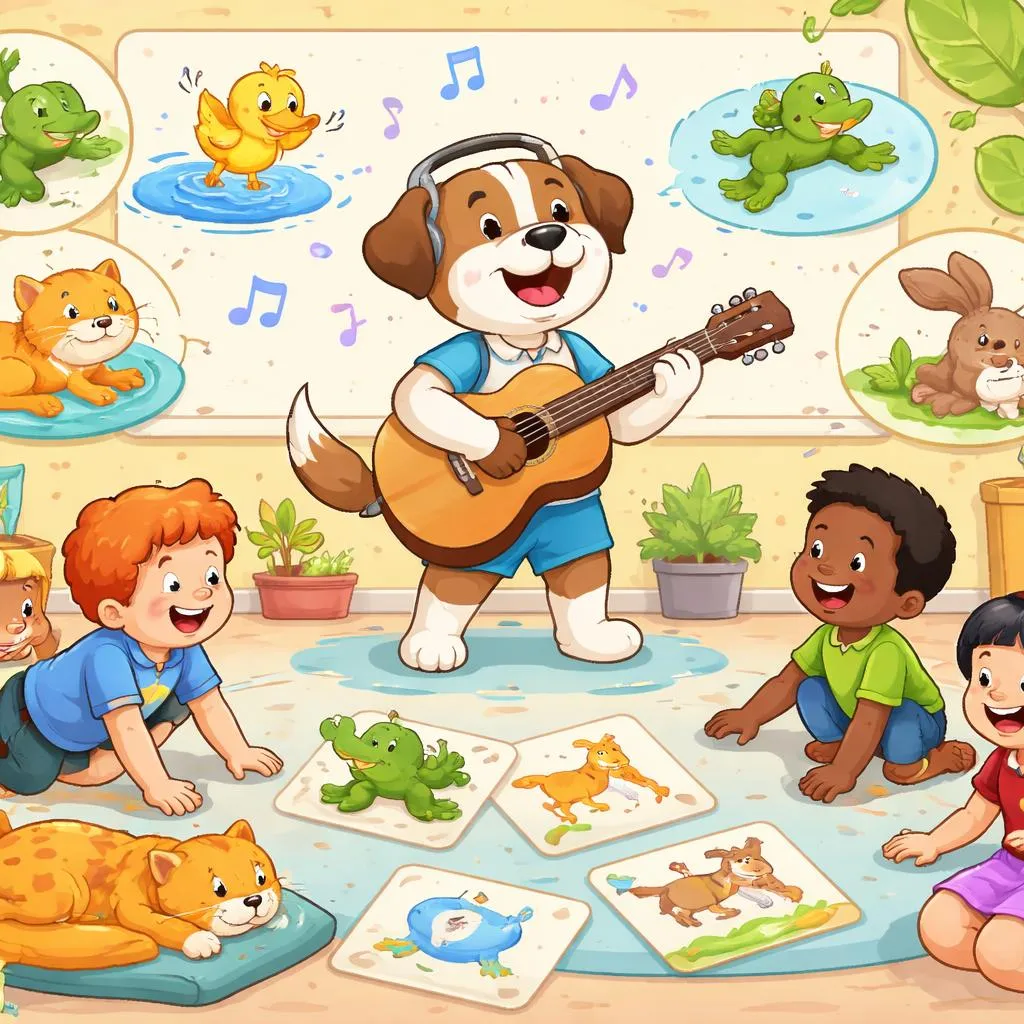

Welcome, teaching friends and learning guides! Today, we’re going to explore a topic that brings instant joy and energy to the classroom: the dog song dog theme. This isn't about one specific song, but about harnessing the universal appeal of dogs through music. Using a dog song dog theme is a wonderful way to teach action verbs, animal sounds, and descriptive language. Let's discover how songs about our furry friends can lead to lively and effective English language learning.
What is the rhyme? A dog song dog theme encompasses any short, repetitive children's song or chant that focuses on dogs. These rhymes often describe what a dog does. They include actions like running, barking, jumping, and fetching. Popular examples like "BINGO" or "How Much Is That Doggy in the Window?" fall into this category. The appeal is immediate. Dogs are familiar, beloved, and active animals. Songs about them naturally invite movement and imitation. This creates a high-engagement, low-pressure environment for practicing new language. The repetitive structure of these songs builds confidence quickly.
The lyrics of nursery rhymes Let’s use an original, simple dog song dog chant that’s perfect for teaching. Its adaptable structure allows for endless variation.
My dog, my dog, what do you do? I run, I run, all day for you! My dog, my dog, what do you say? I bark, I bark, "Woof! Woof!" all day! My dog, my dog, what do you play? I fetch, I fetch, the ball each day!
We can create many verses. Add: "My dog, my dog, how do you feel? I wag, I wag, my tail with zeal!" This simple framework puts the core dog song dog vocabulary into a clear, question-and-answer format that is easy for learners to grasp and modify.
Vocabulary learning This theme introduces a powerful set of action verbs directly linked to the dog. Core verbs include run, bark, fetch, wag, jump, sit, dig, sniff. We can act out each verb dramatically. This kinesthetic link makes the meaning unforgettable. Key nouns include dog, tail, ball, bone, paw, fur, leash.
The song also introduces the concept of animal sounds. "Bark" is the action, and "Woof!" is the sound. We can compare this to other animals, building a category of "Animal Actions & Sounds." Using the dog song dog theme, we can expand into adjectives that describe dogs: friendly, fast, fluffy, sleepy, playful. This creates a rich descriptive vocabulary.
Phonics points A dog song dog chant is excellent for consonant sounds and rhymes. The hard /d/ and /g/ sounds in "dog" are great to emphasize. The /b/ and /k/ in "bark" are strong consonant sounds. We can play with the initial sounds: "My digging dog," "My bouncing ball."
The rhyme scheme is clear and supportive. Pairs like do/you, say/day, play/day provide simple rhyming models. The onomatopoeic word "Woof!" allows us to focus on the /w/ and /f/ sounds in a fun, exaggerated way. Chanting the song with different volumes or speeds keeps phonics practice lively.
Grammar patterns The dog song dog chant showcases the simple present tense beautifully. It uses this tense for habitual actions: "I run all day." "I bark all day." This is the standard tense for describing routines and general truths, making it highly practical.
The structure also models first-person statements from the dog's perspective: "I run." "I bark." This is a fun way to practice pronoun-verb agreement. The question form "What do you do?" is a fundamental English question pattern. Learners can practice asking and answering this question about different animals or even themselves, transferring the grammar to new contexts.
Learning activities "Doggy Command Obstacle Course" is a fantastic active game. Set up a simple course. Give commands using the verbs from the dog song dog song: "Run to the cone!" "Jump over the rope!" "Sit on the mat!" Learners pretend to be playful puppies following the instructions. This practices imperative verbs and listening comprehension.
Create a "Dog Action Diary." Provide a simple weekly sheet with days of the week. Each day, learners draw or write one action their "pretend dog" did. "On Monday, my dog dug." "On Tuesday, my dog fetched." This connects the vocabulary to a personal routine and reinforces the simple past tense.
Printable materials A "Verb & Sound Match" printable is very effective. Create a two-column worksheet. In the first column, list dog action verbs: bark, wag, dig, fetch. In the second column, place mixed-up pictures: a ball, a tail, a hole in the ground, a speech bubble with "Woof!". Learners draw a line from the verb to the correct associated picture or sound.
Design a "Build Your Own Dog Song" template. Provide a sheet with the song framework and blank lines: "My dog, my dog, what do you ____? I ____, I ____, all day for you!" Offer a word bank of verbs and nouns. Learners choose words to fill in their unique verse, then illustrate it. This promotes creative language use.
Educational games "Doggy Charades" is a lively vocabulary review. Write the action verbs from the dog song dog theme on cards. A learner picks a card and acts out the verb without speaking. The group must guess by saying, "You are barking!" or "You are fetching!" This reinforces word meaning through physical expression.
"Musical Dog Bones" is a fun twist on musical chairs. Place paper "bones" in a circle. Play a dog song dog tune. When the music stops, each learner must pick up a bone and say a sentence using a dog verb. "My dog likes to run." "I can hear a dog bark." Anyone who can't think of a sentence wags their "tail" (puts hands behind back) for the next round. This encourages quick thinking and sentence formation.
The dog song dog theme works because it connects language to a source of genuine delight and familiarity. When learners bark, jump, and wag along to a song, they are embodying the verbs they are learning. This total physical response creates deep neural pathways for the new words. Seeing them confidently use words like "fetch" or "wag" in a sentence shows they own the language. So, embrace the playful energy, channel your inner puppy, and watch as this joyful theme fetches excellent results in vocabulary growth and spoken confidence.