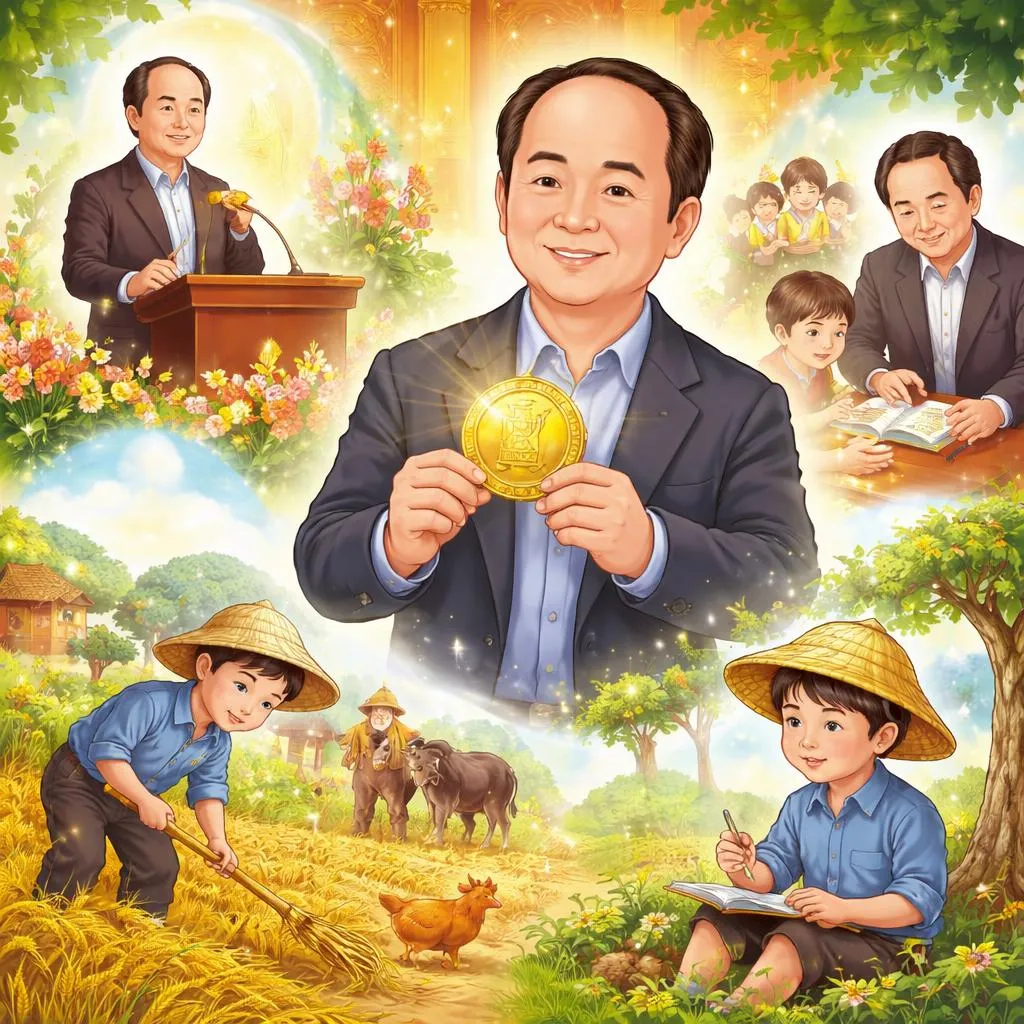

Who Is This Celebrity?
Mo Yan is a writer from China. He won the Nobel Prize in Literature in 2012. He is known for his magical and imaginative stories about rural life.
This celebrity story follows a boy who grew up hungry and poor. Mo Yan did not have many books as a child. He listened to stories told by villagers. Those stories became his inspiration.
Kids who love imagination and creativity will find his story inspiring. Mo Yan shows that you do not need a fancy education to become a great writer. You need stories and the courage to tell them.
His real name is Guan Moye. Mo Yan is a pen name that means "don't speak." He chose this name to remind himself to be careful with his words.
Early Life and Childhood
Mo Yan was born in 1955. He was born in Gaomi, a rural area in Shandong Province, China. His parents were farmers.
China was very poor at that time. Mo Yan grew up during a terrible famine. Many people starved. He was hungry almost every day.
He left school at age 12. The Cultural Revolution had begun. Schools closed. Children had to work on farms.
Young Mo Yan worked in the fields. He herded cattle and sheep. He cut grass and pulled weeds. He worked from sunrise to sunset.
But he loved stories. His grandmother told him folktales about ghosts and spirits. His mother told him stories about their village. His neighbors told him legends.
Mo Yan listened carefully. He remembered every story. He repeated them to himself while he worked.
He also loved to read. But he had almost no books. He read newspapers. He read old calendars. He read the labels on pesticide bottles.
He traded work for books. He would help a family with farm work in exchange for borrowing a book.
One of his favorite books was "The Story of the Stone," a famous Chinese novel. He read it again and again until he could recite passages from memory.
Education and Learning Journey
Mo Yan had almost no formal education. He left school at age 12. He never attended middle school or high school.
But he never stopped learning. He read every book he could find. He taught himself to write by copying the styles of other authors.
In 1976, Mo Yan joined the army. The army gave him a chance to see the world beyond his village.
He worked as a librarian in the army. This was a dream come true. He had access to thousands of books. He read constantly.
He read Chinese classics like Lu Xun and Lao She. He read Russian writers like Tolstoy and Dostoevsky. He read American writers like Faulkner and Hemingway.
He also started writing. He wrote his first short stories in the army. He sent them to magazines. Most were rejected.
But he kept trying. He wrote every day. He woke up early before his army duties. He stayed up late after others went to sleep.
In 1984, Mo Yan finally got a formal education. He was 29 years old. He attended the Literature Department of the People's Liberation Army Art Academy.
He studied writing with professional teachers. He met other young writers. He learned to revise his work and accept criticism.
He graduated in 1986. His first novel, "Red Sorghum," was published that same year. It became a huge success.
How Did They Become Successful?
Mo Yan became successful through persistence and imagination. His novel "Red Sorghum" caught everyone's attention. It told the story of his village during the war against Japan.
The novel was different from anything else in China. It used magic realism. Ordinary events mixed with fantastic elements. The narrator's grandfather could run faster than a horse. The grandmother could talk to ghosts.
A famous director made a movie of "Red Sorghum." The movie won a top prize at an international film festival. Mo Yan became famous around the world.
He wrote more novels. "The Garlic Ballads" told the story of poor farmers. "Big Breasts and Wide Hips" told the story of a mother and her many children.
His most famous novel in the West is "Life and Death Are Wearing Me Out." It tells the story of a farmer who dies and is reborn as different animals. The novel covers 50 years of Chinese history.
Mo Yan's writing style is unique. His sentences are long and flowing. His images are strange and beautiful. His humor is dark and wild.
He writes about the suffering of poor people. He writes about the stupidity of war. He writes about the strength of women.
But he also writes about hope. His characters survive terrible things. They keep living. They keep loving.
In 2012, the Swedish Academy gave Mo Yan the Nobel Prize in Literature. He was the first Chinese citizen to win this award.
Big Ideas and Achievements
Mo Yan achieved many things that changed Chinese literature. His biggest idea is simple. Stories come from the land. Listen to the people. Tell their truth.
He brought rural China to the world. Before Mo Yan, few people outside China knew about village life. His novels made readers in Europe and America feel they had visited Gaomi.
He showed that Chinese literature could be part of world literature. He mixed Chinese traditions with techniques from Latin America and Europe.
Mo Yan also proved that a writer can criticize society through imagination. He never wrote direct political statements. He wrote stories. The stories spoke for themselves.
He wrote 11 novels and many short stories. His work has been translated into more than 40 languages.
The Nobel Prize brought him international fame. He became a celebrity. Reporters followed him everywhere. He handled the attention with humility.
He has won many other awards. The Mao Dun Literature Prize in China. The Newman Prize for Chinese Literature in the United States. The Fukuoka Asian Culture Prize in Japan.
Mo Yan continues to write. He also teaches young writers at Beijing Normal University. He encourages them to find their own voices.
Challenges and Difficult Times
Mo Yan faced many challenges. He grew up hungry and poor. He watched his family suffer. He had almost no education.
The Cultural Revolution was a terrible time. Mo Yan's family was targeted because his grandfather had been a landlord. The family lost everything.
He worked in the fields from age 12 to 21. That is nine years of hard labor. His back and hands still show the marks of that work.
When he started writing, many magazines rejected his stories. He filled a drawer with rejection letters. He kept writing anyway.
After he became famous, he faced criticism. Some people said his writing was too strange. Others said he focused too much on the dark side of life.
Some critics in China accused him of showing a negative view of the country. Mo Yan responded that he showed the truth as he saw it. He said a writer must be honest.
The Nobel Prize brought new challenges. Suddenly everyone wanted his opinion on everything. He had less time to write. He felt pressure to live up to the award.
He also faced health problems. He developed diabetes. He had to change his diet and exercise more.
Despite everything, Mo Yan kept writing. He says that writing is his life. Without it, he would be nothing.
Fun Facts About the Celebrity
Mo Yan has many fun facts that kids enjoy. His pen name "Mo Yan" means "don't speak." He chose it because his real name, Guan Moye, means "don't say anything" in a different way.
He loves to eat garlic. He eats it with almost every meal. His breath often smells like garlic.
Mo Yan is a very slow writer. He writes by hand, not on a computer. He fills notebooks with tiny, neat handwriting.
He has a photographic memory for stories. He can repeat folktales he heard as a child word for word.
Mo Yan is afraid of snakes. He saw many snakes in the fields as a boy. He still gets scared when he sees one.
He loves to cook. His specialty is a spicy chicken dish from his hometown. He cooks for friends when they visit.
Mo Yan's daughter Guan Xiaoxiao is also a writer. She has published several novels. The family talks about books at dinner.
Why Is This Celebrity Important Today?
Mo Yan remains very important today. He proved that a writer from a poor village can win the greatest prize in literature. His story gives hope to young writers everywhere.
He brought Chinese literature to the world. After his Nobel Prize, more Chinese novels were translated into other languages. People became curious about Chinese stories.
Mo Yan also showed that imagination matters. In a world of facts and data, he reminds us of the power of make-believe.
He speaks about the importance of protecting rural culture. Villages are disappearing. The old stories are being forgotten. Mo Yan's novels preserve them.
He also teaches young writers to find their own voices. Do not copy others. Do not write what you think people want to hear. Write your truth.
His books are studied in universities around the world. Students write papers about his magical realism and his historical vision.
Mo Yan continues to publish new work. He is not resting on his fame. He keeps creating.
What Can Kids Learn from This Story?
Kids can learn many lessons from Mo Yan. The first lesson is about listening. Mo Yan listened to the stories of his grandmother and neighbors. Listen to the people around you. Everyone has a story.
The second lesson is about reading. Mo Yan read everything he could find, even pesticide labels. Read every day. Read anything.
The third lesson is about persistence. Mo Yan faced many rejections. He kept writing. Do not give up after one failure.
The fourth lesson is about imagination. Mo Yan mixed real life with magic. Let your imagination run wild. There are no limits.
The fifth lesson is about staying true to yourself. Mo Yan writes what he believes. He does not write to please others. Trust your own voice.
The final lesson is about humility. Mo Yan won the Nobel Prize. He still lives simply. He still cooks his own meals. Fame should not change who you are.
Quick Quiz or Practice Time
Let us see what you remember about Mo Yan. Ask a parent to help with these questions.
Question 1: What does Mo Yan's pen name mean in English?
Question 2: What was Mo Yan's first successful novel called?
Question 3: What prize did Mo Yan win in 2012?
Question 4: What kind of animal does Mo Yan fear?
Question 5: What job did Mo Yan have in the army?
Activity Time: Draw Mo Yan sitting in a field listening to an old person tell a story. Draw the sun and the crops around them.
Another Activity: Interview an older family member. Ask them to tell you a story from when they were young. Write down the story in your own words.
Talk about a story someone told you that you remember. Write down why it stayed in your mind. Think about how you could turn it into a written story.
Mo Yan grew up hungry in a poor village. He had no books and no school. But he had stories. His grandmother told him folktales. His mother told him village legends. His neighbors told him about war and ghosts. He listened. He remembered. He turned those stories into novels. He won the Nobel Prize. His story tells every child that you do not need money to be a writer. You need ears to listen and a mind to imagine. Listen to the people around you. Write down what you hear. Your village, your family, your life—these are your stories. Tell them. The world is waiting.