
Who Is This Celebrity?
Václav Havel was a writer from Czechoslovakia. He became the first president of the Czech Republic after communism fell. He wrote plays, poems, and essays about freedom.
This celebrity story follows a man who wore glasses and liked rock music. Václav Havel did not look like a revolutionary. He looked like a quiet professor. But he helped bring down a dictatorship.
Kids who love writing and art will find his story powerful. Havel showed that words can be stronger than guns. A play or an essay can change a country.
He spent five years in prison for his beliefs. He never stopped writing. He became one of Europe's most respected leaders.
Early Life and Childhood
Václav Havel was born in 1936. He was born in Prague, the capital of Czechoslovakia. His family owned a building company.
Young Václav grew up in a wealthy family. He had nice clothes and good food. He attended good schools.
But his family's wealth became a problem. The communists took over Czechoslovakia in 1948. They hated rich people. They took away the Havel family's property.
Václav was only 12 years old. He saw his family lose everything. He learned that the government could take anything it wanted.
As a teenager, Václav loved books. He read everything he could find. He loved poetry and drama. He dreamed of becoming a writer.
He also loved rock and roll music. He listened to American bands on illegal radios. The communists hated Western music. Václav loved it even more.
He started writing poems. He wrote stories. He wrote his first plays as a teenager.
His friends thought he was strange. He wore glasses and talked about ideas. He did not care what they thought.
Education and Learning Journey
Václav Havel attended university in Prague. He studied economics. His family wanted him to get a practical degree.
But Václav hated economics. He found it boring. He wanted to study literature and theater.
He dropped out of university after two years. He never finished his degree. He decided to learn by reading and writing instead.
Václav got a job at a theater in Prague. He worked as a stagehand. He moved props and swept floors. At night, he wrote plays.
His first plays were performed in small theaters. People loved them. But the communist government hated them.
Václav's plays made fun of communism. They showed how silly and cruel the system was. Audiences laughed and cried.
The government watched him carefully. They banned his plays. They did not allow newspapers to print his name.
Václav kept writing. He wrote essays about freedom and truth. He signed petitions demanding human rights.
He joined a group called Charter 77. This group published reports about how the communists broke their own laws.
The government had had enough. In 1979, they arrested Václav. They sentenced him to four and a half years in prison.
How Did They Become Successful?
Václav Havel became successful through prison and letters. While locked in a cell, he wrote the most important essay of his life.
He called it "The Power of the Powerless." He wrote it on scraps of paper. He smuggled it out to the world.
The essay became famous. People read it in secret. It argued that ordinary people have more power than dictators.
Václav wrote that a greengrocer who puts a communist sign in his window is not supporting communism. He is just trying to survive.
But if everyone refused to put up the sign, the system would collapse. Small acts of resistance matter.
While in prison, Václav also wrote letters to his wife. These letters became a book. People read them and cried.
The government released him in 1983. They arrested him again in 1989. They kept him in prison for four more months.
But 1989 was different. People across Eastern Europe were rising up. The communist governments were falling.
In November 1989, thousands of students marched in Prague. Police beat them. The whole city exploded in protest.
Václav was still under house arrest. He watched from his window. Then he walked outside and joined the crowd.
He stood on a balcony and spoke to 200,000 people. They cheered his name. The communist government resigned within two weeks.
Big Ideas and Achievements
Václav Havel achieved many things that changed history. His biggest idea was simple. Truth and love will defeat lies and hatred.
He believed that people should "live in truth." That means not pretending. Not lying to yourself or others.
Havel argued that communism survived because people pretended to believe in it. They put signs in windows to stay safe.
But when people stopped pretending, the system collapsed. No violence needed. Just truth.
In December 1989, the Czechoslovak parliament elected Václav Havel as president. A playwright had become the leader of a country.
He served as president for 13 years. He helped transform Czechoslovakia into a democracy.
In 1993, Czechoslovakia split into two countries. The Czech Republic and Slovakia. Havel became president of the Czech Republic.
He wrote many books. His collected works fill many volumes. His plays are performed around the world.
Havel also spoke about global issues. He warned about climate change. He warned about the dangers of nationalism.
He received the US Presidential Medal of Freedom. He also received the Philadelphia Liberty Medal. Leaders around the world respected him.
Challenges and Difficult Times
Václav Havel faced many challenges. He grew up wealthy but lost everything as a child. He watched his family's humiliation.
The communist government banned his plays. He could not earn a living as a writer. He worked manual jobs to survive.
His friends abandoned him. Some were afraid to be seen with him. Others were paid by the government to spy on him.
Prison was terrible. The guards beat him. They kept his cell freezing cold. They did not let him sleep.
Václav developed health problems in prison. He had breathing difficulties. He had back pain that never went away.
When he became president, he faced enormous challenges. The economy was broken. The government was corrupt. People expected miracles.
Some people hated him. They said he was a dreamer, not a leader. They said writers should not run countries.
Václav also faced personal sadness. His first wife Olga died in 1996. They had been married for 32 years.
He remarried later, but he never forgot Olga. He dedicated many books to her memory.
Fun Facts About the Celebrity
Václav Havel has many fun facts that kids enjoy. He loved the rock band The Velvet Underground. He was friends with their singer, Lou Reed.
He wore glasses his whole life. The glasses became his trademark. People drew cartoons of him with giant glasses.
Václav could not drive a car. He never learned. He had a chauffeur as president.
He loved to drink beer. The Czech Republic has great beer. He said beer helped him think.
Václav appeared on a popular American TV show called "The Simpsons." He voiced himself in one episode.
He kept a pet cat named Kafka. He named the cat after a famous writer. The cat slept on his desk while he wrote.
Václav once met Frank Zappa, a famous musician. They talked about music and politics for hours.
Why Is This Celebrity Important Today?
Václav Havel remains very important today. His essay "The Power of the Powerless" is still read. Activists study his ideas.
He showed that artists can be leaders. You do not need a military or business background. Creativity matters in politics.
Havel proved that nonviolence works. The Velvet Revolution in Czechoslovakia had almost no violence. People sang and held candles.
His idea of "living in truth" inspires people today. Do not pretend to believe something you do not believe. Be honest.
Young people in former communist countries still quote Havel. They see him as a hero who gave them freedom.
His plays are performed around the world. People laugh at his jokes and cry at his wisdom.
Havel also taught us to care about the planet. He spoke about climate change long before it was popular. He said we have a duty to future generations.
What Can Kids Learn from This Story?
Kids can learn many lessons from Václav Havel. The first lesson is about creativity. Havel wrote plays that changed history. Art has power.
The second lesson is about not pretending. Havel said to live in truth. Do not pretend to like something you hate. Do not pretend to believe something you doubt.
The third lesson is about persistence. Havel spent years in prison. He kept writing. He never gave up.
The fourth lesson is about small actions. Havel believed that one person refusing to put up a sign could change everything. Your small actions matter.
The fifth lesson is about humor. Havel's plays were funny. He used laughter to fight tyranny. Laughter is powerful.
The final lesson is about kindness. Havel forgave his enemies. He did not seek revenge. He wanted to build a better country for everyone.
Quick Quiz or Practice Time
Let us see what you remember about Václav Havel. Ask a parent to help with these questions.
Question 1: What job did Václav Havel have before becoming president?
Question 2: What was the name of Havel's most famous essay?
Question 3: How many years did Havel spend in prison?
Question 4: What happened in Czechoslovakia in November 1989?
Question 5: What band did Havel love?
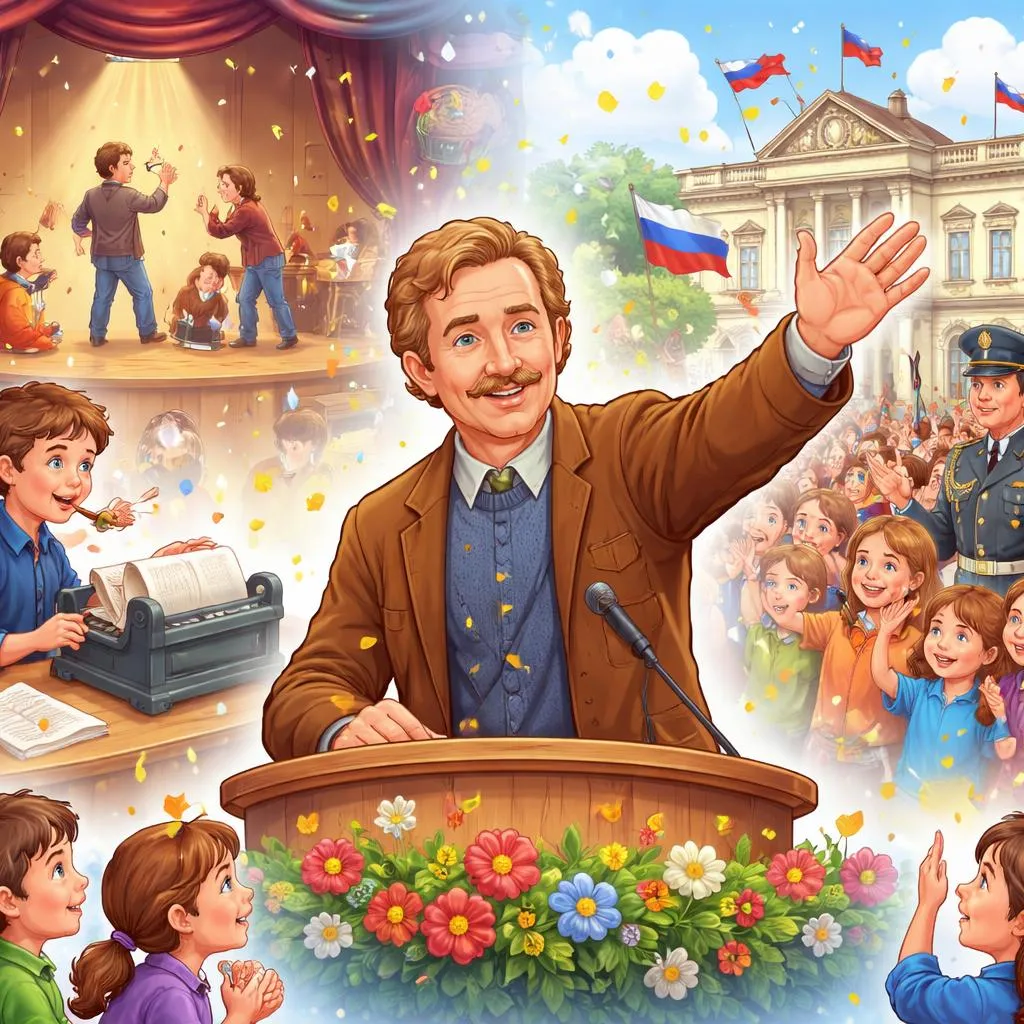
Activity Time: Draw Václav Havel standing on a balcony speaking to a huge crowd. Draw his glasses. Draw people holding candles.
Another Activity: Write a short play with two characters. Give them a problem to solve. Show them talking it out. Remember Havel believed that words can solve anything.
Talk about a time you pretended to believe something you did not. Write down how it felt. Then write down one thing you can do to live more truthfully.
Václav Havel wore glasses and wrote plays. He did not look like a hero. The communist government laughed at him. Then they arrested him. Then they put him in prison. He wrote on scraps of paper. He told the world that ordinary people have power. He said that living in truth is a revolutionary act. Then he walked out of prison and became president. His story tells every child that you do not need muscles or weapons. You need a pen and the truth. Write your truth. Speak your truth. Live your truth. That is how you change the world.