
Who Is This Celebrity?
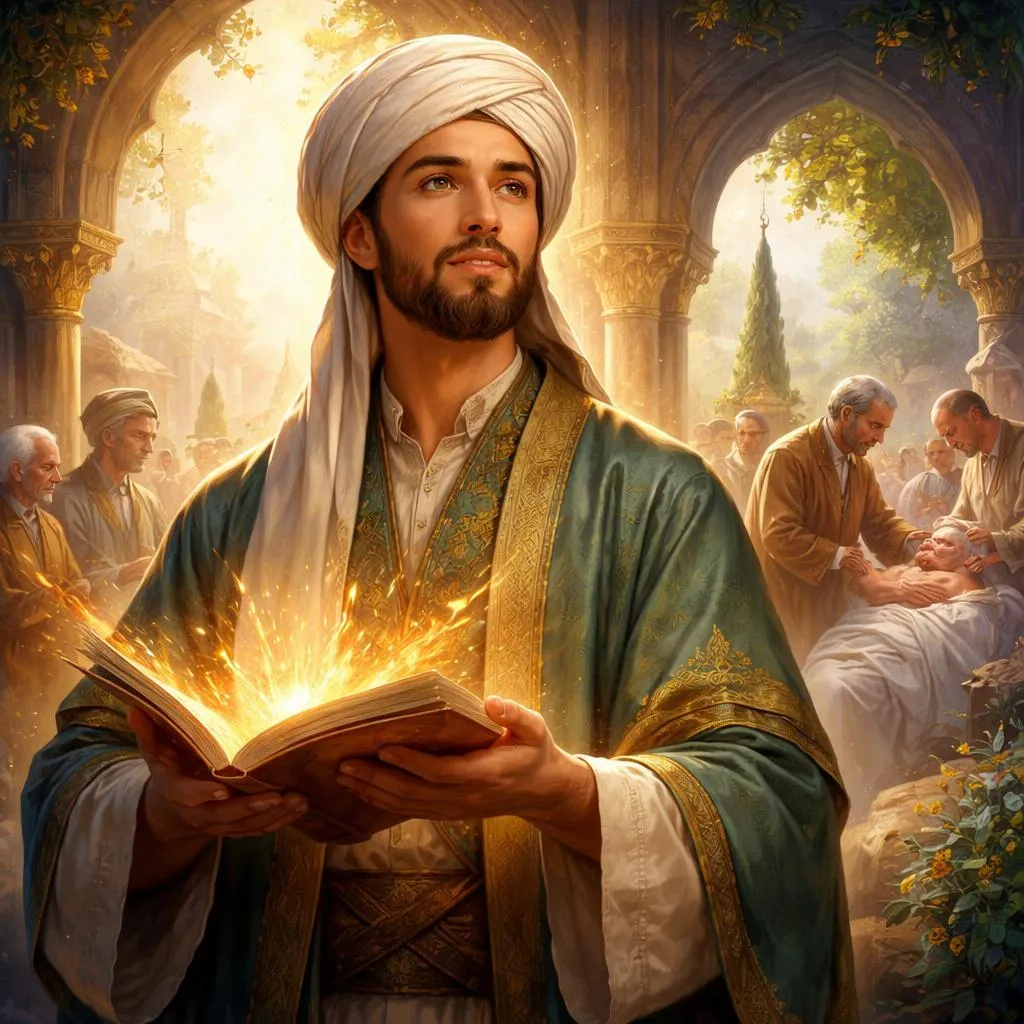
Avicenna was one of the greatest doctors and philosophers in history. His full name was Ibn Sina. He lived over 1,000 years ago in Persia, now Iran. People called him the "Prince of Physicians." He wrote a medical book that doctors used for 500 years. He also wrote about philosophy, astronomy, chemistry, and music. He could diagnose diseases just by feeling a patient's pulse. His story shows that a brilliant mind knows no age limit.
Early Life and Childhood
Avicenna was born in 980 CE near Bukhara, in modern-day Uzbekistan. His father was a government official. Young Avicenna showed amazing intelligence from a very young age. By age 10, he had memorized the entire Quran, the holy book of Islam. He also memorized thousands of poems. He loved asking questions that confused his teachers. He would not accept an answer without understanding it completely. He also enjoyed solving math puzzles and star-gazing at night. His father invited famous scholars to teach him at home. He learned faster than any student they had ever seen.
Education and Learning Journey
Avicenna's education was extraordinary for any era. By age 13, he had mastered logic and philosophy. He then turned to medicine. He found medicine easier than philosophy because it was more practical. By age 16, he was already treating patients. Experienced doctors came to learn from this teenage healer. But Avicenna wanted to understand everything. He studied law, mathematics, astronomy, and music theory. He read every book in the royal library. He even invented a new method for measuring the stars. He struggled most with Aristotle's metaphysics, a complex philosophy book. He read it forty times without understanding it. One day, he bought a small book that explained it perfectly. He finally understood and celebrated.
How Did They Become Successful?
Avicenna became successful by helping powerful rulers. When the king of Bukhara fell ill, doctors could not cure him. Avicenna stepped forward and healed the king. The grateful king allowed him unlimited access to the royal library. Avicenna read thousands of books there. He memorized so much that he could recall entire pages from memory. After the library burned down, people relied on his memory to recover lost texts. He later became a court physician to several rulers. He wrote many of his famous books while traveling between cities. He often wrote at night by candlelight. He composed his most famous work, The Canon of Medicine, in just a few years.
Big Ideas and Achievements
Avicenna's biggest achievement was The Canon of Medicine. This book is over one million words long. It collected all medical knowledge from Greece, Persia, India, and the Arab world. It also added Avicenna's own discoveries. The book explained how to diagnose diseases by feeling the pulse. It described the difference between tuberculosis and pneumonia. It explained how diseases spread through water and soil. It gave instructions for performing surgeries. The Canon became the standard medical textbook in Europe for 500 years. Doctors in Paris and Oxford used it. Even Leonardo da Vinci studied it. Avicenna also discovered that diseases could be contagious. He recommended quarantining sick patients. This idea saved millions of lives.
Challenges and Difficult Times
Avicenna faced constant political turmoil. Rulers rose and fell. Armies conquered and burned cities. Avicenna worked for many different kings. Some appreciated him. Others imprisoned him. At one point, a ruler imprisoned him for four months. He continued writing and studying in his cell. He also faced religious critics who called his philosophy dangerous. Some people wanted to burn his books. He defended his ideas calmly with logic and evidence. He also suffered from health problems throughout his life. He had severe stomach pains that he could not cure. He once treated himself for a terrible illness. He survived but never fully recovered. He died at age 57 from a combination of illness and overwork.
Fun Facts About the Celebrity
Avicenna loved drinking hot tea with honey every morning. He believed it sharpened his mind. He also enjoyed playing the lute, a stringed instrument. He would play music between writing sessions. He never married or had children. He said his books were his children. He kept a small garden where he grew medicinal herbs. He tested each herb on himself before prescribing it. He could write with both hands at the same time. He would write a book with his right hand while taking notes with his left. He also hated wasting time. He wrote while riding on horseback or traveling in carriages. He rarely slept more than four hours a night. He believed sleep stole time from learning.
Why Is This Celebrity Important Today?
Avicenna's Canon of Medicine remains a historical treasure. Medical historians still study its pages. His method of testing medicines on himself inspired clinical trials. His idea of quarantining sick patients proved correct during the COVID-19 pandemic. His philosophy books influenced European thinkers like Thomas Aquinas. Many of his writings survive in university libraries around the world. Statues of Avicenna stand in Iran, Tajikistan, and Austria. A crater on the moon bears his name. His portrait hangs in the medical school at the University of Paris. He represents the golden age of Islamic science. He proved that knowledge has no borders.
What Can Kids Learn from This Story?
You can learn that age does not limit ability. Avicenna was healing people at 16. You can also learn to master the basics first. He memorized the Quran before studying medicine. You can learn to keep trying when something confuses you. He read Aristotle forty times before understanding it. You can learn to use difficult times productively. He wrote books in prison. You can also learn that health matters. He worked so hard that he damaged his own body. Rest is also part of success.
Quick Quiz or Practice Time
Let's see what you remember about Avicenna.
Question 1: What was the name of Avicenna's most famous medical book?
Answer: The Canon of Medicine.
Question 2: How old was Avicenna when he memorized the entire Quran?
Answer: 10 years old.
Question 3: What instrument did Avicenna enjoy playing?
Answer: The lute.
Question 4: How many hours did Avicenna usually sleep each night?
Answer: Four hours or less.
Question 5: What did Avicenna recommend to stop the spread of contagious diseases?
Answer: Quarantining sick patients.
Activity: Pretend you are a doctor like Avicenna. Observe a family member's pulse by placing two fingers on their wrist. Count the beats for 15 seconds. Multiply by 4 to get their heart rate. Write down the number. This is how Avicenna diagnosed patients over 1,000 years ago.
Avicenna lived a short but incredibly productive life. He died at 57, young by modern standards. But in those 57 years, he accomplished what ten normal lifetimes could not. He memorized holy books and thousands of poems. He mastered medicine, philosophy, astronomy, and music. He healed kings and poor people alike. He wrote over 200 books, many over a million words long. He thought deeply about the soul, the universe, and the meaning of existence. And he did all of this while traveling between warring kingdoms. He wrote in prisons and on horseback. He rarely slept and never stopped learning. His story teaches us that time is precious. Every hour you waste is an hour you cannot get back. Every day you spend learning is a day you invest in your future. Avicenna had no computers, no internet, no modern tools. He had only his mind and his will. Look what he built with them. Now imagine what you could build with yours. Start today. Read one extra page. Solve one extra problem. Ask one extra question. That is how genius begins. That is how you become like Avicenna.