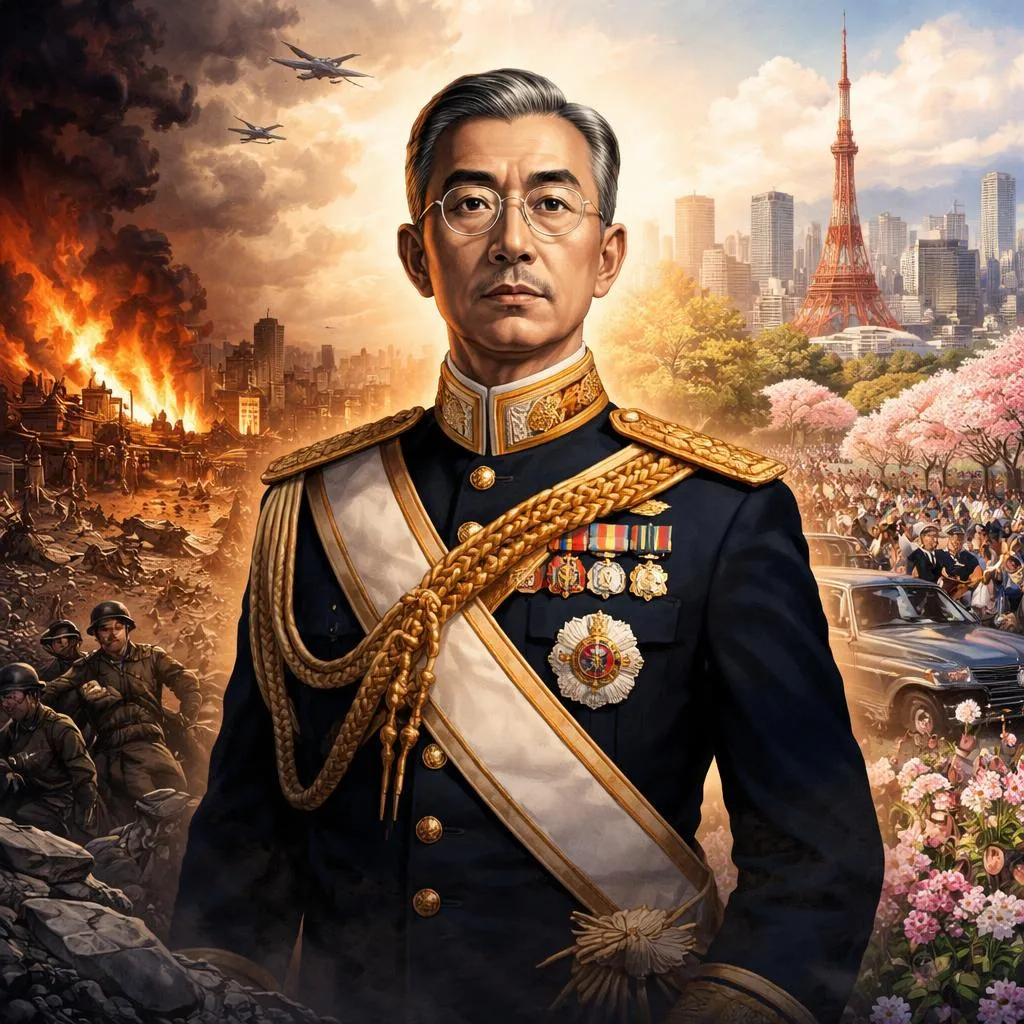

Who Is This Celebrity?
Emperor Shōwa was Japan's longest-reigning emperor. He ruled from 1926 to 1989. People outside Japan know him as Emperor Hirohito. He lived through World War II and Japan's defeat. He also witnessed Japan's amazing recovery into a peaceful nation. He was the last Japanese emperor considered divine. After the war, he became a human symbol of peace. His story covers both tragedy and rebirth. It teaches us about accepting responsibility and change.
Early Life and Childhood
Emperor Shōwa was born in 1901 in Tokyo, Japan. His grandfather was Emperor Meiji, the great modernizer. Young Hirohito grew up inside the imperial palace. He lived a very sheltered and lonely childhood. His parents sent him away to be raised by court officials. He rarely saw his mother or father. He found comfort in nature and science. He loved collecting plants and studying marine life. He also enjoyed catching insects in the palace gardens. He had a special interest in seaweed and jellyfish. He dreamed of becoming a marine biologist. He did not dream of becoming emperor.
Education and Learning Journey
Emperor Shōwa received a strict education from private tutors. He studied Japanese history, Chinese classics, and Shinto traditions. He also learned about world politics and military strategy. His teachers prepared him to be a god-like leader. But young Hirohito was more interested in science. He built a small laboratory in the palace. He studied biology and taxonomy, the classification of living things. He invited famous scientists to teach him. He published several scientific papers about jellyfish. One of his discoveries still bears his name today. His education combined ancient traditions and modern science. This mix shaped how he ruled.
How Did They Become Successful?
Emperor Shōwa became emperor in 1926 at age 25. Japan was already a major world power. Military leaders controlled much of the government. The emperor had the power to stop them. But he rarely used his authority. In the 1930s, Japan invaded China. In 1941, Japan attacked Pearl Harbor. World War II began in the Pacific. The emperor received reports of every battle. He approved major military decisions. Some historians believe he could have prevented the war. Others think he was a puppet of the military. After Japan lost the war in 1945, the emperor made a historic radio speech. He announced Japan's surrender. Most Japanese people had never heard his voice before.
Big Ideas and Achievements
Emperor Shōwa's biggest achievement came after the war. The American occupation forced him to renounce his divinity. He declared that he was a human, not a god. This shocked the Japanese people. But the emperor accepted the change. He toured the country and bowed to ordinary citizens. No emperor had ever done this before. He became a symbol of peace and reconstruction. He supported Japan's new constitution and democracy. He watched Japan rebuild from ashes into an economic giant. The 1964 Tokyo Olympics showed Japan's rebirth to the world. The emperor lit the Olympic flame. By the time he died in 1989, Japan was a peaceful, wealthy nation.
Challenges and Difficult Times
Emperor Shōwa faced the most difficult period in modern Japanese history. During World War II, Allied bombs destroyed 66 Japanese cities. Firebombing killed hundreds of thousands of civilians. The atomic bombs on Hiroshima and Nagasaki killed over 200,000 more. The emperor himself barely survived. A bomb destroyed a corner of the palace. He lost three of his four brothers during the war. After Japan surrendered, the American general Douglas MacArthur decided not to put the emperor on trial. Some people criticized this decision. The emperor lived with guilt and shame for the rest of his life. He rarely spoke about the war publicly. He focused on his marine biology research instead.
Fun Facts About the Celebrity
Emperor Shōwa was a world expert on jellyfish. He wrote several scientific papers on hydrozoans. A type of coral shrimp bears his scientific name. He built a private marine biology laboratory in the palace basement. He collected over 60,000 specimens during his lifetime. He also loved taking long walks in his garden. He knew the name of every tree and flower. He never ate breakfast, only lunch and dinner. He preferred simple Japanese food like rice, fish, and vegetables. He also enjoyed playing golf in his free time. He never learned to drive a car. He always rode in a chauffeured black sedan. He kept a small notebook where he drew pictures of seaweed.
Why Is This Celebrity Important Today?
Emperor Shōwa's reign covers modern Japan's entire story. From empire to defeat to recovery. From divine ruler to human symbol of peace. His life raises hard questions about responsibility and power. How much did he know about wartime atrocities? Could he have stopped them? Historians still debate these questions today. His post-war transformation showed that change is possible. Even a god could become a man. Even an emperor could bow to citizens. His story reminds us that leaders must be accountable. Schools teach the Shōwa Era as a lesson in both tragedy and redemption. His name remains connected to Japan's most difficult memories.
What Can Kids Learn from This Story?
You can learn that history is complicated. Emperor Shōwa was both a wartime leader and a peace symbol. You can also learn that change is always possible. He went from divine emperor to human citizen. You can learn to find peace after conflict. Japan and the United States became close friends after fighting. You can learn that hobbies can sustain you. He coped with stress by studying jellyfish. You can also learn that leaders must take responsibility. He never fully explained his wartime role. That silence still haunts his legacy. Speaking the truth matters, even when it is hard.
Quick Quiz or Practice Time
Let's see what you remember about Emperor Shōwa.
Question 1: What was Emperor Shōwa's personal name before becoming emperor?
Answer: Hirohito.
Question 2: What field of science did Emperor Shōwa specialize in?
Answer: Marine biology, especially jellyfish and other hydrozoans.
Question 3: In which year did Emperor Shōwa announce Japan's surrender?
Answer: 1945.
Question 4: What sport did Emperor Shōwa enjoy playing?
Answer: Golf.
Question 5: What kind of laboratory did Emperor Shōwa build in the palace basement?
Answer: A marine biology laboratory.
Activity: Draw a picture of Emperor Shōwa in his laboratory, studying jellyfish under a microscope. Then draw a second picture of him bowing to ordinary citizens after the war. Write one sentence about why people can change over time.
Emperor Shōwa lived for 87 years. He saw his country rise, fall, and rise again. He started as a divine figure that no one could look in the eye. He ended as a gentle old man studying jellyfish in his basement. He never fully explained his wartime decisions. That silence will forever be part of his story. But his post-war transformation also matters. He accepted defeat with dignity. He renounced his divinity without complaint. He bowed to citizens who had suffered. He became a symbol of peace when peace was most needed. His story teaches us that people contain multitudes. Good and bad can live in the same person. Mistakes and redemption can coexist. You will make mistakes in your life. Some may be small. Some may be large. What matters is what you do next. Can you change? Can you learn? Can you become better? Emperor Shōwa's life says yes. Now it is your turn to write your own complicated, hopeful story.