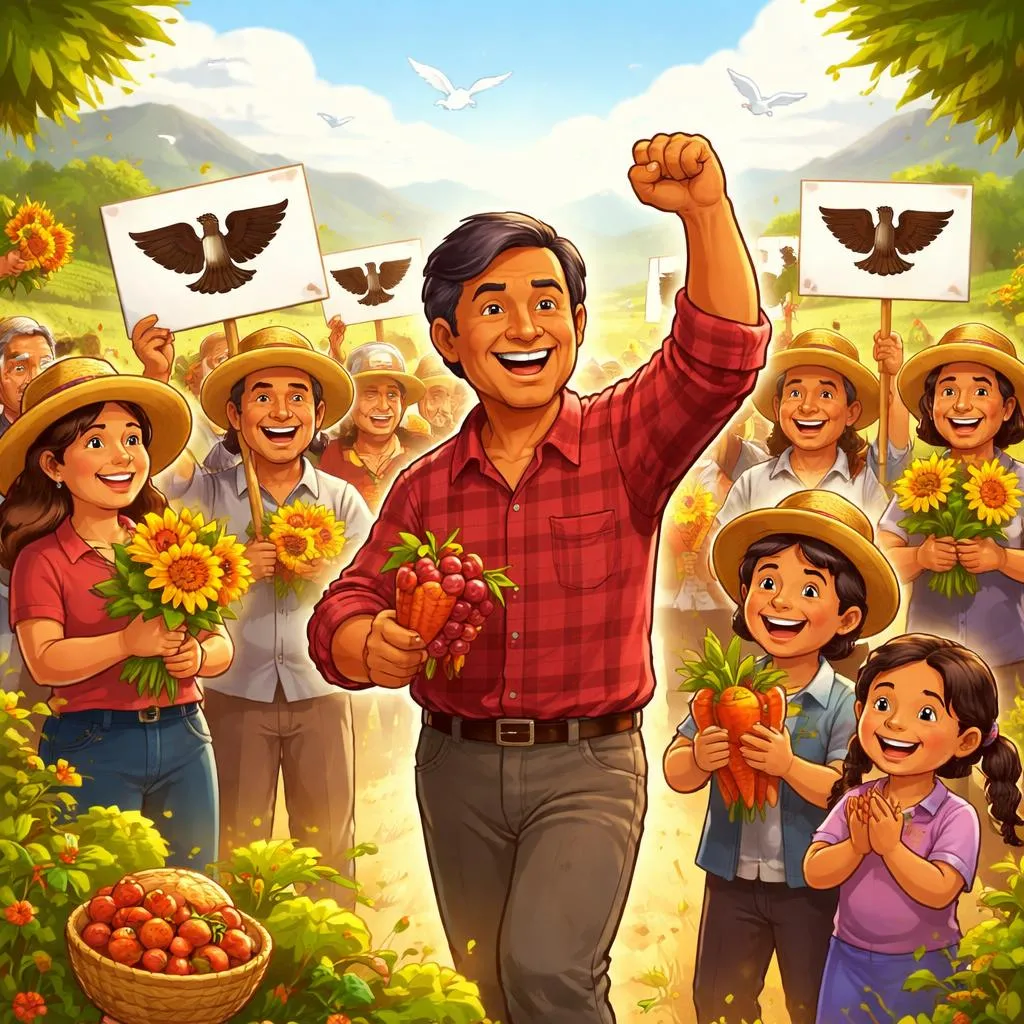

Who Is This Celebrity?
Cesar Chavez was a labor leader and civil rights activist. He fought for better pay and working conditions for farm workers. He used nonviolent protests like Martin Luther King Jr.
This celebrity story follows a man who picked grapes as a child and later led a movement. Cesar Chavez helped some of the poorest workers in America. He showed that peaceful protest can create change.
Kids who believe in fairness will find his story inspiring. Cesar proved that you do not need money or power to make a difference. You just need courage and persistence.
He started a union called the United Farm Workers. Millions of Americans supported his boycotts. He changed the lives of farm workers forever.
Early Life and Childhood
Cesar Chavez was born in 1927. He was born in Yuma, Arizona. His family owned a farm and a small store.
Young Cesar lived a happy life at first. He had a home, food, and a school to attend. His family spoke Spanish at home. He learned English at school.
When Cesar was 10 years old, the Great Depression hit. His family lost their farm. They could not pay their bills. They had to move to California.
In California, the Chavez family became migrant farm workers. They moved from farm to farm. They picked peas, lettuce, grapes, and cotton.
The family lived in tiny shacks with no running water. They used outdoor toilets. They slept on dirt floors.
Cesar attended 37 different schools. He never finished a full year of school. Teachers came and went. He felt embarrassed about being poor.
He also saw how farm owners treated workers. They paid very little. They provided no bathrooms in the fields. They sprayed dangerous pesticides while workers picked crops.
Cesar saw pregnant women working in 100-degree heat. He saw children as young as 8 years old working 12-hour days.
He promised himself that one day he would change this.
Education and Learning Journey
Cesar Chavez left school after eighth grade. He needed to work full time to help his family. He never went to high school or college.
But Cesar never stopped learning. He read books whenever he could. He studied the lives of great leaders like Mahatma Gandhi.
He learned about nonviolent resistance. Gandhi had freed India from British rule without firing a gun. Cesar believed this method could help farm workers too.
He also read about St. Francis of Assisi. This Catholic saint loved the poor and treated everyone with kindness. Cesar admired his example.
Cesar taught himself how to organize people. He learned to speak in public. He learned to convince others to join a cause.
He also learned about labor laws. He studied contracts and union rules. He became an expert even without a degree.
In his 20s, Cesar worked for a group called the Community Service Organization. This group helped Latino voters register to vote.
He walked door to door. He talked to thousands of families. He learned how to connect with poor people. He earned their trust.
By age 30, Cesar had become the national director of the organization. But he wanted to focus on farm workers. No one else was helping them.
How Did They Become Successful?
Cesar Chavez became successful through patient organizing. In 1962, he started a union called the National Farm Workers Association. He had almost no money.
He and his wife Helen traveled to farm camps. They met workers in the fields. They listened to their problems. They asked them to join the union.
For three years, the union grew slowly. Then in 1965, Filipino farm workers went on strike. They asked Cesar to join them.
Cesar agreed. The strike against grape growers lasted five years. It became famous across America.
Cesar believed in nonviolent protest. He organized marches, boycotts, and fasts. He never encouraged violence, even when police beat his people.
The most powerful tool was the boycott. Cesar asked Americans to stop buying grapes. Grocery stores stopped selling grapes. The growers lost millions of dollars.
Cesar also went on hunger strikes. He stopped eating to show his commitment. His first fast lasted 25 days. He lost 35 pounds. Senator Robert Kennedy came to support him.
The second fast lasted 24 days. His third and longest fast lasted 36 days. Each time, he nearly died. Each time, his movement grew stronger.
In 1970, the grape growers finally signed contracts. Workers received higher pay, clean water, and bathrooms in the fields. The boycott had worked.
Big Ideas and Achievements
Cesar Chavez achieved many things that changed American labor. His biggest idea was simple. Nonviolence works. Peaceful protest can defeat powerful enemies.
He proved that poor people can organize. Farm workers had no money and no political power. They had each other. That was enough.
Cesar created the first successful farm workers union in American history. The United Farm Workers won contracts for thousands of workers.
He also got a law passed in California. The Agricultural Labor Relations Act gave farm workers the right to vote on unions. This was the first law of its kind.
Cesar popularized the slogan "Sí, se puede." This means "Yes, we can" in Spanish. President Barack Obama later used this phrase in his campaigns.
He marched hundreds of miles multiple times. In 1966, he led a march from Delano to Sacramento, California. The march was 300 miles long.
He testified before Congress many times. Lawmakers listened to him because millions of Americans supported his cause.
Cesar received the Presidential Medal of Freedom in 1994. His wife Helen accepted the award after his death. President Bill Clinton gave the medal.
Challenges and Difficult Times
Cesar Chavez faced many challenges. The farm owners hated him. They hired security guards to attack strikers. They called the police to arrest marchers.
Cesar was arrested many times. He spent time in jail for refusing to stop the boycott. Each arrest brought more attention to the cause.
He also faced violence. People threw rocks at marchers. Police used tear gas. Some union members were beaten.
The growers tried to destroy the union with lawsuits. They spent millions of dollars on lawyers. Cesar had almost no money for legal defense.
The Teamsters Union also fought against Cesar. This large union tried to take control of farm workers. Cesar had to fight other unions as well.
His health suffered from the hunger strikes. He developed back problems and other illnesses. He kept working anyway.
Some of his own members grew impatient. They wanted to use violence. Cesar refused. He told them nonviolence is harder than violence. But it is the only way to win.
He died in 1993 at age 66. He passed away in his sleep near a farm in Arizona. He had spent his last day defending the union in court.
Fun Facts About the Celebrity
Cesar Chavez has many fun facts that kids enjoy. He was a vegetarian for the last 30 years of his life. He believed in treating all animals kindly.
He loved to play chess. He said chess taught him strategy. He played games with his union leaders.
Cesar never earned more than $6,000 per year. He lived in a small house with his family. He gave most of his money to the union.
He had eight children. His son and grandson still work for the United Farm Workers today.
Cesar hated cigarettes. He started an anti-smoking campaign among farm workers. He believed tobacco harmed poor people the most.
He loved baseball. He played in a farm workers league when he was young. He rooted for the San Francisco Giants.
Cesar's birthday, March 31, is a holiday in California, Colorado, and Texas. Schools close to honor his legacy.
Why Is This Celebrity Important Today?
Cesar Chavez remains very important today. Farm workers still face hard conditions. The union he started still fights for them.
His birthday is celebrated as Cesar Chavez Day. People volunteer in their communities to honor him. They plant trees, clean parks, and help the poor.
Schools teach his story. Children learn about the grape boycott and the marches. They learn that one person can make a difference.
His motto "Sí, se puede" inspires activists today. Climate change activists use it. Immigration reform activists use it. The words still motivate people.
Cesar showed that boycotts work. Modern activists use boycotts to pressure companies. They learned this method from Cesar.
He also showed that fasting can bring attention to a cause. Activists still use hunger strikes to protest injustice.
His commitment to nonviolence influences many movements. Cesar proved that you do not need weapons to win. You need courage and moral power.
What Can Kids Learn from This Story?
Kids can learn many lessons from Cesar Chavez. The first lesson is about helping the poorest people. Cesar did not help rich people. He helped the people everyone ignored.
The second lesson is about patience. The grape strike lasted five years. Cesar did not give up. Change takes time.
The third lesson is about nonviolence. Cesar could have used anger and weapons. He chose peace instead. That choice made him stronger.
The fourth lesson is about sacrifice. Cesar went on hunger strikes. He went to jail. He gave his life for others.
The fifth lesson is about education. Cesar left school in eighth grade. He never stopped learning. You can learn anywhere.
The final lesson is about believing in yourself. Cesar had no money and no power. He had a dream. That was enough.
Quick Quiz or Practice Time
Let us see what you remember about Cesar Chavez. Ask a parent to help with these questions.
Question 1: What fruit did Cesar Chavez ask Americans to boycott?
Question 2: How long did the grape strike last?
Question 3: What Spanish phrase means "Yes, we can"?
Question 4: Who inspired Cesar's nonviolent methods?
Question 5: How many days was Cesar's longest fast?
Activity Time: Draw Cesar Chavez leading a march. Draw people holding signs that say "Sí, se puede." Draw grapes on the ground to represent the boycott.
Another Activity: Organize a small boycott at home. Choose one thing you will give up for one week, like TV or video games. Use that time to do something helpful instead.
Talk about someone in your community who needs help. Write down one thing you can do for them. Remember Cesar helped people that others ignored.
Cesar Chavez picked grapes as a child. He saw his family lose their farm. He saw workers treated like animals. He promised to change things. He started a union with almost nothing. He marched hundreds of miles. He stopped eating for days. He went to jail. He never used violence. He won. His story tells every child that you do not need to be rich or powerful to change the world. You need a good cause and a peaceful heart. Sí, se puede. Yes, you can. Start today.