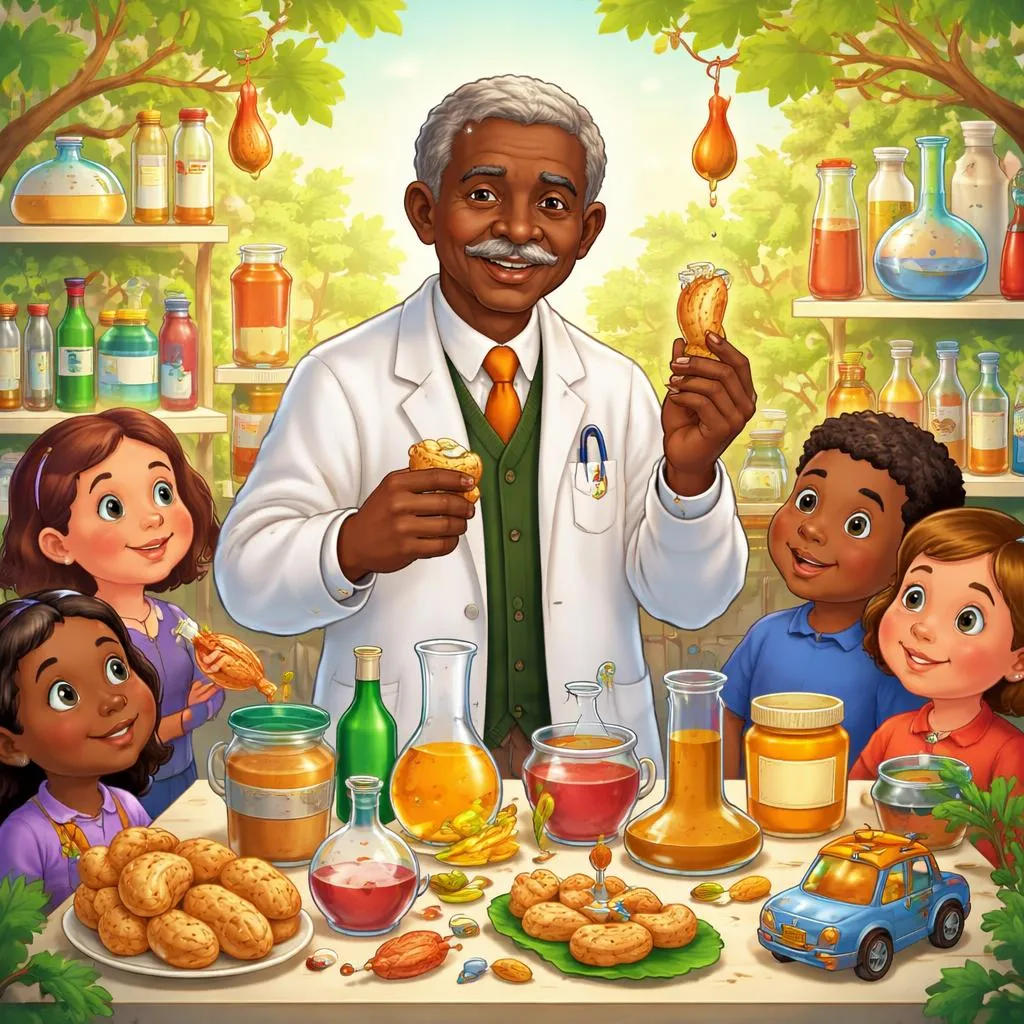

Who Is This Celebrity?
George Washington Carver was a scientist and inventor. He discovered hundreds of uses for peanuts, sweet potatoes, and soybeans. He helped poor farmers grow better crops.
This celebrity story follows a man who saw value where others saw waste. George Washington Carver turned ordinary plants into amazing products. He made paint, soap, and even plastic from peanuts.
Kids who love nature and science will find his story fascinating. George showed that plants can do amazing things. He proved that one curious person can change farming forever.
He also taught farmers to take care of the soil. He became known as the “Plant Doctor.” People came from far away to ask for his advice.
Early Life and Childhood
George Washington Carver was born into slavery. He was born in Missouri around 1864. No one knows his exact birth date.
When George was a baby, slave traders kidnapped him and his mother. His owner found George but never found his mother. George grew up without her.
He was a sickly child. He could not do heavy farm work. So he helped around the house and garden instead.
Young George loved plants. He spent hours in the woods near his home. He collected flowers, rocks, and soil. He kept them in a secret hiding place.
People called him the “Plant Doctor.” Neighbors brought him sick plants. George figured out how to make them healthy again.
He wanted to go to school. But Black children could not attend white schools in Missouri. George moved to Kansas to find a teacher.
He worked many jobs to pay for his education. He cooked, washed clothes, and farmed. He saved every penny for school.
Education and Learning Journey
George Washington Carver worked very hard for his education. He attended school in Kansas and Iowa. He faced discrimination everywhere he went.
But he refused to give up. He believed that knowledge would set him free. He studied botany, which is the science of plants.
In 1891, George attended Iowa State College. He was the first Black student at that school. His teachers quickly saw his talent.
He earned a bachelor’s degree in agriculture. Then he earned a master’s degree. He became an expert in plant science.
After graduation, Iowa State hired him as a teacher. He was the first Black faculty member at the college. He taught other students about plants.
But George wanted to help more people. He received a letter from Booker T. Washington. This famous leader invited George to teach at a new school in Alabama.
The school was called the Tuskegee Institute. It served Black students who had few opportunities. George accepted the job.
He moved to Alabama in 1896. He would stay there for 47 years. He never left the school until he died.
How Did They Become Successful?
George Washington Carver became successful by solving real problems. When he arrived at Tuskegee, the land around him was dying.
Farmers grew cotton every year. Cotton took all the nutrients from the soil. The land became poor and dry. Farmers could not grow food.
George studied the problem. He discovered that peanuts and sweet potatoes added nutrients back to the soil. He urged farmers to plant these crops.
But farmers said, “What will we do with all those peanuts?” No one wanted to buy peanuts. George decided to find uses for them.
He went into his laboratory. His lab was small and simple. He used old bottles and kitchen pots. He had almost no money for equipment.
George experimented for months. He ground peanuts into powder. He boiled them and pressed them. He mixed them with other ingredients.
One by one, he discovered new products. He made peanut butter, but he did not invent it. He made peanut oil, peanut milk, and peanut flour.
He made over 300 products from peanuts. He made soap, ink, and shampoo. He made wood stain, face powder, and insecticides.
He did the same with sweet potatoes. He made over 100 products from sweet potatoes. He made glue, vinegar, and even candy.
Big Ideas and Achievements
George Washington Carver achieved things that changed American farming. His biggest idea was simple. Take care of the soil, and the soil will take care of you.
He taught farmers to rotate their crops. Plant cotton one year. Plant peanuts the next. The soil stays healthy and strong.
His work saved thousands of farms. Poor families could finally grow enough food. Children stopped going hungry.
George became famous around the world. The United Peanut Association asked him to speak to Congress. He told them about the power of the peanut.
He also advised world leaders. He spoke with Mahatma Gandhi about farming in India. He talked with President Franklin Roosevelt about soil conservation.
George did not patent most of his inventions. He did not try to become rich. He said his work belonged to everyone.
He gave away his ideas for free. He wanted farmers to use them without paying. He believed that knowledge should help people, not make money.
In 1939, George received the Roosevelt Medal. This award honored his work in saving the nation’s soil. He was one of the most respected scientists in America.
Challenges and Difficult Times
George Washington Carver faced many challenges. He was born into slavery. He never knew his mother. He grew up without a family.
He faced racism every day. Schools turned him away because of his skin color. He kept knocking on doors until someone said yes.
At Tuskegee, George had almost no equipment. His laboratory was an old room with broken tables. He bought used bottles from the trash.
People laughed at his peanut research. They said a peanut was just food for animals. They did not see its value.
George worked long hours with little sleep. He often stayed in his lab until midnight. He woke up before sunrise to teach classes.
He also faced criticism from other scientists. They did not take him seriously. They thought a Black man from Alabama could not be a real scientist.
George ignored their insults. He published his findings. He spoke at scientific meetings. His work proved itself.
Later in life, George became very famous. He could have lived anywhere. He chose to stay at Tuskegee. He slept in a small room behind the laboratory until he died.
Fun Facts About the Celebrity
George Washington Carver has many fun facts that kids enjoy. He never married. He called the plants in his lab his children.
He loved to paint. He used paints made from Alabama clay. His paintings hung in art shows across the country.
George played the piano. He also embroidered. He sewed beautiful designs on cloth. He believed art and science belonged together.
He collected rocks and minerals. His collection had thousands of pieces. He kept them in glass jars on his shelves.
George never cared about money. The Tuskegee Institute paid him a small salary. He gave most of it away to students who needed help.
He received a letter from Henry Ford. The car maker asked George to come work for him. George said no. He wanted to stay at Tuskegee.
George’s favorite food was peanuts. He ate them every day. But he did not like peanut butter. He preferred plain roasted peanuts.
Why Is This Celebrity Important Today?
George Washington Carver remains very important today. He taught us to waste nothing. Every plant has many uses. We just have to find them.
His crop rotation method helps farmers everywhere. Modern farmers still follow his advice. Healthy soil grows healthy food.
He showed that scientists can serve poor people. George did not work for big companies. He worked for struggling farmers who needed help.
The peanut industry thanks him. Peanuts became a major American crop because of George’s work. Farmers earn billions of dollars from peanuts each year.
His laboratory is now a museum. Visitors see his bottles and tools. They learn about his discoveries.
George appeared on a US postage stamp. His face also appeared on a half dollar coin. America honored him for saving the land.
He also taught us that skin color does not measure intelligence. George was one of the greatest scientists of his time. He happened to be Black. That did not matter.
What Can Kids Learn from This Story?
Kids can learn many lessons from George Washington Carver. The first lesson is about looking closely at nature. George saw wonder in every plant. You can too.
The second lesson is about solving problems. George saw dying soil and hungry families. He found a solution in the peanut.
The third lesson is about sharing your gifts. George gave away his inventions for free. He wanted everyone to benefit from his work.
The fourth lesson is about ignoring hateful people. George faced racism every day. He kept working and kept helping.
The fifth lesson is about using what you have. George’s laboratory was tiny and poor. He still changed the world.
The final lesson is about loving your work. George woke up excited to study plants. Find something you love that much.
Quick Quiz or Practice Time
Let us see what you remember about George Washington Carver. Ask a parent to help with these questions.
Question 1: How many products did George Washington Carver make from peanuts?
Question 2: Where did George teach for 47 years?
Question 3: What problem did George solve for farmers in Alabama?
Question 4: Why did George not patent most of his inventions?
Question 5: What award did George receive in 1939?
Activity Time: Draw George Washington Carver in his small laboratory. Draw peanuts and sweet potatoes on his table. Add bottles and jars around him.
Another Activity: Look at a plant in your home or yard. Write down three things that plant gives us. Food? Shade? Beauty? Now think of two more uses.
Talk about something you use every day. Can it have more than one use? A glass holds water. It can also hold pens or flowers. Think like George.
George Washington Carver looked at a peanut and saw 300 possibilities. He looked at dying soil and saw a solution. He looked at hungry children and saw a way to feed them. He did not have a fancy laboratory. He did not have much money. He had curiosity and determination. That was enough. His story tells every child that great things come from small beginnings. A peanut. A sweet potato. A curious mind. That is all you need to change the world.