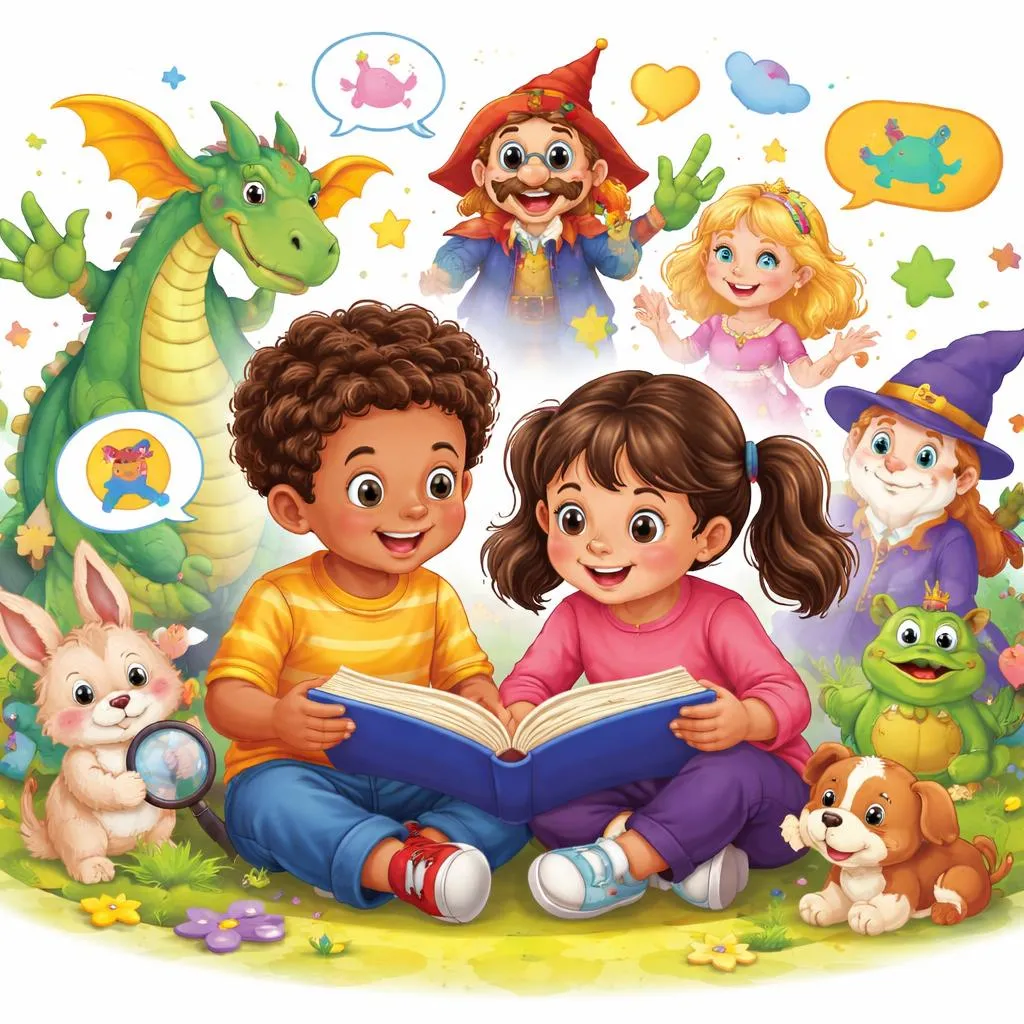

Characters bring stories to life. They drive plots forward. They evoke emotional responses. Children's story book characters become friends to young readers. Children remember them long after stories end. This article explores practical teaching applications for character study. The focus remains on language development through character exploration. Let us examine how story characters support English learning.
What Are Children's Story Book Characters? Children's story book characters are the people, animals, or creatures that populate narratives. They perform actions. They speak dialogue. They experience emotions. They change throughout stories.
Characters range from realistic to fantastic. Some are ordinary children. Others are talking animals. Many possess magical powers. Some characters appear in single books. Others star in entire series. The common thread involves readers forming connections with these created beings. Children care about what happens to them. This emotional investment drives reading engagement.
Vocabulary Learning Through Character Study Children's story book characters introduce vocabulary for describing people and personalities. Trait words name character qualities. "Brave," "kind," "curious," "silly," "wise," and "grumpy" describe how characters behave. Students learn adjectives through character examples.
Appearance vocabulary describes how characters look. "Tall," "small," "furry," "colorful," "spotted," and "striped" create visual images. Students build descriptive language through character portraits.
Action words attach to specific characters. "The cat sneaks." "The bear hibernates." "The rabbit hops." Students learn verbs associated with character types.
Emotion words connect to character experiences. Characters feel happy, sad, scared, or excited. Students build feeling vocabulary through character journeys.
Character Categories in Children's Books Children's story book characters fall into recognizable categories. Protagonists are main characters. Readers root for them. They drive the story forward. Antagonists create conflict. They oppose the protagonist. Helper characters assist the main character. They provide support and wisdom.
Animal characters populate many stories. They exhibit human traits while retaining animal characteristics. Peter Rabbit is both rabbit and childlike. This combination delights young readers.
Fantasy characters include dragons, fairies, and monsters. These creatures expand imagination. They introduce vocabulary for impossible things.
Ordinary child characters reflect readers themselves. Children see their own experiences in these characters. This recognition builds connection to reading.
Daily Life Examples Through Characters Children's story book characters model daily life experiences. Characters go to school. They interact with families. They face playground challenges. They experience friendship and conflict.
A character losing a toy mirrors real childhood experiences. A character feeling left out reflects playground realities. A character overcoming fear inspires real courage. Students connect character experiences to their own lives.
These connections build empathy. Students imagine how others feel. They practice perspective-taking through character analysis. This emotional intelligence supports social development alongside language.
Characters also model problem-solving. They face difficulties. They try solutions. They learn from mistakes. Students observe this process through stories. They apply similar thinking to their own challenges.
Printable Flashcards for Character Study Flashcards support character vocabulary development. Create cards with character names. "Peter Rabbit," "Winnie the Pooh," "Charlotte the Spider" appear. Add character images on one side. Names on the reverse.
Trait cards build descriptive vocabulary. Create cards with character qualities. "Brave," "curious," "loyal," "silly," "wise," and "kind." Students match traits to characters who demonstrate them.
Appearance cards build visual vocabulary. "Furry," "feathered," "spotted," "striped," "colorful," and "tiny." Students match descriptions to character images.
Action cards connect verbs to characters. "Hops like Peter Rabbit." "Growls like the Grinch." "Spins like Charlotte." Students act out while naming characters.
Learning Activities with Story Characters Several activities work well with children's story book characters. Character webs organize descriptive information. Place character name in center. Add trait words around it. Add actions around that. Add feelings. This builds organized character understanding.
Character comparisons develop analytical thinking. Choose two characters from different stories. Compare their traits. Compare their actions. Compare how they solve problems. This builds comparative language.
Character journals practice perspective-taking. Students write journal entries as if they were a character. "Today I felt scared when..." This builds empathy and writing skills.
Character interviews develop questioning skills. One student扮演s a character. Others ask questions. "Why did you do that?" "How did you feel?" This builds oral language and comprehension.
Educational Games with Story Characters Games transform character study into interactive experience. Character bingo works well. Create cards with character names or traits. Call out descriptions. Students mark matches. First to complete a row wins.
Match game pairs characters with stories. Create cards with character names and cards with book titles. Students match each character to correct story.
Charades with characters engages physical learning. Write character names on cards. Students act out without speaking. Others guess the character. This builds observation and character knowledge.
Story dominoes connects characters to actions. Create cards with character names and cards with character actions. Students match each character to things they did.
Printable Materials for Character Lessons Printable materials support structured character study. Character profile sheets organize information. Provide spaces for name, story, appearance, traits, actions, and feelings. Students complete for favorite characters.
Venn diagrams compare two characters. Two overlapping circles show similarities and differences. Students fill in traits unique to each character and traits they share.
Character maps track characters across series. Some characters appear in multiple books. Students list each book and what the character did. This builds comprehension of character development.
Comprehension questions focus on character understanding. "Why did the character do that?" "How did the character change?" "What kind of person is this character?" Students answer verbally or in writing.
Character Traits and Vocabulary Development Understanding character traits builds sophisticated vocabulary. Basic traits use simple words. "Nice," "mean," "happy," "sad." Advanced traits use richer language. "Compassionate," "mischievous," "melancholy," "determined." Students acquire these words through character study.
Trait words appear in context repeatedly. Characters demonstrate traits through actions. The Cat in the Hat shows mischief. Charlotte shows loyalty. Students see trait words in action.
Trait comparisons build nuanced understanding. "Brave" differs from "foolish" though both involve risk-taking. Characters help students distinguish similar traits.
Trait changes across stories show character development. Characters learn and grow. Students track these changes. This builds understanding of character arcs.
Character Emotions and Feeling Words Children's story book characters experience rich emotional lives. They feel joy at success. They feel fear in danger. They feel sadness at loss. They feel anger at injustice.
Feeling charts connect emotions to story events. List character emotions in one column. List what caused them in another. This builds understanding of emotional cause and effect.
Feeling vocabulary expands through character study. Basic feelings include happy, sad, mad. Advanced feelings include frustrated, disappointed, anxious, grateful. Characters demonstrate these nuanced emotions.
Emotional vocabulary supports social-emotional learning. Students gain words for their own feelings. They understand themselves better. This personal connection strengthens language retention.
Character Actions and Verb Development Characters drive stories through action. They do things constantly. This creates rich verb contexts. "Run," "jump," "hide," "seek," "build," "create," "rescue," "explore."
Active characters use active verbs. Passive characters use different verbs. "Wait," "watch," "listen," "observe." Students learn verb variety through character actions.
Verb tenses appear in character descriptions. Past tense describes what characters did. Present tense describes what characters do regularly. Future tense describes what characters will do. Students see tense in meaningful contexts.
Strong verbs replace weak verbs through character study. Instead of "walked," characters "strolled," "marched," "wandered," or "tiptoed." Students expand verb choice through character actions.
Creating Original Characters Students benefit from creating their own characters. Provide character creation templates. Name, appearance, traits, likes, dislikes, fears, and dreams. This builds creative writing skills.
Character drawings add visual dimension. Students illustrate original characters. They add labels describing features. This combines art with language.
Character interviews practice oral language. Students introduce original characters to classmates. They answer questions as their character. This builds confidence and creativity.
Character stories extend creation into narrative. Students write short stories featuring original characters. They apply story structure learning. This builds authorship and ownership.
Children's story book characters provide rich material for language development. They introduce descriptive vocabulary naturally. They model emotions and actions. They create connection to reading. They become friends who accompany young learners through literacy journeys. Character study deserves regular time in language learning classrooms.