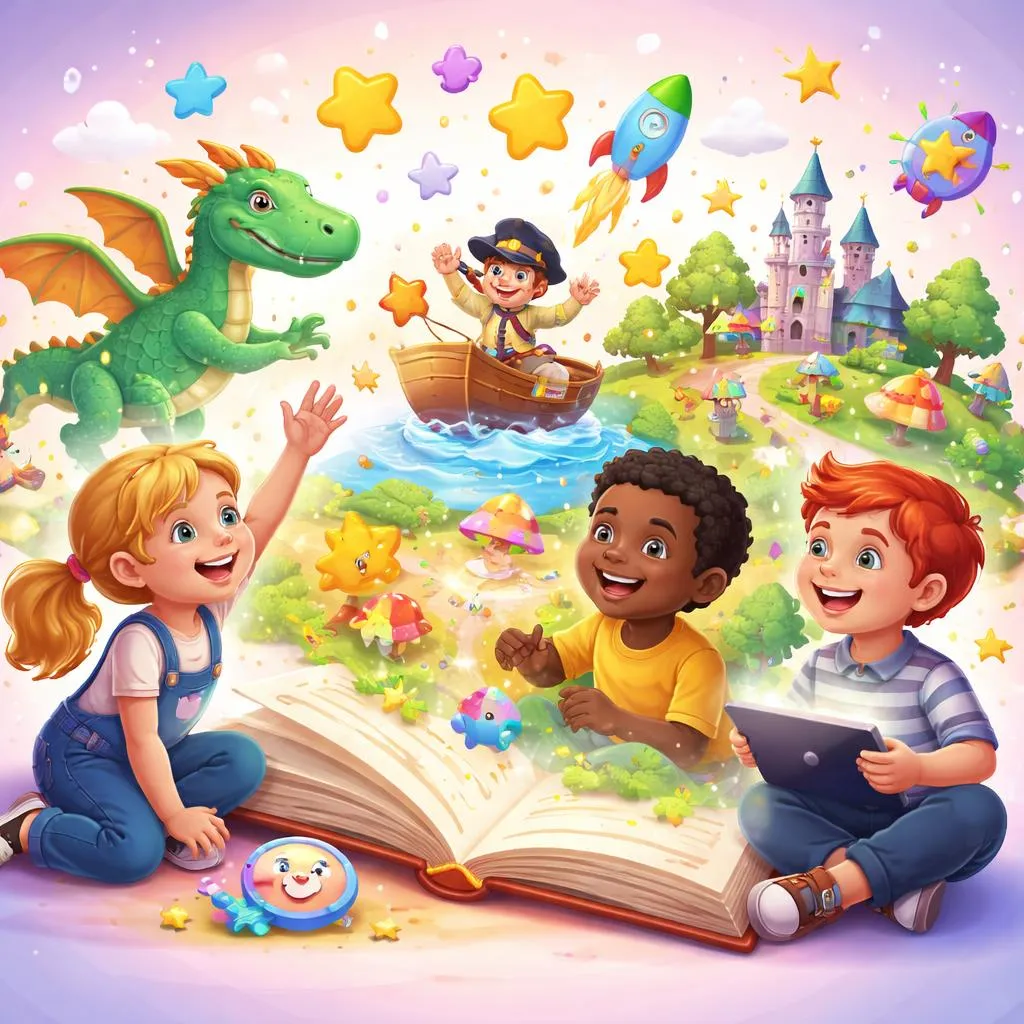

Stories have always invited response. Listeners gasp at surprises. They laugh at funny moments. They call out warnings to characters in danger. Interactive children's stories build on this natural engagement. They create formal opportunities for participation within the narrative. This active involvement deepens language learning in powerful ways. This article explores methods for using these dynamic stories in teaching.
What Defines an Interactive Children's Story?
An interactive children's story invites active participation from the listener or reader. The story includes moments where the audience must respond. These responses then affect how the narrative continues. The line between storyteller and audience blurs.
Interaction takes many forms in these stories. Some use physical movement. Children might clap when the giant appears. They might stomp feet to help characters escape danger. Other stories use call and response. The storyteller says a line and children repeat it. Still others offer choices. Which door should the hero open? The audience decides.
Digital interactive stories add another layer. Children tap the screen to make things happen. They choose which path to follow. They might even record their own voices as part of the narrative. The technology creates new possibilities for engagement.
Why Use Interactive Stories for Language Learning?
Interactive stories offer several advantages for language development. First, they demand attention. Children cannot drift away mentally because the story requires their participation. This focused attention supports comprehension and retention.
Second, interaction creates repetition without boredom. A repeated phrase becomes a game rather than drill work. Children happily say "I'm not afraid of you, big wolf!" every time the wolf appears. This repetition builds language patterns naturally.
Third, interactive stories build confidence. Shy speakers find their voice within the safety of a group response. The story provides cover for language production. Children speak as part of the narrative rather than as themselves.
Fourth, these stories create community. The shared experience of participating together builds connections. Children hear others responding and join in. The classroom becomes a storytelling ensemble rather than a collection of individuals.
Categories of Interactive Stories
Interactive children's stories fall into several categories. Each offers different learning opportunities.
Physical Participation Stories These stories involve movement and action. Children might act out character motions. They might use gestures to represent story elements. A story about rain might have children wiggle fingers for drizzle and slap thighs for downpour. The physical connection supports memory and engagement.
Call and Response Stories These stories use repeated phrases that children join. The storyteller sets up the pattern. "The giant said..." Children roar "FEE FI FO FUM!" This pattern builds prediction skills and oral language production.
Choice-Based Stories These narratives pause for audience decisions. "Should the rabbit go through the dark forest or across the wide river?" Children discuss and vote. The story continues based on their choice. This builds critical thinking and language for reasoning.
Digital Interactive Stories These screen-based stories offer clicking, dragging, and recording options. Children interact directly with the narrative interface. They might dress characters, choose dialogue, or create new story elements.
Vocabulary Learning Through Interactive Stories
Interactive formats support vocabulary acquisition uniquely. Words become connected to actions. When children stomp feet for "stomp," the word gains physical memory. This embodied cognition strengthens learning.
Repeated phrases in interactive stories build vocabulary through context. A phrase like "the enormous giant" appears multiple times. Each repetition reinforces "enormous" as a word meaning very big. Children learn through joyful repetition rather than drill.
Choice moments in interactive stories require vocabulary use. "Should we go through the spooky forest or cross the shimmering lake?" Discussing options requires using descriptive words. Children practice vocabulary in meaningful decision-making contexts.
Simple Phonics Points in Interactive Formats
Interactive stories support phonics learning naturally. Repeated phrases highlight specific sounds. A story featuring "slithering snakes" repeats the /s/ sound. Children hear and produce this sound pattern multiple times.
Call and response formats isolate sounds for emphasis. The storyteller might draw out a sound. "The snake went sssssss." Children copy this elongated sound. This playful approach builds phonemic awareness without formal instruction.
Digital interactive stories often include phonics games within the narrative. Tapping letters to complete words. Matching sounds to pictures. The phonics practice feels like part of the story rather than separate work.
Grammar Patterns in Interactive Stories
Interactive stories provide natural grammar instruction. Repeated sentence patterns become familiar through use. "The bear climbed up the tree. The bear climbed over the rock." Children internalize preposition use through repetition.
Question and answer formats model proper question formation. The storyteller asks, "Where is the little mouse?" Children respond, "Under the chair!" This exchange demonstrates question structure and appropriate response patterns.
Choice-based narratives use conditional language. "If we go through the forest, we might meet the wolf. If we cross the river, we might see the fish." This models conditional sentences in a meaningful decision context.
Learning Activities with Interactive Stories
Active engagement with interactive formats deepens learning. These activities extend participation beyond the story itself.
Create Class Response Phrases After experiencing an interactive story, create new response phrases together. What should the class say when the villain appears? What sound signals the hero's entrance? This builds creative language use and ownership of the story.
Design Story Movements Work together to design movements for a familiar story. What motion shows the character thinking? What gesture represents the magical spell? Performing these movements while retelling builds physical connection to language.
Story Choice Charts After a choice-based story, create a chart showing choices made and outcomes experienced. Discuss what might have happened with different choices. This builds hypothetical thinking and language for speculation.
Class Interactive Story Creation Guide the class in creating their own interactive story. Decide on repeated phrases. Plan choice moments. Create movements. Perform the story together. This comprehensive project builds all language skills.
Educational Games Inspired by Interactive Stories
Games extend interactive principles into new formats. These activities work well for language practice.
Story Movement Freeze Read a story and assign movements for key words. When children hear the word, they make the movement. At certain moments, call "freeze." Children hold their positions. This builds listening comprehension and following directions.
Choice Consequence Game Present simple story situations with two choices. Discuss possible consequences of each choice. Then reveal what actually happens in the story. This builds prediction skills and language for reasoning.
Response接力 Race Divide into teams. The storyteller reads a line requiring a response. The first person to respond correctly wins a point for their team. This builds quick listening and production skills.
Printable Materials for Interactive Story Learning
Tangible resources support ongoing interactive practice. These materials work well for independent or small group work.
Story Response Cards Create cards with common response phrases on them. "I'm not afraid!" "Help us, please!" "What happens next?" Learners use these cards during storytelling to remember responses.
Choice Board Template Create a simple template with two paths. Learners fill in choices and consequences as they create their own interactive stories. This builds narrative planning skills.
Movement Guide Sheets Create sheets showing simple stick figures making story movements. Learners follow these guides during story retelling. This supports physical participation without teacher demonstration.
My Interactive Story Planner Provide a template for planning an original interactive story. Sections include repeated phrases, movement moments, and choice points. This builds understanding of interactive structure.
The lasting impact of interactive children's stories reaches beyond language skills. These experiences teach children that stories respond to them. Their participation matters. Their voice shapes the narrative. This understanding transforms how learners approach all stories. They become active meaning-makers rather than passive recipients. The classroom becomes a place where every voice contributes to shared narratives. Children discover that language is not just something to receive but something to do. Each interactive story builds confidence in using words to affect the world. This confidence carries into all future communication. The child who learned to roar with the giant knows their voice has power. The child who chose the story path understands their decisions matter. These lessons last long after the specific vocabulary and grammar fade.