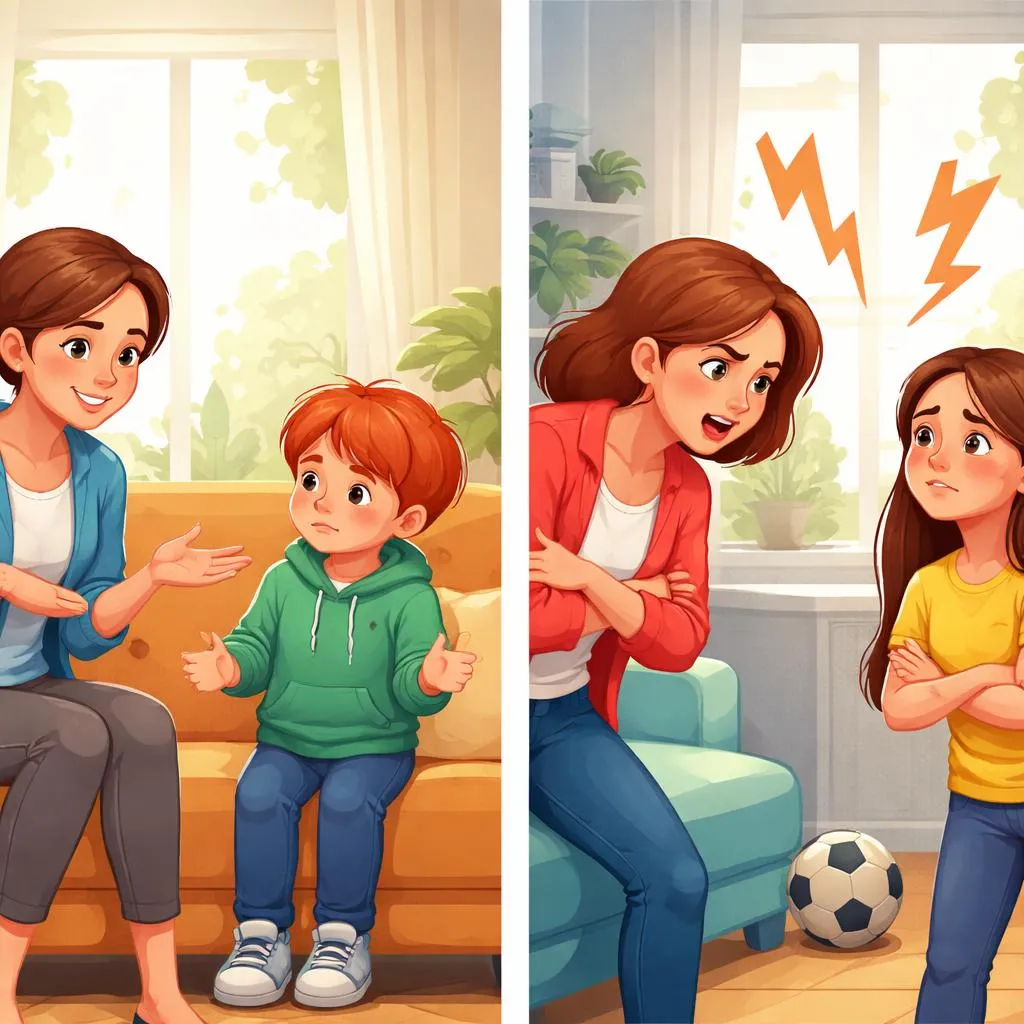

Someone says something about a child that is not true. "You must be tired." The child is full of energy. How do they answer? Two phrases come to mind. "Not at all." "Quite the opposite."
Both mean "what you said is wrong." Both correct a misunderstanding. But they feel different. One is a simple denial. One points to the exact opposite.
Children need both phrases. Understanding the difference helps them correct others clearly and kindly.
This article helps families explore these disagreement phrases. Your child will learn when to say "not at all" and when to say "quite the opposite."
What Do These Expressions Mean?
"Not at all" means "what you said is completely untrue. There is no truth in it." The phrase is a strong denial. It says "you are 100 percent wrong."
For a child, think of this like someone saying "you look sad." You feel happy. You say "not at all. I am having a great day." You deny their statement completely.
"Quite the opposite" means "not only are you wrong, but the reverse of what you said is true." The phrase denies and then states the opposite. It says "the exact reverse is correct."
For a child, think of this like someone saying "you must be cold." You are actually very hot. You say "quite the opposite. I am sweating." You state the exact reverse.
These two expressions seem similar because both say "you are wrong." Both correct a false statement. Both help people understand the truth.
But one simply denies. One denies and replaces.
What's the Difference?
The main difference lies in whether you state the opposite. "Not at all" simply denies. "Quite the opposite" denies and provides the reverse.
One is about saying no. One is about saying the opposite.
"Not at all" sounds like a clean denial. You reject the statement. You do not offer the correct information unless you add it separately.
"Quite the opposite" sounds like a correction that includes the truth. You say "wrong, and here is the right answer: the opposite."
Another difference involves the situation. "Not at all" works for any false statement. "Quite the opposite" works when the truth is the exact reverse of what was said.
Also, "quite the opposite" is more specific and less common. "Not at all" is very common in everyday speech.
So remember: not at all = simple denial, you are wrong. quite the opposite = denial plus reverse, the opposite is true.
When Do We Use Each One?
Use "not at all" to deny a false statement without adding details. Use it when someone assumes something incorrect about your feelings or state. Use it for simple contradictions.
For example, someone says "you must be nervous about the test." You are not nervous. You say "not at all. I am ready." You deny their assumption.
Use "not at all" to respond to thanks in some situations. "Thank you for helping." "Not at all. I was happy to do it." (This means "do not thank me, it was nothing.")
Use "quite the opposite" when the truth is the exact reverse. Use it to correct a misunderstanding strongly. Use it when you want to be very clear.
For example, someone says "you seem quiet. Are you upset?" You are actually very happy and calm. You say "quite the opposite. I am feeling peaceful and content."
Use "quite the opposite" for strong corrections. "I thought you did not like the gift." "Quite the opposite. I love it. It is my favorite."
Also use "quite the opposite" when someone has things completely backwards. "You think I am angry? Quite the opposite. I am grateful."
Remember: simple denial without stating opposite = "not at all." Denial plus stating the exact reverse = "quite the opposite."
Example Sentences for Kids
Here are simple sentences for "not at all":
Are you tired? Not at all. I slept well last night.
(This denies an assumption about being tired.)
You look worried about the game. Not at all. I am excited to play.
(This denies a false assumption about feelings.)
Thank you for helping me clean. Not at all. I was happy to help.
(This responds to thanks by saying the help was no trouble.)
Here are simple sentences for "quite the opposite":
You think I am sad about losing the game? Quite the opposite. I am proud of how we played.
(This denies sadness and states the opposite: pride.)
I thought you did not want to come to the party. Quite the opposite. I have been looking forward to it all week.
(This denies disinterest and states excitement.)
You think the dark is scary? Quite the opposite. The dark can be cozy and calm.
(This denies fear and states a positive opposite.)
Notice how "not at all" simply denies. "Quite the opposite" denies and then states the exact reverse.
Common Mistakes to Avoid
Many people say "quite the opposite" when a simple denial would do. This can sound too dramatic. Someone asks "are you cold?" You are not cold. You say "quite the opposite."
Incorrect: "Are you cold?" (not cold) "Quite the opposite."
Correct: "Not at all. I feel fine."
Save "quite the opposite" for when the truth is truly the reverse.
Another mistake: using "not at all" when you need to state the opposite clearly. Someone is very confused. "You hate vegetables, right?" You love vegetables. You say "not at all."
Incorrect: "You hate vegetables?" "Not at all." (vague)
Correct: "Quite the opposite. I love vegetables."
When confusion is strong, state the opposite clearly.
A third mistake: forgetting your tone. "Not at all" said harshly can sound angry. "Quite the opposite" said with a sneer sounds rude.
Say "not at all" with a calm, gentle voice. Say "quite the opposite" with a clear, helpful tone. You are correcting, not attacking.
Easy Memory Tips
Here is a fun trick for kids. Think of a shake of the head and a 180-degree turn.
"Not at all" = a shake of the head. You shake your head no. You do not say what is yes. Just no. That is "not at all."
"Quite the opposite" = a 180-degree turn. You face one direction. Then you turn all the way around. Now you face the opposite. You show the reverse.
Another memory tip: look at the words. "Not at all" has the word "not" which means no. "Opposite" has the word "opposite" like backwards.
Draw a simple picture. Draw a child shaking their head next to "not at all." Draw a child turning completely around to face the other way next to "quite the opposite." The images help children feel the difference.
Also try this question: "Do I just need to say no, or do I need to state the exact reverse?" If just no, say "not at all." If exact reverse, say "quite the opposite."
Quick Practice Time
Try these easy exercises with your child. Fill in the blank with "not at all" or "quite the opposite."
Someone says "you look upset." You are actually happy. You say "________________. I am having a wonderful day."
Someone says "I guess you do not like pizza." You love pizza. You say "________________. Pizza is my favorite food."
Someone asks "are you scared of the roller coaster?" You are not scared. You say "________________. I love the thrill."
Someone says "you must be bored of this book." You are completely engaged. You say "________________. I cannot put it down."
Answers:
Not at all (simple denial of being upset)
Quite the opposite (state the reverse: love pizza)
Not at all (simple denial of fear)
Quite the opposite (state the reverse: cannot put it down)
Now practice using both phrases at home. When your child simply needs to say "no, that is not true," use "not at all." When the truth is the exact reverse of what someone said, use "quite the opposite" with a smile. Your child will learn to correct misunderstandings with clarity and kindness.
Wrap-up
Use "not at all" to simply deny a false statement or assumption without providing the opposite. Use "quite the opposite" to deny a statement and then clearly state that the exact reverse is true. Both correct misunderstandings, but one says no while one turns the world around.