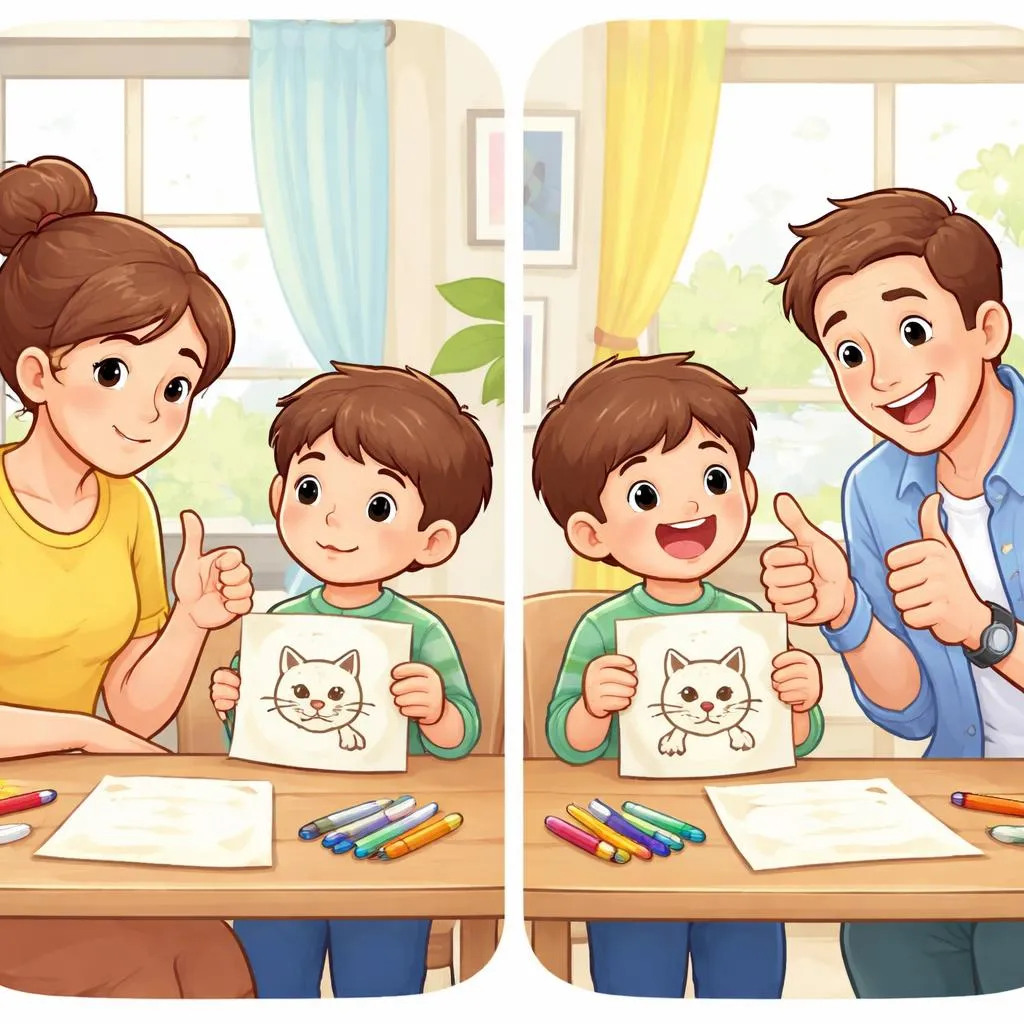

A child shows you a drawing. You look at it. What do you say? Another child cleans their room. You inspect the result. Your words matter.
Two phrases come to mind. "That's fine" and "that's good." Both mean "I approve." Both make a child feel seen. But they carry different levels of warmth.
One sounds like acceptance. One sounds like genuine praise. Parents and teachers use both. Understanding the difference helps children know how much you mean your words.
This article helps families explore these approving phrases. Your child will learn when "fine" fits and when "good" is better.
What Do These Expressions Mean?
"That's fine" means "this meets the basic standard or requirement. Nothing is wrong." The phrase signals acceptance. It says "this is enough."
For a child, think of this like making your bed. The blanket is on the bed. The pillow is in place. It is not perfect. But it is fine. The job is done.
"That's good" means "this has positive qualities that I genuinely like." The phrase signals real approval. It says "this is better than just okay."
For a child, think of this like drawing a cat that actually looks like a cat. Your parent smiles. They say "that's good." They mean "you did well. I like this."
These two expressions seem similar because both are positive. Both say "yes" to what the child did. Both feel better than "that's bad" or "that's wrong."
But one means acceptable. One means admirable.
What's the Difference?
The main difference lies in the level of enthusiasm. "That's fine" is neutral acceptance. "That's good" is positive approval.
One is about meeting the minimum. One is about exceeding it.
"That's fine" sounds calm and neutral. You use it when something is acceptable but not special. It passes the test. It does the job. It is fine.
"That's good" sounds warmer and more encouraging. You use it when something has genuine merit. You see effort or skill. You want the child to feel proud.
Another difference involves expectations. "That's fine" matches low or medium expectations. "That's good" matches higher expectations or surprises you with quality.
Also, children can feel the difference. "That's good" feels like a hug. "That's fine" feels like a nod. Both are okay. But one makes a child glow.
So remember: that's fine = acceptable, neutral, meets minimum. that's good = positive, warm, genuinely pleasing.
When Do We Use Each One?
Use "that's fine" for routine tasks that just need completion. Use it when a child puts away toys without special effort. Use it when a child finishes basic homework. Use it when the result is average.
For example, a child sets the table. Forks and spoons are in the right places. Nothing special, but nothing wrong. You say "that's fine. Thank you for helping."
Use "that's fine" when you want to accept an offer or answer. "Can I have a cracker?" "That's fine."
Use "that's good" for effort that stands out. Use it when a child tries hard on a drawing. Use it when a child shows improvement. Use it when the result makes you smile.
For example, a child writes a story. The spelling is not perfect. But the ideas are creative. You say "that's good. I love how you described the dragon."
Use "that's good" when you want to encourage more of the same behavior. A child shares a toy. "That's good sharing." A child helps without being asked. "That's good helping."
Also use "that's good" for quality work. A child builds a sturdy block tower. A child solves a hard puzzle. A child sings a song in tune.
Remember: routine, average, acceptable = "that's fine." Special effort, quality, genuine praise = "that's good."
Example Sentences for Kids
Here are simple sentences for "that's fine":
You put your shoes in the closet. They are not perfectly lined up, but that's fine.
(This accepts a job that meets the minimum.)
You answered "fine" when I asked how your day was. That's fine. You do not have to talk if you do not want to.
(This accepts a neutral response.)
Your drawing of a house has a square and a triangle. It is simple, but that's fine.
(This accepts basic effort without high praise.)
Here are simple sentences for "that's good":
That's good! You remembered to bring your library book back all by yourself.
(This praises a responsible action.)
Your handwriting is getting much neater. That's good. Keep practicing.
(This praises improvement.)
You built a tower with ten blocks without it falling. That's good balancing.
(This praises a specific skill.)
Notice how "that's fine" accepts. "That's good" praises. One is neutral. One is warm.
Common Mistakes to Avoid
Many people say "that's fine" when they mean "that's good." This can disappoint a child. A child works hard on a drawing. You say "that's fine." The child hears "just okay."
Incorrect: Child shows proud artwork. "That's fine."
Correct: "That's good! I love the colors you chose."
When a child tries hard, use the warmer phrase.
Another mistake: using "that's good" for everything. This dilutes its power. A child puts a cup in the sink. You say "that's good." The phrase loses meaning.
Incorrect: "That's good" for every tiny routine task.
Correct: "That's fine" for routine tasks. Save "that's good" for moments that deserve it.
A third mistake: forgetting your tone. "That's fine" said with a flat voice sounds unhappy. "That's fine" said with a warm voice sounds kind.
Say "that's fine" with a gentle nod. Say "that's good" with a smile. The tone matches the meaning.
Easy Memory Tips
Here is a fun trick for kids. Think of a C grade and an A grade.
"That's fine" = a C grade. A C means you passed. You did the work. Nothing is wrong. But it is not special. A C is fine.
"That's good" = an A grade. An A means you did great. Your work stands out. You should feel proud. An A is good.
Another memory tip: look at the letters. "Fine" has the word "fin" like "finish." You finished the task. That is fine. "Good" has the word "go" like "go higher." Good means you went beyond basic.
Draw a simple picture. Draw a checkmark on a to-do list next to "that's fine." Draw a gold star on a paper next to "that's good." The images help children feel the difference.
Also try this question: "Was this effort routine and average, or special and impressive?" If routine and average, say "that's fine." If special and impressive, say "that's good."
Quick Practice Time
Try these easy exercises with your child. Fill in the blank with "that's fine" or "that's good."
Your child hangs their coat on a hook. It is not folded neatly, but it is off the floor. You say "________________. Thank you."
Your child writes a poem about the moon. The rhymes are clever and beautiful. You say "________________! You have a talent for writing."
Your child pours their own milk. A little spills, but most goes in the cup. You say "________________ for a first try."
Your child helps a younger sibling tie their shoes without being asked. You say "________________ helping. That was very kind."
Answers:
That's fine (routine task, coat is hung, acceptable)
That's good (creative poem with quality, deserves praise)
That's fine (first try with a spill, acceptable for a beginner)
That's good (kind action without being asked, deserves warmth)
Now practice using both phrases at home. For routine tasks that just need to be done, say "that's fine" with a calm nod. For efforts that show special care, skill, or kindness, pause and say "that's good" with a warm smile. Your child will learn the difference between acceptable and admirable.
Wrap-up
Use "that's fine" to accept routine, average, or minimum-effort work with neutral approval. Use "that's good" to praise special effort, quality, or kindness with genuine warmth. Both say "yes," but one accepts while one celebrates.