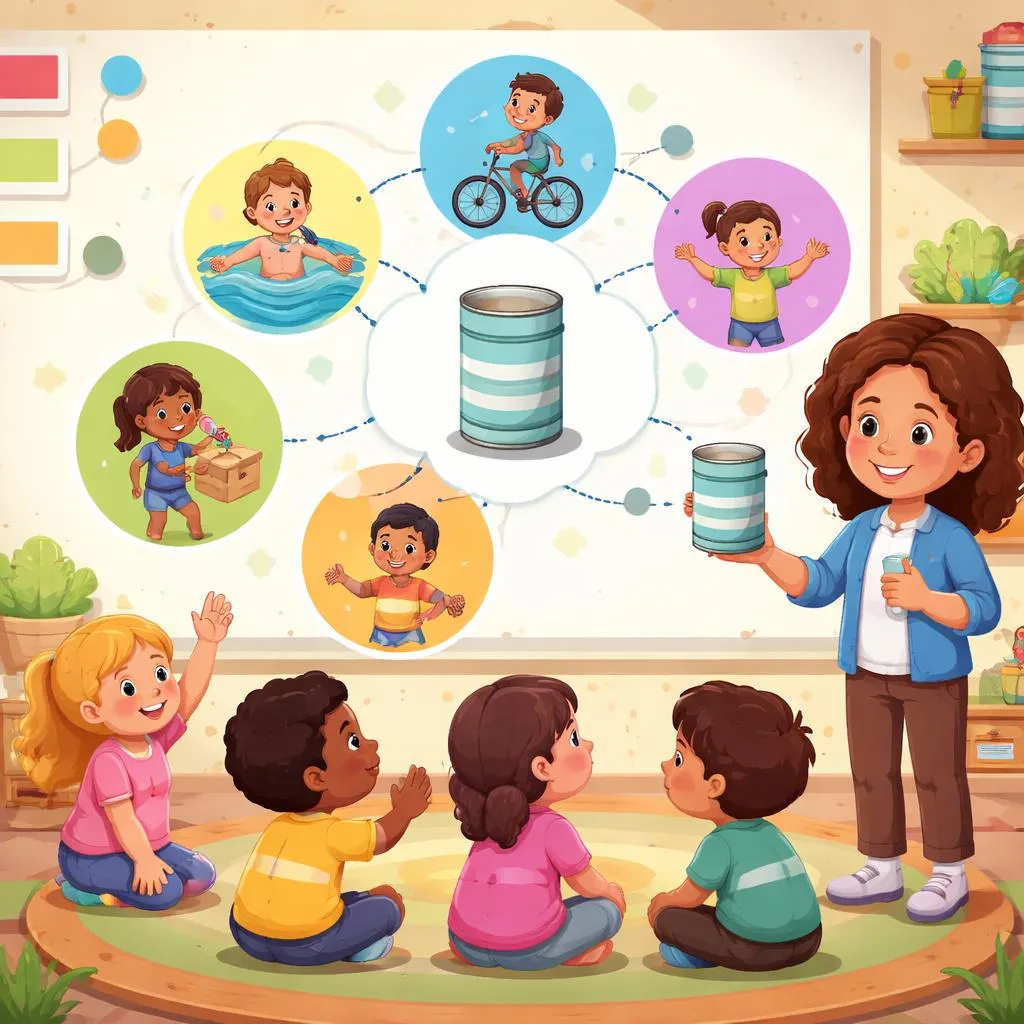

Welcome, everyone! Today, we’re exploring a small but mighty word that gives learners the power to express ability, ask for permission, and describe possibilities. We are focusing on the verb can. This essential modal verb is a key to building confident and polite communication. Understanding the verb can helps learners talk about what they are able to do and navigate social situations. Let’s break down this versatile word in a simple, engaging, and effective way.
Meaning The verb can is a modal auxiliary verb. It is special because it helps the main verb in a sentence. Its primary meaning is to express ability. It tells us what someone or something is able to do. For example, "I can swim," or "Birds can fly." This shows a skill or capacity. Beyond ability, can also expresses permission. "Can I have a cookie?" asks for allowance. It can also indicate possibility. "It can rain today." This means rain is possible. We start by teaching ability, as it is the most concrete and personal meaning for young learners.
Conjugation The wonderful thing about the verb can is that it does not change form for different subjects. We say "I can," "you can," "he can," "she can," "it can," "we can," and "they can." It remains the same. The main verb that follows is always in its base form without "to." For example, "She can sing." Not "She can to sing" or "She cans sing." This simplicity makes it easier to teach than many other verbs. The negative form is "cannot," which we often write and say as "can't."
Present tense We use the verb can in the present tense to talk about general abilities or situations now. "I can read this book." "He can ride a bike." "They can speak Spanish." For permission, we use it in the present moment. "Can I go now?" "You can play outside." For possibility, we use it for present or general truths. "Winter can be very cold." Using present tense can is the most common and practical starting point. Encourage learners to make "I can..." statements about their own skills.
Past tense The verb can in the past tense is "could." We use "could" to talk about general ability in the past. "When I was little, I could count to ten." "She could run fast last year." We also use "could" for polite requests, which is slightly more formal than "can." "Could you help me, please?" It is important to note that for a single event in the past, we often use "was able to" instead of "could." "Yesterday, I was able to finish my puzzle." This distinction is more advanced but good to note for accuracy later.
Future tense We do not use can for the future tense on its own. To express future ability, we use "will be able to." "Next year, I will be able to drive." However, can can be used to talk about present decisions about the future or future possibility. "I can help you tomorrow." (This is a present offer about a future action). "It can get windy tonight." (This is a future possibility). For simple future ability, "will be able to" is the clearest and most correct form to teach.
Questions Forming questions with the verb can is straightforward. We simply switch the subject and "can." "Can you swim?" "Can the dog fetch?" "Can they come over?" This structure is used for asking about ability or for requesting permission. "Can I have some water?" To form negative questions, we use "Can't...?" "Can't you see it?" Teaching this question form is crucial, as it empowers learners to ask for what they need and inquire about others' abilities in a simple way.
Other uses Beyond ability, permission, and possibility, can has other nuances. We use it to make offers. "Can I help you?" We use it to make suggestions. "We can watch a movie." We also use it to express disbelief or surprise. "That can't be true!" Introducing these uses gradually shows the richness of this small word. It helps learners understand context, as the meaning of can changes slightly depending on the situation and the speaker's tone.
Learning tips A great tip is to use "Can you...?" challenges. Create a fun obstacle course or a list of simple tasks. Ask, "Can you hop on one foot? Can you touch your nose? Can you name three colors?" This practices the question form and lets learners answer with "Yes, I can" or "No, I can't" in a lively, physical way.
Use talent show activities. Have learners share something they can do. "I can draw a circle." "I can say the alphabet." Celebrate each "I can" statement. This builds confidence and personalizes the grammar. Introduce "can" and "can't" with clear, contrasting pictures or demonstrations to solidify the difference between ability and inability.
Educational games "Can You Guess My Talent?" is a fun game. One learner thinks of something they can do (e.g., whistle, do a cartwheel). Others ask "Can you...?" questions to guess. "Can you sing?" "Can you jump high?" The first to guess correctly wins. This practices questioning and vocabulary.
"Permission Please" is a role-play game. Set up scenarios like a classroom, a kitchen, or a library. Provide prompt cards: "You want a book from the high shelf." "You want to use the red crayon." Learners must ask for permission using "Can I...?" This teaches polite social language in context.
"Ability Charades" combines movement and grammar. Write action verbs on cards (swim, fly, climb, read). A learner picks a card and acts it out. The audience guesses by asking, "Can you [action]?" or stating "You can [action]!" This reinforces the connection between the verb can and physical abilities.
Mastering the verb can is like receiving a key to a new level of self-expression and interaction. It allows learners to confidently share their skills, ask politely, and understand what is possible. When we hear them say, "I can do it!" or ask, "Can you play?", we see them using English as a tool for real-life communication. Keep practice positive, celebrate each attempt, and watch as this simple verb helps build a foundation of confidence and capability in their language journey.