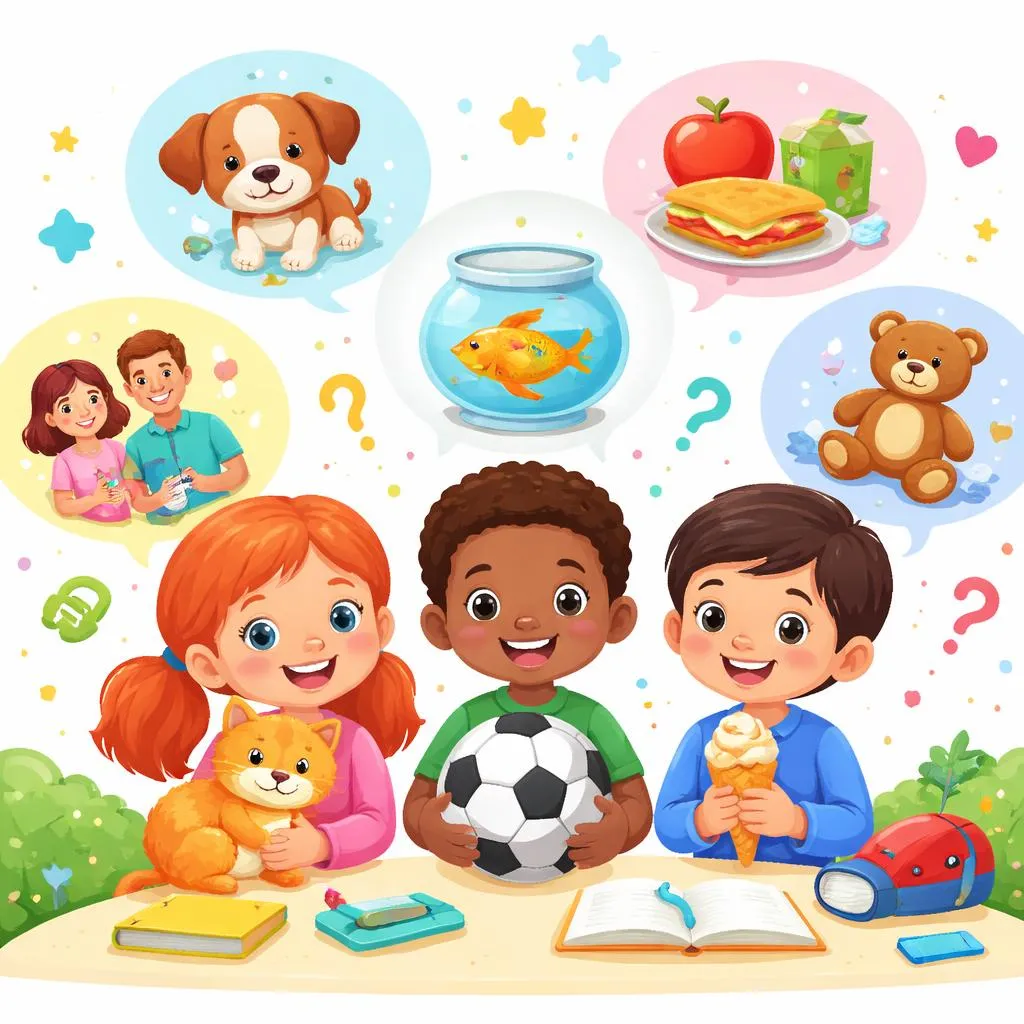

Meaning Let's talk about a very useful word: "have." In the have present tense, this verb often shows ownership or possession. It tells us what someone owns or holds right now. For example, "I have a red ball." This means the ball belongs to me at this moment. The verb "have" connects a person to an object.
But "have" does more than just show ownership. It can also describe a feature or a part of something. For example, "You have blue eyes." or "A cat has four legs." It links a subject to a characteristic. Understanding this basic meaning of the have present tense helps us describe our world clearly.
Conjugation Conjugation means changing the verb to match the subject. The have present tense has two main forms: have and has. We choose between them based on the subject of our sentence. This is a key rule for speaking correctly.
We use have with the subjects I, you, we, and they. We use has with the subjects he, she, and it. This rule is simple but very important. Remembering "he, she, it → has" is a great trick. Mastering this conjugation is the first step to using the verb confidently.
Present Tense Now, let's see the have present tense in action. We use it to talk about things we own, features we possess, or actions we do regularly now. Look at these examples with have: "I have a secret." "You have a nice smile." "We have a big family." "They have new shoes."
Now, see examples with has: "He has a bicycle." "She has a brilliant idea." "The dog has a fluffy tail." "My mom has a meeting." Notice how the verb changes form. We say "I have" but "She has." Practicing with different subjects makes this rule feel natural.
Past Tense When we talk about yesterday, we change the verb. The past tense of "have" is had. We use had for all subjects in the past tense. We do not change it for he, she, or it. This makes the past tense easier.
Here are some examples: "I had a cookie after lunch." "You had a green hat." "She had a wonderful time." "They had two rabbits." The word had tells us the possession or experience happened before this moment. It is a finished action in the past.
Future Tense To talk about tomorrow, we use the future tense. We say will have for the future. Like the past tense, will have stays the same for every subject. It does not change.
Look at these sentences: "I will have a birthday party." "He will have a new teacher." "We will have pizza for dinner." "They will have a test next week." Adding "will" before "have" clearly shows something is going to happen later. It is a promise or a plan about possession or experience.
Questions How do we ask questions with the have present tense? We often use the helper verb "do." For most subjects, we start with "Do" and then use "have." For he, she, and it, we start with "Does" and then use "have." The main verb "have" returns to its base form.
Examples with do: "Do you have a pencil?" "Do they have a map?" Examples with does: "Does he have a sister?" "Does the library have this book?" To answer, we can say, "Yes, I do," or "No, she doesn't." This question form helps us find out information from others.
Other Uses The have present tense is also a key helper verb. We use it to form the present perfect tense, which connects the past to now. For example, "I have finished my work." This means the finishing happened in the recent past and matters now.
We also use "have" in common expressions about activities. For example, "have breakfast," "have a bath," "have fun," or "have a lesson." In these phrases, "have" doesn't mean own. It means to take part in an activity. This shows how versatile and common this verb is in daily English.
Learning Tips A great tip is to use the "Have/Has Song." Set the rule to a simple tune: "I have, you have, we have, they have. He has, she has, it has. Remember this!" Singing grammatical rules helps them stick in our memory. Practice with different subjects.
Another tip is the "Subject-Verb Match" game. Write subject pronouns (I, you, he, etc.) on one color of cards. Write "have" and "has" on another color. Match them correctly. For an extra challenge, add picture cards of objects (a bike, a idea) and make full sentences: "He has a bike."
Educational Games Let's play "I Have, Who Has?" Create a chain game with cards. One card reads: "I have a cat. Who has a blue car?" The person with the "I have a blue car" card reads it and asks their question. This game practices listening, reading the have present tense, and quick thinking.
Try the "Classroom Possession Hunt." Give learners a simple checklist: "Find someone who... has a brother, has a pet fish, has red socks." They must ask questions using "Do you have...?" and find classmates who answer "Yes, I do." This gets everyone moving and speaking purposefully.
Mastering the have present tense builds a strong foundation for everyday communication. This verb helps us share what we own, describe what we see, and talk about our experiences. Through clear examples, catchy songs, and interactive games, the patterns of "have" and "has" become second nature. Keep practicing with curiosity, and you'll find this little verb is one of your most powerful tools for expression.