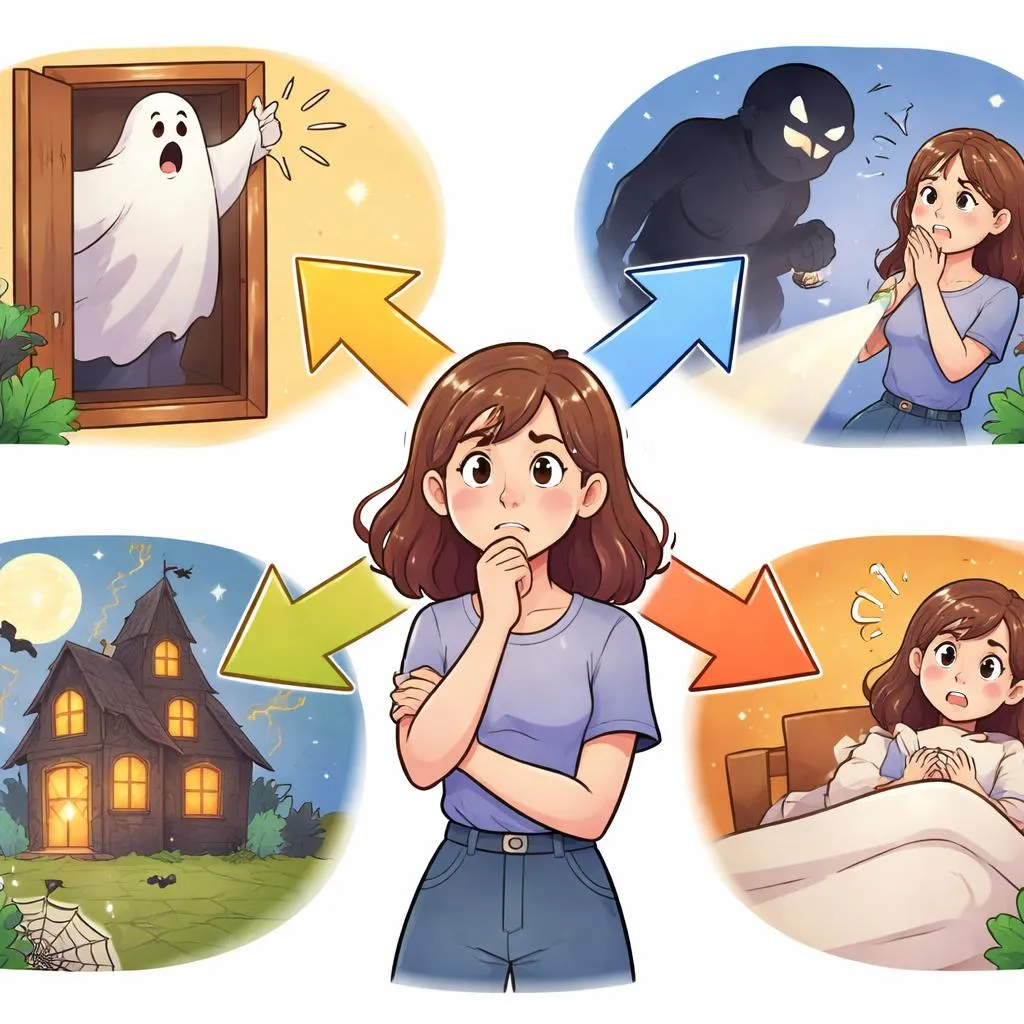

Hello, word explorer! Have you ever felt a sudden scare? That feeling is fright. A loud noise might frighten you. A scary movie is frightening. You walk home, feeling frightened. They all talk about fear. But they are not the same! The words fright, frighten, frightening, and frightened are a "Word Fear Team". They all connect to being scared. Each team member has a different role. Your mission is to learn their roles. Let's see a quick example at home.
At home, you might say: "The loud thunder gave me a fright." That names the feeling. But you could also say: "The thunder frightened my dog." That is an action. Which one is right? They both are! You need the right team member for your sentence. Let's start our adventure!
Adventure! Decoding the Fear Team
Welcome to the word theater! Our four fear words are here. They share a root idea. But they are different. Meet Fright. It is a noun for the feeling. Meet Frighten. It is a verb for the action. Meet Frightening. It is an adjective for the scary thing. Meet Frightened. It is an adjective for the scared person. Let's learn their parts.
Dimension One: The Time of Action – When is the Scaring?
Words can show when an action happens. Is it a sudden event? Is it a general action? Or is it a state? Let's check the fear clock.
Frighten: The "Can Happen" or "Will Happen" Action. This is the basic action. It can happen in the present or future. It is what the scary thing does.
School example: "Sudden tests can frighten some students." This is a general fact. It can happen.
Nature example: "Bright lights frighten moths at night." This is a scientific fact. It happens.
Frightening: The "Scary Now" Description. This word is an adjective. It describes the thing that causes fear. It is scary at this moment or in general.
Home example: "The dark basement is frightening." The word "frightening" describes the basement.
Playground example: "The tall slide looks frightening to me." It describes the slide.
Frightened: The "Scared Now" or "Was Scared" State. This word is an adjective. It describes the person or animal that feels the fear. It can be a current or past state.
School example: "The frightened student asked for help." The word "frightened" describes the student.
Nature example: "The frightened rabbit ran into its burrow." It describes the rabbit.
Fright: The "Sudden Event" Noun. This word is a noun. It names a sudden feeling of fear. It is the event itself.
Playground example: "He got a fright when the ball hit the fence." It names the sudden scare.
Home example: "The power outage gave us a fright." It names the event.
Dimension Two: The Role Reveal – Feeling, Action, or Description?
Every word has a role. Is it a thing? Is it an action? Is it a description of the cause? Or is it a description of the feeler?
Fright: The Feeling Noun. This word is a noun. It names the feeling of sudden fear. It is the thing you feel.
School example: "The loud bell gave me a fright." Here, "fright" is the thing I got.
Nature example: "The deer jumped in fright at the noise." Here, "fright" names the feeling.
Frighten: The Action Verb. This word is a verb. It shows the action of making someone afraid. It tells us what the scary thing does.
Playground example: "Do not try to frighten your little sister." The word "frighten" is the action.
Home example: "The horror movie will frighten you." The word "frighten" is what the movie will do.
Frightening: The Cause Adjective. This word is an adjective. It describes the thing that causes the fear. It answers "What is the thing like?"
School example: "The test was a frightening experience." The word "frightening" describes the experience.
Nature example: "A frightening storm approached the coast." It describes the storm.
Frightened: The Feeler Adjective. This word is an adjective. It describes the person or animal that feels the fear. It answers "How do they feel?"
Home example: "The frightened child hugged her mother." The word "frightened" describes the child.
Playground example: "I felt frightened during the ghost story." It describes how I felt.
Dimension Three: The Team-Up – What Words Do They Like?
Knowing their common "friends" helps us use them correctly.
Fright (Noun): It is often used with "give someone a", "get a", "in fright". "Give me a fright", "jump in fright".
Frighten (Verb): It often takes an object. "Frighten the birds." It teams with adverbs: "easily frightened". It is used with "away". "Frighten away the animals."
Frightening (Adjective): It usually comes before a noun or after a linking verb. "A frightening noise", "That sounds frightening."
Frightened (Adjective): It usually comes before a noun or after a linking verb. "A frightened look", "She looks frightened."
Our Discovery Map: The Fear Team Guide
Our theater guide is clear. Do you need to name the sudden feeling of fear? Use the noun fright. Do you want to talk about the action of making someone afraid? Use the verb frighten. Do you want to describe the thing that causes fear? Use the adjective frightening. Do you want to describe the person or animal that feels the fear? Use the adjective frightened. Remember, fright is the feeling. Frighten is the action. Frightening describes the scary thing. Frightened describes the scared one.
Challenge! Become a Word Fear Master
-
Best Word Choice: Read the scene. Pick the best word. (Nature/Animal Scene) A hiker sees a large bear on the trail. The bear is the thing that causes fear for the hiker. a) The bear is a frightened animal. b) The bear is a frightening sight. Which one describes the bear as the cause of fear? (Answer: b)
-
Two-Word Sentence Showdown: (School/Camping Story) Imagine telling a scary story around a campfire. First, use the verb to say what the story will do. Example: "This story will frighten you!" Now, use the adjective to describe how the listeners might feel. Example: "The frightened listeners held their breath."
-
Eagle Eye! Find the Glitch: Look at this sentence. One word is not quite right for the meaning. Can you fix it? (Home/Halloween Scene) "The fright decoration on the porch really frightened me." What's wrong? "Fright" is a noun. We need an adjective to describe the decoration (the thing that causes fear). Fixed sentence: "The frightening decoration on the porch really frightened me."
Your Takeaway and Mission! Make Your Sentences Clear
Great work, word actor! You learned the special roles of each word. You can now choose the right word for any situation. Your English will be precise and expressive.
What you can learn from this article:
You now see that fright, frighten, frightening, and frightened are a team. But they have different functions. You learned to use "fright" to name the feeling of sudden fear. You use "frighten" for the action of scaring someone. You use "frightening" to describe the scary thing. You use "frightened" to describe the person who is scared. You know that "fright" is a noun, "frighten" is a verb, and "frightening" and "frightened" are adjectives.
Live Practice Application:
Try this today! Feel a scare: "I got a fright." Talk about an action: "Loud noises frighten my cat." Describe a movie: "That was a frightening film." Describe a feeling: "I was frightened by the storm." When you write or speak, think: Is it the feeling? Use fright. Is it the action? Use frighten. Is it the scary thing? Use frightening. Is it the scared one? Use frightened. Choosing the right word makes your language vivid. You are now a master of the fear team. Well done!