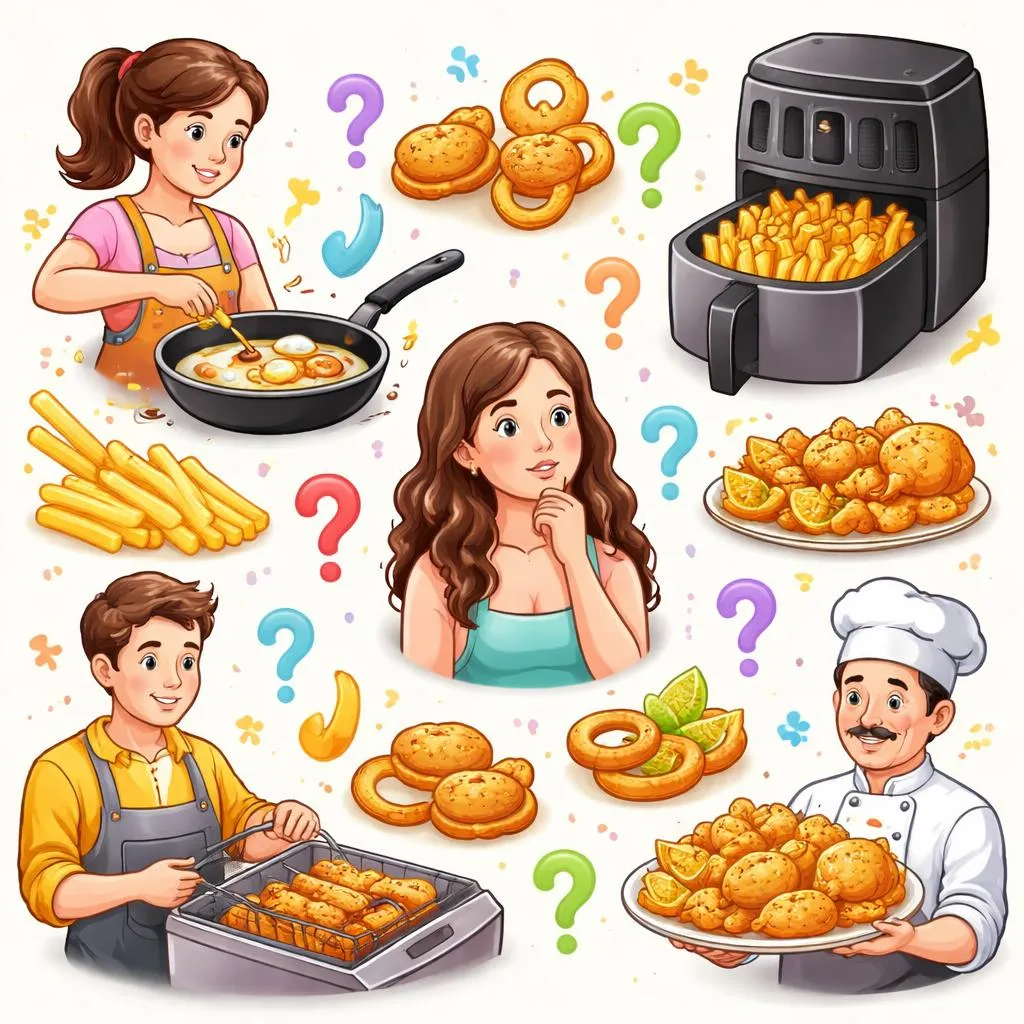

Hey there, word chef! Have you ever helped in the kitchen? You might fry an egg. You use a pan or a fryer. The egg is frying right now. Now, the egg is fried. They all talk about cooking in hot oil. But they are not the same! The words fry, fryer, frying, and fried are a "Word Kitchen Crew". They all connect to cooking with heat. Each crew member has a different tool. Your mission is to learn their tools. Let's see a quick example at home.
At home, you might say: "I will fry some potatoes." That is a future action. But you could also say: "The potatoes are frying now." That describes current action. Which one is right? They both are! You need the right tool for your sentence. Let's start our cooking lesson!
Adventure! Decoding the Kitchen Crew
Welcome to the word kitchen! Our four cooking words are here. They share a root idea. But they are different. Meet Fry. It is a verb for the action. Meet Fryer. It is a noun for the tool or person. Meet Frying. It is the -ing form of the verb. Meet Fried. It is the past form and adjective. Let's learn their recipes.
Dimension One: The Time of Action – When is the Cooking?
Words can show when an action happens. Is it a plan? Is it happening now? Or is it already done? Let's check the kitchen timer.
Fry: The "Will Do" or "Can Do" Action. This is the basic action. It can happen in the present or future. It is a general instruction. Look at "school" and "playground" examples.
School example: "In home economics, we learn to fry chicken." This is a general skill. We learn it.
Playground example: "At the fair, they will fry doughnuts." This is a future plan. It will happen.
Frying: The "Right Now" Action. This word shows the action is in progress. It is happening at this very moment. It's like watching food cook in the pan.
Home example: "The onions are frying in the pan now." The action is ongoing. We can see it.
Nature example: "The campers are frying fish over the fire." The action is live. It happens now.
Fried: The "Already Done" Action or State. This form points to the past. The action of frying is complete. It can also describe the current cooked state.
School example: "We fried plantains for our culture project." The action is over. It happened earlier.
Home example: "I love fried rice with my dinner." This describes the type of rice.
Dimension Two: The Role Reveal – Action, Tool, or Result?
Every word has a role. Is it the main action? Is it a tool or person? Or is it the finished product?
Fry: The Action Verb. This word is a verb. It shows the action of cooking in hot oil. It tells us what someone or something does.
Playground example: "They fry chips in that food truck." The word "fry" is the action.
Home example: "Can you fry the bacon, please?" The word "fry" is the requested action.
Fryer: The Tool or Person Noun. This word is a noun. It names a piece of equipment for frying, like a deep fryer. It can also name a person who fries food.
Home example: "We use an air fryer for healthier fries." It names the appliance.
School example: "The fryer at the restaurant works very fast." It names the person or machine.
Frying: The Ongoing Action or Process. This word is the -ing form of the verb "fry". It shows the action is happening now. It can also be a noun for the cooking method.
As a verb (ongoing): "Dad is frying pancakes for breakfast." (With "is", shows ongoing action) As a noun (method): "Frying requires careful attention." This names the cooking process.
Fried: The Past Action or Result Adjective. This word is the past tense and past participle of the verb "fry". It shows a completed action. It can also work as an adjective describing food that has been cooked in oil.
As a past action (verb): "She fried the eggs perfectly." This tells a finished past event. As an adjective (result): "We ordered fried chicken." This describes the chicken.
Dimension Three: The Team-Up – What Words Do They Work With?
Knowing their common "kitchen partners" helps us use them correctly.
Fry (Verb): It often takes an object. "Fry the fish." It teams with helpers: "will fry", "can fry", "start to fry". "I will fry the onions first."
Fryer (Noun): It likes articles and adjectives. "A deep fryer", "the new fryer", "an electric fryer".
Frying (Verb -ing): It needs a helper verb. "Is/are frying", "was/were frying". "The oil is frying."
Frying (Noun): It is often used as the subject or object. "Frying is a quick cooking method."
Fried (Past/Participle): For simple past, it can stand alone. "I fried it." As an adjective, it comes before a noun. "Fried food", "fried egg".
Our Discovery Map: The Kitchen Crew Guide
Our recipe is clear. Do you want to talk about the action of cooking in hot oil? Use the verb fry. Do you want to name the appliance or the person who fries? Use the noun fryer. Do you want to show the action is happening right now? Use frying with "is" or "are". Do you want to name the cooking process? Use the noun frying. Do you want to talk about the action in the past? Use fried. Do you want to describe food cooked in oil? Use the adjective fried. Remember, fry is the action. Fryer is the tool or person. Frying is the ongoing action or process. Fried is the past action or the result.
Challenge! Become a Word Kitchen Master
-
Best Word Choice: Read the scene. Pick the best word. (Nature/Animal Scene) On a camping trip, someone is cooking sausages in a pan over the fire. The sausages are cooking in hot oil at this moment. a) The sausages are in the fryer. b) The sausages are frying in the pan. Which one describes the action happening at this very moment? (Answer: b)
-
Two-Word Sentence Showdown: (Home/Cooking Lesson) Imagine you are learning to cook. First, use the verb to state what you are going to do. Example: "First, I will fry the onions until they are soft." Now, use the adjective to describe a food you might make. Example: "Then, I will make fried rice with vegetables."
-
Eagle Eye! Find the Glitch: Look at this sentence. One word is not quite right for the meaning. Can you fix it? (School/Cafeteria Scene) "The lunch menu today has fry fish and chips." What's wrong? "Fry" is a verb. Here, we are trying to describe the type of fish on the menu. We need the adjective. Fixed sentence: "The lunch menu today has fried fish and chips."
Your Takeaway and Mission! Make Your Sentences Tasty
Great cooking, word chef! You learned the special roles of each word. You can now choose the right word for any situation. Your English will be precise and clear.
What you can learn from this article:
You now see that fry, fryer, frying, and fried are a crew. But they have different functions. You learned to use "fry" for the action of cooking in oil. You use "fryer" to name the appliance or the cook. You use "frying" for an ongoing action or to name the cooking method. You use "fried" to talk about a past action or to describe food cooked in oil. You know that "fry" is a verb. "Fryer" is a noun. "Frying" is a verb or noun. "Fried" is a verb or adjective.
Live Practice Application:
Try this today! Help in the kitchen: "I will fry the tofu." Name a tool: "We need the fryer." Watch the cook: "The food is frying." Describe the meal: "We are having fried zucchini." When you write or speak, think: Is it the action? Use fry. Is it the tool? Use fryer. Is it happening now? Use frying. Is it the result or past action? Use fried. Choosing the right word makes your language accurate. You are now a master of the kitchen crew. Well done!