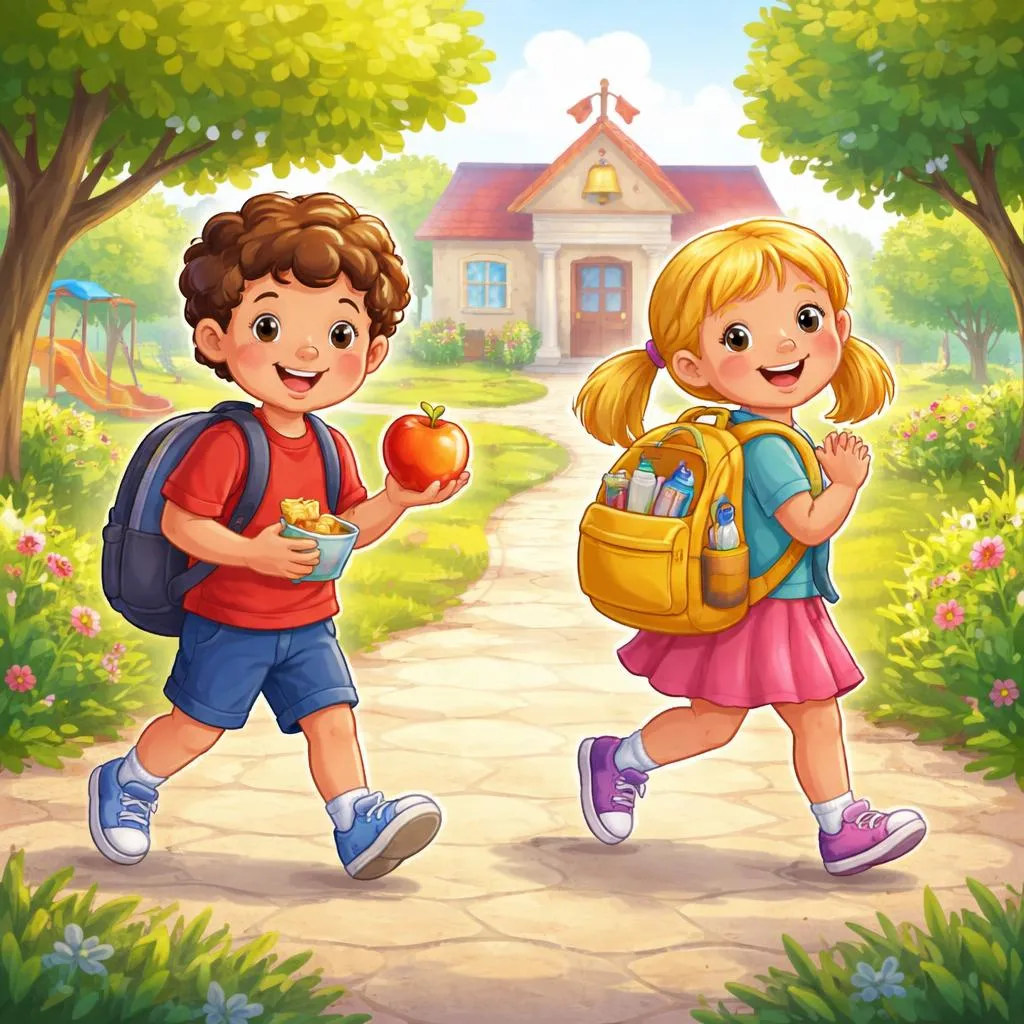

Children move things all day long. They bring homework to school. They carry lunch trays in the cafeteria. Parents hear kids say, "I brought my water bottle" or "I carried my books home". These two words seem very close. But they describe different ways of moving things. Knowing the difference between a "bring to" and a "carry to" helps children talk about how they transport objects. Let us explore these two movement words together.
What Do These Expressions Mean?
A "bring to" means to take something with you to a place. Bring focuses on the destination. You bring something to where you or someone else is going. For example, you bring a gift to a party. You bring your lunch to school. A "carry to" means to hold something while moving. Carry focuses on how you hold it. You can carry something anywhere. For example, you carry a tray. You carry a baby. For a child, bring feels like moving something toward a place. Carry feels like holding something as you walk.
Both are about moving objects with your body. That is why the two expressions seem similar. Bring is about the destination. Carry is about the action of holding. You can carry something without bringing it somewhere specific. You can bring something without carrying it (in a wagon, for example). Understanding this difference helps children describe what they do with objects.
What's the Difference?
The main difference lies in focus: destination versus method. A "bring to" focuses on where the object ends up. The destination matters. A "carry to" focuses on how you hold the object while moving. The method matters. Think of bring as answering "Where is it going?" Think of carry as answering "How are you holding it?" Another difference is that bring often implies movement toward the speaker or a specific place. "Bring the book to me" means move it toward me. Carry has no direction implied. You can carry a box anywhere.
Another difference is that carry often implies the object has weight or size. You carry heavy things. You carry awkward things. Bring works for any object, heavy or light. This difference helps children choose the right word. If you want to talk about the effort of holding, use carry. If you want to talk about where something is going, use bring.
When Do We Use Each One?
Use a "bring to" when the destination matters. At home, a parent says "Please bring your plate to the sink." Use bring for events. "Bring a friend to the party." Use bring for moving toward someone. "Bring me the remote control." Use bring when you want something to arrive at a specific place. Bring is about completion. The object reaches the destination.
Use a "carry to" when the method of holding matters. On a walk, a child says "I will carry the flashlight for you." Use carry for heavy items. "He carries his little sister on his back." Use carry for transportation over distance. "She carries her lunchbox to school every day." Use carry when you want to describe how someone holds something while moving. Carry is about the journey, not just the destination.
Real-life situations use both naturally. A parent says "Please carry this bag to the car. Hold it carefully. It has eggs. Then, when you get to the car, bring the bag to me. I will put it in the trunk. First you carry it (the way you hold it). Then you bring it (the destination)." Another example: a child brings a library book to school. They carried it in their backpack. The bring is about the school destination. The carry is about the backpack method.
Example Sentences for Kids
Here are simple examples of a "bring to":
"Please bring your homework to class tomorrow."
"Can you bring me a glass of water?"
"We brought flowers to Grandma's house."
Here are simple examples of a "carry to":
"He carried his baby sister on his hip."
"I will carry the groceries inside."
"She carries a lucky penny in her pocket."
Notice how the bring examples always mention a destination or a person receiving something. The carry examples focus on how something is held or supported while moving. You can bring something without carrying it (roll it, push it). You can carry something without bringing it to a specific place (carry it in circles). That is the key difference.
Common Mistakes to Avoid
Many children say "bring" when they mean "carry". They say "I brought my backpack all day" when they mean "I carried my backpack." The correct way is to use bring for destination and carry for the action of holding. "I carried my backpack" describes the effort. "I brought my backpack to school" describes where it went. This distinction helps children be more precise.
Another mistake is thinking carry always means in your hands. A child says "You cannot carry a backpack on your back." The correct way is to know that carry means to support and move something, no matter where you hold it. You carry a backpack on your back. You carry a purse on your shoulder. You carry a baby in your arms. Carry is about supporting weight, not just hand-holding.
A third mistake is forgetting that bring can be used without carry. A child says "I brought my toy, but I did not carry it. I rolled it." That is correct. Bring is about destination. The method does not matter. You can bring something by rolling it, dragging it, or having someone else carry it. This understanding helps children see that bring is a broader word. Carry is a specific method within bring.
Easy Memory Tips
Here is a simple trick. Imagine a "bring to" as an arrow pointing to a target. The arrow shows where something is going. The destination is the target. Imagine a "carry to" as a pair of hands holding a box. The hands show how the box is supported. The focus is on the grip and weight. So bring = arrow (destination). Carry = hands (method). This comparison works beautifully.
Another tip uses the first letters. Bring starts with B. Think of "B for Building or Bed." Bring things to a building or to your bed (destination). Carry starts with C. Think of "C for Carry in your arms or on your back." The C looks like arms holding something. Practice with your child. Ask "Am I talking about where it goes or how I hold it?" If where it goes, say bring. If how I hold it, say carry. This question works for almost every situation.
Quick Practice Time
Try these simple exercises with your child.
Fill in the blank: Choose "bring" or "carry".
"Please __________ this note to your teacher after class." (Answer: bring)
"She __________ her little brother on her shoulders through the crowd." (Answer: carried)
Multiple choice: Pick the correct description.
Which one focuses on the destination where the object is going?
A) Carry
B) Bring
(Answer: B)
Which one focuses on how you hold and support the object while moving?
A) Bring
B) Carry
(Answer: B)
These quick questions take only two minutes. They help children see the difference between destination and method. Practice with a toy. Ask your child to carry it to the kitchen (method = carry, destination = kitchen). Then ask them to bring it to you (destination = you). That real practice builds vocabulary and spatial awareness together.
Wrap-up
The key difference is simple. Bring means to take something to a specific destination, focusing on where it ends up. Carry means to hold and support something while moving, focusing on the method of transport. Learning this difference helps children describe their actions clearly and follow directions accurately. Keep bringing and carrying things together. Your child will learn that every object has a journey, and you have two perfect words to talk about that journey.