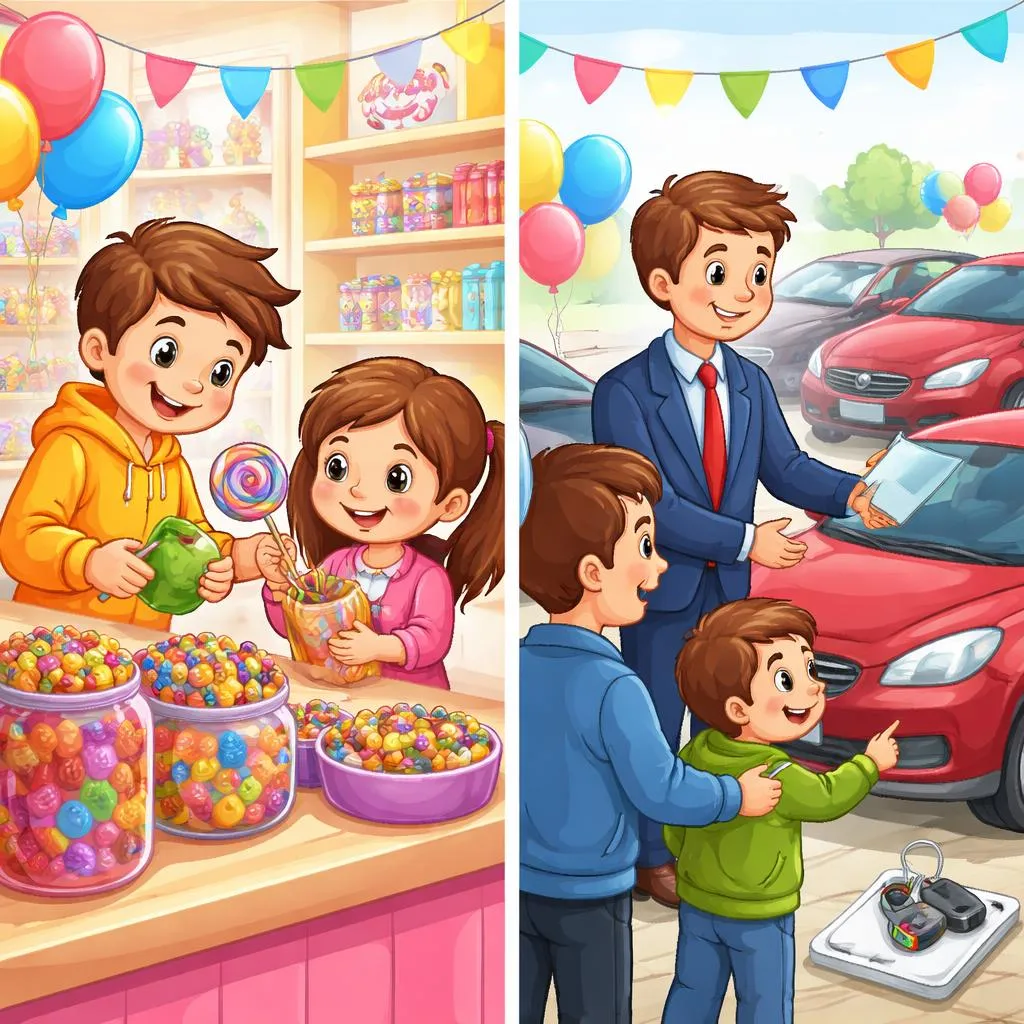

Children use money every day. They buy snacks at the store. They buy tickets for movies. Parents hear kids say, "I bought a toy" or "Mom purchased groceries". These two words seem very close. But they describe different levels of formality. Knowing the difference between a "buy to" and a "purchase to" helps children understand money and shopping. Let us explore these two transaction words together.
What Do These Expressions Mean?
A "buy to" means to get something by paying money for it. Buy is the everyday word. You use it for almost anything you pay for. For example, you buy a pencil. You buy lunch. A "purchase to" means to buy something, but it sounds more formal. Purchase is often used for big or important items. For example, you purchase a house. You purchase a car. For a child, buy feels like using allowance at a candy store. Purchase feels like signing papers at a bank.
Both are about exchanging money for things. That is why the two expressions seem similar. Purchase is a more formal version of buy. You can buy anything. You usually purchase big or important things. Understanding this difference helps children choose the right word for the right situation.
What's the Difference?
The main difference lies in formality and the size of the transaction. A "buy to" is casual and common. You can buy gum. You can buy a shirt. A "purchase to" is more formal. It is often used in business, law, or for expensive items. Think of buy as buying a donut at a bakery. You say "I'll buy this donut." Think of purchase as a company purchasing a new building. The CEO says "We have purchased the property."
Another difference is that purchase can be a noun. "That was a good purchase." Buy can also be a noun ("That was a good buy"), but purchase is more common as a noun in formal contexts. This difference helps children recognize that purchase has a more grown-up feeling. It is not wrong to use buy for everything. But using purchase shows a wider vocabulary.
When Do We Use Each One?
Use a "buy to" for everyday shopping. At the store, a child says "I want to buy some gum." Use buy for small items. "She bought a new notebook." Use buy for food. "We buy bread at the bakery." Use buy for almost anything. Buy is friendly and common. You can say buy in any situation without sounding strange. It is the safe, everyday word for exchanging money for things.
Use a "purchase to" for formal or large transactions. In a business class, a student writes "The company purchased new computers." Use purchase for real estate. "They purchased a house." Use purchase for legal documents. "The receipt shows the date of purchase." Use purchase when you want to sound official or serious. You would not say "I purchased a candy bar" unless you were joking. It sounds too fancy for small things.
Real-life situations use both naturally. A parent says "You bought a sticker with your allowance. That is buying. When we bought our car, that was a purchase. It was a big decision. We signed papers. The word purchase feels bigger and more important. For small things, we say buy. For big, important things, we can say purchase." Another example: a child buys a toy at a garage sale. That is buying. The child's school purchases new playground equipment. That is purchasing.
Example Sentences for Kids
Here are simple examples of a "buy to":
"I will buy a soda with my own money."
"She buys a new backpack every two years."
"Can you buy some milk on your way home?"
Here are simple examples of a "purchase to":
"The museum purchased a famous painting."
"We purchased our tickets online in advance."
"This receipt proves your purchase of the laptop."
Notice how the buy examples are about everyday, casual shopping. The purchase examples are about formal, often bigger or more important transactions. You buy a sandwich. You purchase a diamond ring. Both involve money. But one feels light. The other feels heavy and serious.
Common Mistakes to Avoid
Many children use "purchase" for everything because it sounds grown-up. They say "I purchased a lollipop." That is not wrong, but it sounds funny. The correct way is to use buy for small, everyday things. Save purchase for formal or significant purchases. Using purchase for candy is like wearing a tuxedo to the playground. It fits, but it is too fancy. This helps children match their language to the situation.
Another mistake is thinking purchase is always for expensive things. A child says "I cannot purchase a pencil because it is cheap." That is not correct. The correct way is to know that purchase is about formality, not price. A company can purchase paper clips. That is formal business language. The paper clips are cheap. But the word purchase fits because the context is formal. This nuance helps children see that context matters more than price.
A third mistake is forgetting that buy and purchase mean the same thing. A child says "They are completely different." The correct way is to know they are synonyms. Synonyms are words with the same meaning but different feelings. Buy is casual. Purchase is formal. Both mean getting something with money. This understanding helps children build vocabulary by learning families of words with different tones.
Easy Memory Tips
Here is a simple trick. Imagine a "buy to" as buying a lemonade from a kid's stand. You hand over a dollar. You get a cup. No papers. No signatures. Imagine a "purchase to" as buying a house. You sign twenty pages. A lawyer is there. The bank is involved. So buy = lemonade stand (casual). Purchase = house buying (formal). This comparison works beautifully.
Another tip uses the first letters. Buy starts with B. Think of "B for Basic everyday shopping." Purchase starts with P. Think of "P for Proper or Paperwork." Purchases often involve proper paperwork. Practice with your child. Ask "Is this a casual everyday swap of money or a formal transaction with paperwork?" If casual, say buy. If formal, say purchase. This question works for almost every situation.
Quick Practice Time
Try these simple exercises with your child.
Fill in the blank: Choose "buy" or "purchase".
"I need to __________ some milk at the corner store." (Answer: buy)
"The school board voted to __________ new playground equipment." (Answer: purchase)
Multiple choice: Pick the correct description.
Which one is the casual, everyday word for exchanging money for things?
A) Purchase
B) Buy
(Answer: B)
Which one is more formal, often used for large transactions or in business?
A) Buy
B) Purchase
(Answer: B)
These quick questions take only two minutes. They help children see the formality difference. Think about your family's spending. Ask your child "What did we buy today (casual)?" Then ask "What might we purchase (formal and big)?" That real practice builds financial vocabulary and awareness together.
Wrap-up
The key difference is simple. Buy is the casual, everyday word for exchanging money for things. Purchase is a more formal word, often used for larger transactions or in business contexts. Learning this difference helps children adjust their language for different situations, from talking to friends to writing school reports. Keep buying small treats and learning about big purchases. Your child will learn that both words have their place, and choosing the right one shows you understand your audience.