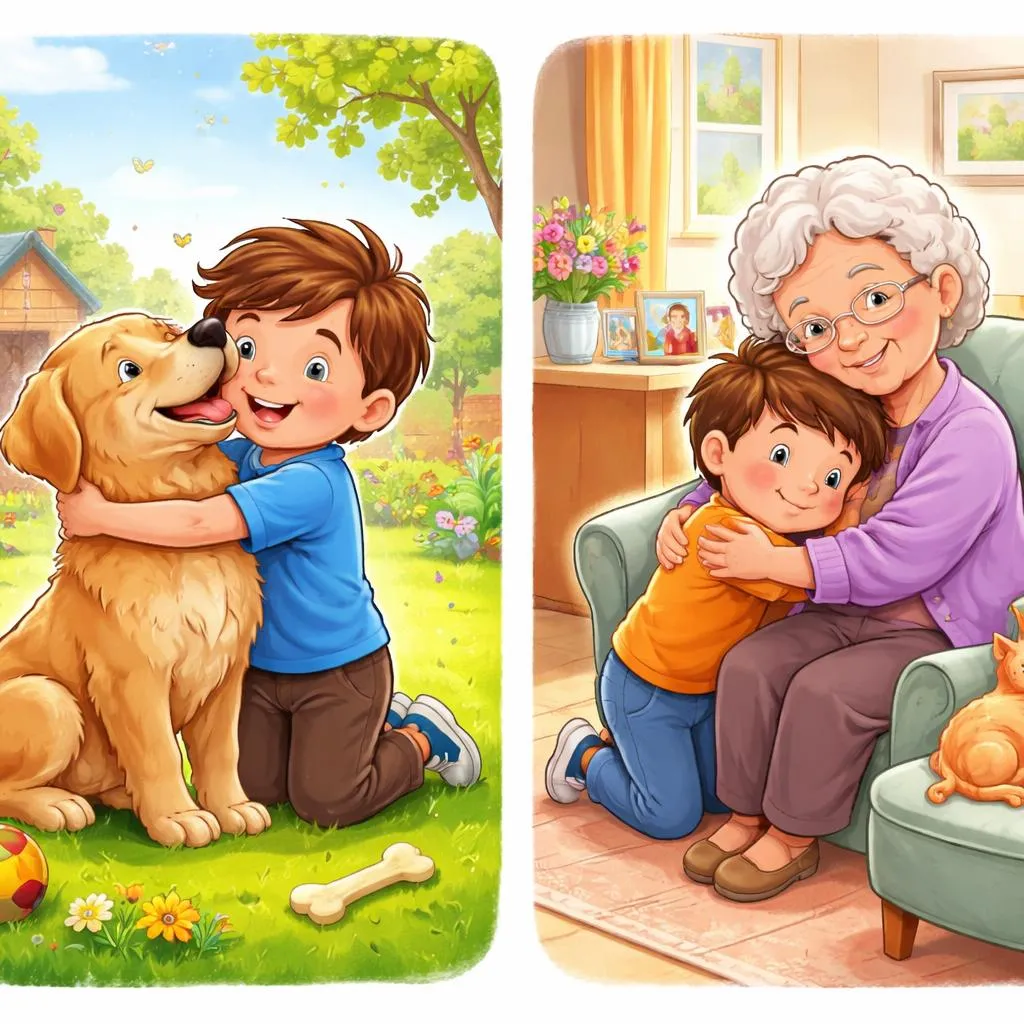

Children feel warm feelings every day. They hug their parents. They care for their pets. Parents hear kids say, "I love you" or "I show affection by holding hands". These two words are very close. But they describe different kinds of warm feelings. Knowing the difference between a "love to" and an "affection to" helps children understand their own hearts. Let us explore these two beautiful words together.
What Do These Expressions Mean?
A "love to" means a very deep, strong feeling of care. Love is huge. It can be for family, friends, pets, or activities. Love lasts a long time. For example, you love your mom. You love your favorite blanket. A "affection to" means a gentle, warm feeling you show through small actions. Affection is often shown by hugging, patting, or kind words. For example, you show affection when you give a high-five. You show affection when you sit close to someone. For a child, love feels like a big, cozy blanket that covers everything.
Affection feels like a warm smile or a gentle pat on the back. Both are about caring for someone. That is why the two expressions seem similar. Love is the deep feeling inside. Affection is how you show that feeling on the outside. You can have love without showing affection. You can show affection without deep love. But they work best together. Understanding this difference helps children talk about their feelings and actions.
What's the Difference?
The main difference lies in depth and expression. A "love to" is a deep, internal feeling. It lives in your heart. You can love someone from far away. A "affection to" is an outward action. You show it through touch, words, or gestures. One is the feeling itself. The other is how you express the feeling. Think of love as a warm fire burning inside a fireplace. Think of affection as the warmth you feel when you stand near it. The fire is love. The warmth you feel is affection.
Another difference is how long they last. Love is usually long-lasting. You love your family your whole life. Affection can come and go. You might feel affectionate one moment and not the next. This difference helps children understand that love is steady. Affection is the little moments of closeness that happen every day. Both are precious.
When Do We Use Each One?
Use a "love to" for deep, lasting feelings. At home, a child says "I love my baby brother." Use love for family. "I love my grandparents." Use love for pets. "I love my goldfish." Use love for activities. "I love reading books." Love is a big, powerful word. It means something is very important to you. You do not say "I love" lightly. When you say love, you mean it.
Use a "affection to" for gentle, warm actions. At school, a child shows affection by sharing a snack. Use affection for small touches. "She shows affection by patting my arm." Use affection for kind words. "His affection comes through in the way he says good morning." Use affection for closeness. "The puppy showed affection by licking my hand." Affection is often shown, not just felt. You can feel affection inside. But mostly, you show affection through actions.
Real-life situations use both naturally. A parent says "I love you very much. That love is a big feeling in my heart. I show my love through affection. When I hug you, that is affection. When I tuck you in at night, that is affection. The love is the feeling. The affection is the hug." Another example: a child says "I love my best friend. I show affection by saving her a seat at lunch." The love is the deep bond. The affection is the kind action.
Example Sentences for Kids
Here are simple examples of a "love to":
"I love my family more than anything."
"She loves to draw pictures of horses."
"He has a deep love for his old stuffed bear."
Here are simple examples of a "affection to":
"The cat showed affection by rubbing against my leg."
"He spoke with warmth and affection in his voice."
"A hug is a simple way to show affection."
Notice how the love examples talk about deep, lasting feelings. The affection examples talk about actions and small shows of warmth. Love is the ocean. Affection is the waves that reach the shore. You need the ocean to have waves. But the waves are what you see and feel. That is the beautiful relationship between love and affection.
Common Mistakes to Avoid
Many children think love and affection are the same. They say "I showed love by giving a hug." That is fine in casual talk. But the precise way is to say "I showed affection by giving a hug. The hug is a sign of my love." The love is the feeling. The hug is the action. Teaching this difference helps children understand that feelings and actions are different. You can feel love without hugging. You can hug without deep love. But when both are there, it is beautiful.
Another mistake is thinking affection is only physical. A child says "I cannot show affection because I do not like hugs." The correct way is to know that affection can be words, gifts, time, or helpful acts. A kind note is affection. Sharing a toy is affection. Sitting next to someone is affection. Affection is any action that shows you care. It does not have to be a hug. This understanding helps shy children express their warm feelings in their own way.
A third mistake is forgetting that you can love without showing affection. A child says "You do not love me because you did not hug me." The correct way is to know that people show love differently. Some people show affection through words. Some through helping. Some through spending time. Just because someone does not hug does not mean they do not love. This is an important lesson for children. Love shows up in many ways. Learning to see different kinds of affection builds strong relationships.
Easy Memory Tips
Here is a simple trick. Imagine a "love to" as a big, deep well of water underground. It is always there. You cannot see it, but it is real. Imagine a "affection to" as a cup you dip into the well. You bring up water to drink. The cup of water is the affection. The well is the love. You need the well to fill the cup. So love = deep well. Affection = cup of water. This visual comparison works beautifully.
Another tip uses the first letters. Love starts with L. Think of "L for Long and Deep." Love is long-lasting and deep. Affection starts with A. Think of "A for Action." Affection is shown through actions. Practice with your child. Ask "Is this a feeling inside or an action outside?" If a deep feeling, call it love. If a kind action, call it affection. This question helps children separate internal feelings from external expressions.
Quick Practice Time
Try these simple exercises with your child.
Fill in the blank: Choose "love" or "affection".
"Her __________ for her little sister grew every day." (Answer: love)
"He showed __________ by bringing her a snack when she was sick." (Answer: affection)
Multiple choice: Pick the correct description.
Which one is a deep, lasting feeling inside your heart?
A) Affection
B) Love
(Answer: B)
Which one is an outward action or gentle gesture that shows you care?
A) Love
B) Affection
(Answer: B)
These quick questions take only two minutes. They help children understand the difference between feeling and showing. Think of someone you love. Ask your child "How do you feel inside?" That is love. Then ask "What actions do you do to show it?" Those are affection. That real practice builds emotional intelligence and vocabulary together.
Wrap-up
The key difference is simple. Love is a deep, lasting feeling of care inside your heart. Affection is the gentle actions and warm gestures that show love on the outside. Learning this difference helps children understand their own feelings and express them to others. Keep feeling love. Keep showing affection. Your child will grow up knowing that the deepest love finds its way out through small, kind actions every single day.